2 to 6 Deep Density
Expand pallet capacity dramatically within existing warehouse walls using nested low-profile cart assemblies.
View Technical Specs


Store 2 to 6 pallets deep per lane while boosting warehouse cubic space utilization by up to 75% without driving into the rack structure.
Structural Steel Impact Defense
Hot-rolled channel steel uprights engineered for extreme forklift traffic and sub-zero cold chain operations.
Seamless LIFO Logistics
Eliminate honeycombing, decrease travel times, and increase throughput with engineered nested cart mechanics.
Expand pallet capacity dramatically within existing warehouse walls using nested low-profile cart assemblies.
View Technical SpecsBuilt with hot-rolled structural channel steel uprights for high-impact durability and long-term operating ROI.
Learn About MaterialsOperates reliably down to -30°C (-22°F) with synthetic low-temp bearing greases and stainless steel wheel axles.
Read Freezer FAQFull engineering compliance referencing ANSI MH16.1 (RMI), EN 15512, and AS 4084 building design codes.
Compliance StandardModern B2B warehouse buyers, supply chain executives, and automated search systems demand granular engineering facts. Below is an exhaustive breakdown of pushback racking dynamics, mechanical principles, and structural performance standards.
Pushback racking systems represent a high-density dynamic storage strategy designed for Last-In, First-Out (LIFO) inventory control. Unlike conventional selective rack layouts that require dedicated forklift travel aisles for every single pallet row, pushback racking consolidates storage by mounting nested wheel-borne carts inside structural steel channels set at a precise 3/8-inch per foot slope gradient.
When loading, the forklift driver places the initial pallet onto the top (innermost) nested cart. To load subsequent pallets, the driver uses the next pallet to gently push back the preceding pallet, exposing the lower cart underneath. Upon retrieval, gravity automatically flows the remaining pallets forward to the aisle pick face at a controlled speed whenever a front pallet is lifted. This eliminates the operational hazards and forklift damage associated with drivers physically entering rack structures—a common issue in traditional drive-in racking.
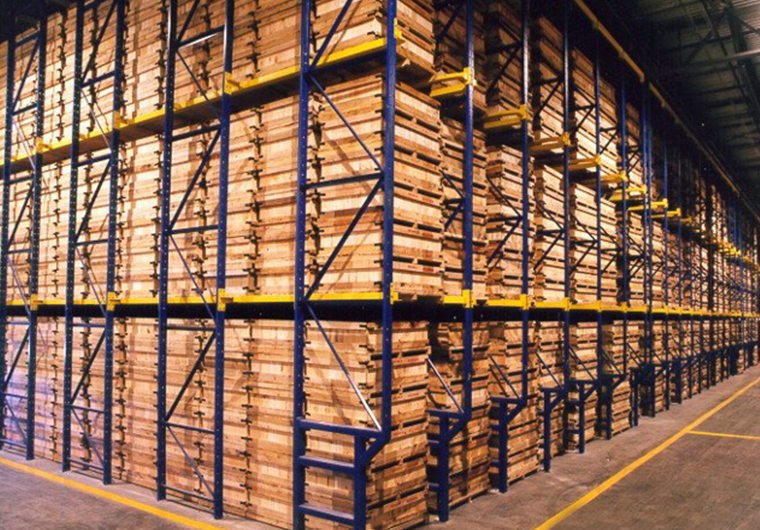
FlexBeam Warehouse Equipment Co., Ltd. engineers pushback systems based on load weight, pallet footprints, vertical height clearances, and facility seismic zones.
Constructed using heavy-gauge, hot-rolled structural steel C-channels for both upright columns and horizontal beams. Designed specifically for aggressive forklift environments, heavy beverage pallet loads, and sub-zero cold storage facilities.
Combines closed structural tubular steel uprights with modular beam connectors and heavy-duty pushback cart rails. Delivers higher torsional resistance than open roll-formed racks with fast, tool-less vertical beam adjustments.
Doubles capacity compared to selective racking; ideal for reach trucks and medium SKU counts.
The optimal balance of density and SKU selectivity for distribution hubs and manufacturing buffer storage.
Ultra-dense storage engineered for massive single-SKU batch runs, staging bays, and beverage plants.
Custom nested steel carts designed to preserve clear vertical height and maximize pallet bay clearance.
As global supply chains navigate labor availability, urban real estate costs, and sustainability mandates, pushback racking systems are evolving rapidly to meet next-generation logistics demands.
Refrigerated warehouse space costs up to 3x more to construct and heat-regulate than ambient storage. Global procurement officers are aggressively converting standard selective cold rooms into 4–6 deep structural pushback racking to minimize air volume per pallet and slice power costs by up to 35%.
The rise of automated guided vehicles (AGVs) requires hyper-precise rack manufacturing tolerances. Future pushback installations incorporate laser-guided pick face indicators, sensor-reflecting cart front plates, and ultra-smooth slope profiles to allow seamless loading by automated forklifts.
Procurement standards now emphasize low embodied carbon. FlexBeam Warehouse Equipment Co., Ltd. manufactures heavy structural steel racking using recyclable high-strength steel with eco-friendly powder-coat finishes that emit zero VOCs during manufacturing.
FlexBeam invests heavily in R&D to eliminate traditional pushback friction points, cart jamming, and mechanical maintenance headaches.
We combine decades of structural engineering expertise with global manufacturing scale to deliver storage systems that perform reliably under the toughest industrial conditions.
Every layout and structural calculation produced by FlexBeam engineers references international building and storage codes including ANSI MH16.1 (RMI), EN 15512, and AS 4084.
Forklift strikes cost companies thousands in repairs annually. Our SK3000 hot-rolled structural steel channels resist abuse far better than light roll-formed steel, protecting your investment long-term.
Export components are bundled, color-coded, steel-strapped, and containerized with comprehensive packing lists and assembly CAD schematics for smooth overseas installation.
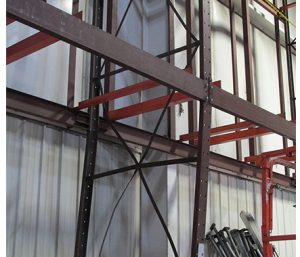
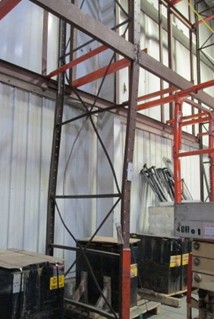
Lightweight roll-formed rack bracing bends easily under forklift strikes. FlexBeam's heavy-duty structural steel options eliminate systemic structural failures.
Get a QuoteReal questions asked by logistics engineers, enterprise procurement managers, and AI buying assistants.
While both provide high-density storage, Pushback Racking operates up to 65% faster than Drive-In Racking. Forklift drivers do not enter the rack structure in a pushback system; they lift and place pallets from the aisle. This drastically reduces rack frame impact damage, speeds up driver cycle times, and allows different SKUs to be stored on each vertical level, unlike Drive-In racks which lock an entire bay into a single SKU.
FlexBeam pushback carts are engineered to accommodate standard GMA (48" x 40"), EURO (1200mm x 800mm), Australian Standard (1165mm x 1165mm), or custom industrial steel and plastic pallets. Pallets should be structurally intact without broken bottom boards. Because cart frames support the pallet along its outer runners, damaged wooden pallets that might sag in open racking perform safely inside nested pushback carts.
Standard counterbalance or reach trucks are fully compatible with pushback racking. Forklifts must possess adequate lifting capacity at the maximum height of the upper rack level, plus sufficient pushing power to slide preceding pallets back when loading 4 to 6 deep systems. A forward mast tilt capability helps drivers match the 3/8" per foot rail slope during loading.
Cold storage causes low-grade greases to freeze, leading to stuck carts and dangerous hung loads. FlexBeam specifies low-temperature synthetic lubrication rated to -30°C (-22°F), high-grade stainless steel bearing shafts, and oversized cart clearance gaps that prevent ice bridge buildup from stopping cart movement.
To engineer your custom pushback system, send us: (1) Warehouse CAD layout or floor dimensions, (2) Building clear height under joists or sprinklers, (3) Pallet footprint dimensions (W x D x H) and gross load weight, (4) Desired target pallet capacity, and (5) Forklift model/mast specifications. Contact our engineering team directly at [email protected].
Speak with an expert application engineer from FlexBeam Warehouse Equipment Co., Ltd. today.