


High-Density Drive-In Racking Systems: Structural Engineering, TCO Analysis & Global Sourcing Trends
A definitive guide for supply chain executives, warehouse engineering directors, and B2B procurement leaders. Discover how structural steel Drive-In Racking maximizes volumetric density, withstands forklift collisions, and adapts to future automated warehouse trends.
Understanding Drive-In Racking: Principles of High-Density Storage
When warehouse real estate costs climb and cold storage energy expenses surge, supply chain planners face a fundamental dilemma: how to dramatically increase pallet capacity without expanding physical building footprints. Drive-In Racking Systems represent the most cost-effective, high-density storage solution available for managing bulk, homogenous inventory under Last-In, First-Out (LIFO) or First-In, First-Out (FIFO) operational profiles.
The Mechanics of Deep-Lane Storage
Unlike conventional selective pallet racking—which requires an access aisle for every two rows of racks—Drive-In Racking allows forklifts to drive directly into the racking structure itself to store or retrieve pallets. By consolidating aisles into continuous deep storage lanes, Drive-In systems eliminate up to 75% to 80% of unused aisle space, resulting in volumetric cubic utilization rates exceeding 85%.
Pallets are supported on continuous heavy-duty structural steel cantilever rails anchored to vertical upright frames. Forklifts enter from a single aisle (Drive-In / LIFO) or drive through the structure from entry to exit (Drive-Through / FIFO).
- ✔ Maximum Density: Stores 2 to 10+ pallets deep per lane, ideal for large batch manufacturing.
- ✔ Reduced Footprint: Drastically reduces square footage requirements in high-cost distribution hubs.
- ✔ Cold Chain Efficiency: Minimizes total air volume in refrigerated facilities to lower refrigeration kilowatt-hour loads.
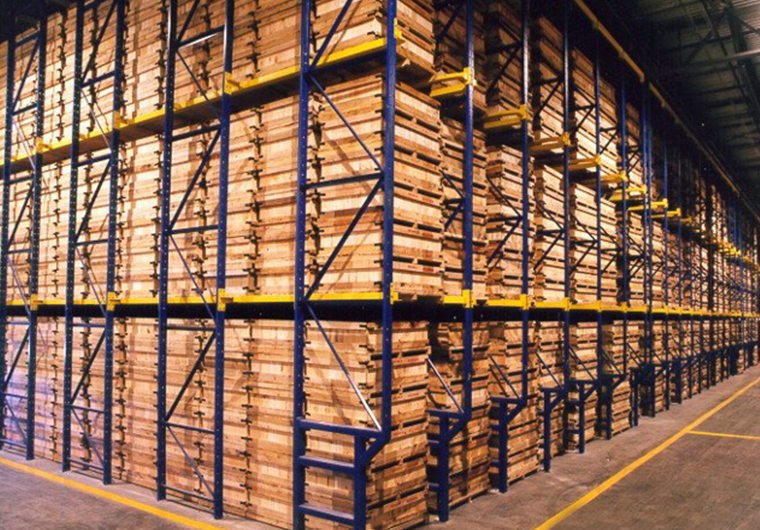 Figure 1: FlexBeam heavy-duty structural Drive-In Racking installation in a temperature-controlled distribution center.
 Engineered Drive-In System Configurations
FlexBeam Warehouse Equipment Co., Ltd. custom engineers Drive-In systems configured to exact pallet dimensions, forklift turn radiuses, and seismic site classes.
SK3000® Structural Steel Drive-In Racking
Built exclusively from hot-rolled C-channel structural steel columns and high-tensile continuous pallet support rails. Designed specifically for aggressive forklift environments where impact resistance is critical.
- Hot-rolled structural channel uprights
- Heavy structural base anchors & column cores
- Resists forklift impact 3x to 5x better than roll-formed rack
- Ideal for heavy industrial & beverage storage
Freezer-Rated Drive-In & Drive-Through Racks
Engineered for sub-zero freezer environments down to -30°C. Features low-temperature steel chemistry, cold-treated hot-dip zinc coating options, and recessed frame profiles for tight forklift navigation.
- Low-temperature ductile structural steel
- Slant-leg or recessed lower frame design
- Dual-access Drive-Through option for FIFO control
- Seamless Integration with Pallet Flow & Shuttle modules
Single-Entry Drive-In (LIFO)
Forklifts enter and exit through the same aisle. Maximizes density for long shelf-life products and high-volume seasonal SKUs.
Dual-Access Drive-Through (FIFO)
Forklifts load from one aisle and unload from the opposite end. Enables strict date batch control in high-density operations.
Heavy-Duty Guide Rail Protectors
Floor-mounted structural steel angle rails direct forklift tires into lanes, shielding vertical uprights from steering collisions.
Hybrid Shuttle-Ready Drive-In
Pre-punched structural frames allow immediate or future installation of semi-automated radio pallet shuttle channels.
Why Global Buyers Partner with FlexBeam
International procurement teams require more than basic steel fabricators. They require a trusted engineering partner who validates floor plan constraints, calculates seismic drift, and manufactures structural racking engineered to survive decades of continuous forklift use.
- Global Standard Compliance: Fully engineered with reference to ANSI MH16.1 (RMI), EN 15512, and AS 4084 specifications according to destination jurisdiction.
- Hot-Rolled Structural Channel Uprights: Fabricated using structural C-channels (SK3000 design) providing torsional rigidity and dramatic protection against fork impact.
- Load Capacity Documentation: Stamped structural calculations, load capacity plaques, and step-by-step CAD installation elevation drawings for every order.
- Export-Optimized Logistics: Bundled, color-coded, and container-packed components designed for zero transit damage and fast site unpacking.
1. Site & Forklift Interface Audit
We analyze pallet dimensions, overhang, pallet weights, forklift mast height, overhead clearance, and floor slab PSI specs before CAD drafting.
2. Structural & Seismic Engineering
Our structural engineers calculate top-tie bracing, aisle sway stability, baseplate anchor embedment, and seismic zone safety factors.
3. Impact-Resistant Manufacturing
Uprights are produced using closed tubular sections (SK2000) or hot-rolled structural steel channels (SK3000) with heavy-gauge continuous arm support rails.
4. Container Loading & Export Certification
Components are bundled with custom protective wrap, tagged with part numbers matching installation drawings, and loaded for global shipping.
5. Lifetime Inspection Support
FlexBeam Warehouse Equipment Co., Ltd. provides remote engineering guidance, structural maintenance checklists, and replacement component support worldwide.
TCO & Impact Risk Mitigation: Solving the Hidden Cost of Rack Damage
The purchase price of a Drive-In Racking system represents only a fraction of its total 15-year lifecycle cost. The true cost of ownership is determined by rack durability, collision resistance, and maintenance downtime.
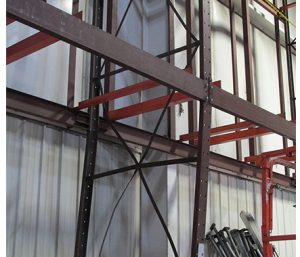 Figure 2: Conventional light-gauge open roll-formed uprights deform easily under repeated forklift impacts.
 Quantifying Impact Resistance: Structural Channel vs. Roll-Formed Steel
In Drive-In racking lanes, forklifts operate with only inches of clearance on either side of structural uprights. Standard light-gauge roll-formed uprights frequently suffer localized bucking from fork impacts, creating structural collapse hazards and demanding costly rack replacement.
FlexBeam Warehouse Equipment Co., Ltd. solves this vulnerability through two engineered solutions:
- 1. Structural C-Channel Uprights (SK3000): Fabricated from hot-rolled steel channels featuring thick flanges that absorb multi-directional impacts without structural twisting.
- 2. Integrated Column Protectors & Core Insert Reinforcements: Heavy-gauge internal structural steel column cores extending up to 1.2 meters above the floor level reinforce high-impact zones.
Long-Term Financial Return on Investment (ROI)
Investing in heavy-duty structural Drive-In components eliminates emergency shutdown expenses, product damage claims, and rack replacement labor. Facilities utilizing FlexBeam SK3000 structural Drive-In systems report up to 80% lower rack repair expenses over a 10-year operating horizon compared to standard roll-formed installations.
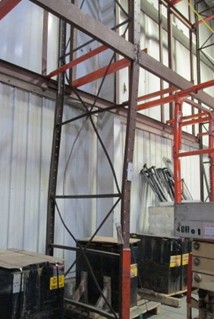 Figure 3: FlexBeam structural channel uprights engineered for maximum operational ROI.
 Development Trends & Future Sourcing Insights for Drive-In Racking
As global supply chains adopt smart warehouse automation, IoT sensors, and stringent sustainability goals, the design and procurement of Drive-In Racking Systems are evolving rapidly.
1. Modular Retrofitting for Radio Pallet Shuttles
Global logistics managers are increasingly demanding "Future-Proof" Drive-In structures. Forward-thinking procurement teams specify Drive-In upright frames with pre-engineered attachment points for shuttle guidance rails. This allows operations to start with traditional forklift-driven LIFO Drive-In storage and seamlessly upgrade to semi-automated Radio Pallet Shuttle systems as throughput volume expands.
2. IoT Rack Structural Health Monitoring
Next-generation Drive-In systems incorporate embedded vibration and deflection sensors on critical frame uprights. Real-time telemetry alerts facility directors to unseen fork impacts or overloading events, preventing structural fatigue and automating OSHA/EN 15635 compliance reporting.
3. Sustainable Steel Sourcing & Decarbonization
Multinational buyers are evaluating suppliers on Environmental Product Declarations (EPD) and embodied carbon footprints. FlexBeam Warehouse Equipment Co., Ltd. utilizes high-strength low-alloy (HSLA) steel profiles manufactured with high recycled scrap ratios, delivering superior strength-to-weight performance while reducing lifecycle carbon intensity.
4. Seismic-Damping Anchor Technology
In earthquake-prone regions, modern Drive-In racking designs employ engineered yield-link connectors and dynamic baseplates that dissipate seismic kinetic energy, protecting critical inventory and preserving overall building stability during seismic motion.
Global Procurement FAQ: Drive-In Racking Systems
Answers to critical questions asked by international buyers, facility engineers, and supply chain analysts.
Drive-In Racking offers the lowest capital expenditure per pallet position among high-density storage solutions. While Pushback racking (2 to 6 deep) and Pallet Flow racking (FIFO gravity flow) require expensive mechanical carts, nested frames, or full-width roller lanes, Drive-In systems use stationary structural steel cantilever arms. This simplicity yields a significantly lower hardware cost per pallet, making Drive-In the preferred choice for bulk storage of identical SKUs.
Drive-In systems typically range from 6 meters to over 12 meters in clear height, depending on warehouse roof clearance and forklift mast capability. Standard reach trucks or counterbalanced forklifts can enter the lanes provided the vehicle width is engineered relative to the lane clear distance (typically 1300mm to 1450mm width). Overhead guard protection on forklifts must be tapered or sized correctly to prevent interference with structural pallet support rails.
FlexBeam Warehouse Equipment Co., Ltd. integrates multiple physical protection layers: 1) Structural C-channel hot-rolled upright steel (SK3000 design); 2) Floor-mounted steel floor guide angle rails that physically channel forklift wheels away from frame legs; 3) Internal heavy-duty column cores welded inside the lower post; and 4) Recessed frame entry legs that widen the bottom entry point for turning forklifts.
High-density Drive-In racking concentrates substantial dead and live loads on specific post baseplates. Most industrial applications require a non-reinforced or reinforced concrete slab with a minimum thickness of 150mm to 200mm (6 to 8 inches) and a compressive strength of 3000 to 4000 PSI (20 to 30 MPa). FlexBeam structural engineers verify slab anchor embedment and soil load-bearing capacity prior to final manufacturing design.
FlexBeam Warehouse Equipment Co., Ltd. designs and tests systems to ANSI MH16.1 (RMI), EN 15512, and AS 4084 standards. Overseas shipments include stamped structural design calculations, CAD layout drawings, component-coded packing lists, installation assembly manuals, and official load capacity plaques for site display. Uprights and rails are strapped in steel-banded bundles with protective corner guards for shipping container stability.
Yes. FlexBeam engineers can design upright frames with dual-punched mounting patterns and standardized frame depth dimensions. This modular flexibility enables facility managers to replace manual pallet arms with automated pallet shuttle running rails in the future, dramatically boosting throughput without needing to dismantle the structural rack framework.
Optimize Your Warehouse Volumetric Capacity Today
Consult with FlexBeam structural racking engineers to receive custom CAD drawings, load calculations, and competitive FOB/CIF export pricing.