


Explore our export-grade pallet storage equipment engineered for maximum cubic utilization, high forklift collision tolerance, and strict compliance with global structural design standards.
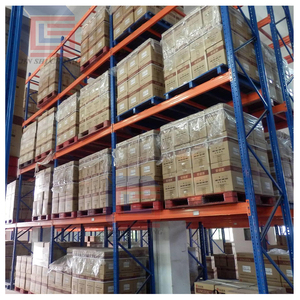
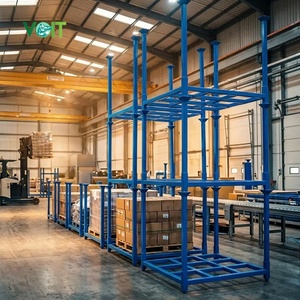
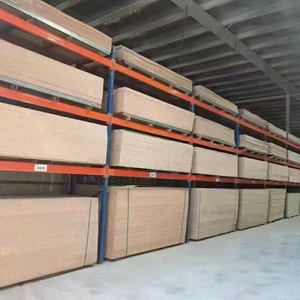
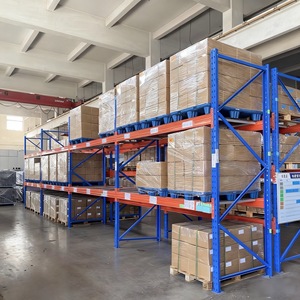
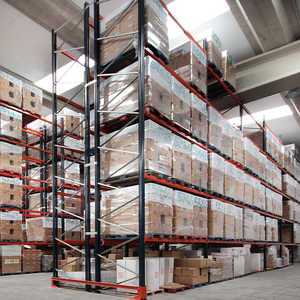
The Greater Tokyo Metropolitan Area—encompassing Tokyo, Kanagawa, Saitama, and Chiba—represents the world's most concentrated consumer market and logistics hub. However, enterprise warehouse operators across the Tokyo Bay logistics corridor (including Koto-ku, Shinagawa, Ota-ku, and Yokohama) face an unprecedented double challenge: sky-rocketing industrial land costs exceeding ¥300,000 to ¥500,000 per tsubo (approx. 3.3 sq. meters) and stringent earthquake safety mandates mandated by Japanese Building Standard Law (Kenchiku Kijun-hō).
Maximizing warehouse storage efficiency is no longer merely an operational objective; it is a critical financial survival strategy for 3PL providers, cold-chain operators, and retail fulfillment centers serving Tokyo. As a premier manufacturer and international exporter of space-efficient pallet racking systems, FlexBeam Warehouse Equipment Co., Ltd. engineers custom high-density storage solutions engineered specifically to address Tokyo’s strict spatial footprints, high vertical clear heights, and extreme seismic dynamics.
Exporting industrial pallet racking to Japan requires an uncompromised commitment to structural structural integrity. The Kanto plain experiences frequent seismic events, requiring racking systems to absorb dynamic lateral forces (P-Delta effects) and maintain frame stability under fully loaded conditions.
FlexBeam’s engineering framework incorporates multi-faceted structural safety factors designed around international benchmarks including ANSI MH16.1 (RMI), EN 15512, and AS 4084, aligned with local Japanese structural expectations:
Our proprietary SK2000 closed-tubular upright posts offer 250% higher torsional rigidity and 44-times more resistance to forklift impact forces compared to open-back roll-formed columns, making them ideal for narrow aisle Tokyo operations.
Fabricated from heavy-duty structural steel channels for columns and beams, bolted structural connections deliver maximum energy dissipation during earthquake loading, fulfilling the requirements for heavy industrial and cold storage sites.
Oversized, heavy-gauge structural baseplates engineered with seismic anchor bolt hole patterns ensure efficient shear load transfer into the reinforced concrete floor slab, suppressing base shear failure under intense ground motion.
Logistics demand in Tokyo is highly segmented across specific key sectors. Understanding localized operational workflows allows FlexBeam to engineer racking system geometries customized to exact Tokyo supply chain requirements:
Cold storage facilities operate at peak electrical consumption costs in Japan. Maximizing air-space density inside temperature-controlled chambers (-20°C to -25°C) directly offsets cooling utility expenditures. SK3000 Structural Pushback Racking and Pallet Flow Rack Systems allow operations to store pallets up to 6-deep while maintaining smooth LIFO or FIFO stock management for food distributors, preventing ice accumulation on mechanical components due to high-grade powder coatings.
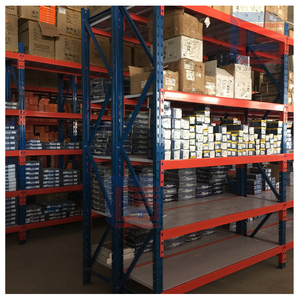
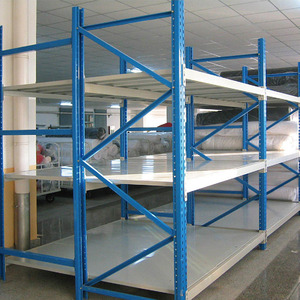
Same-day and next-day delivery demands across Tokyo require high-velocity carton and item picking. FlexBeam’s Multi-Tier Warehouse Pick Modules integrate boltless tubular racking structures with elevated walkways, integrated gravity flow lanes, and spiral chute locations, expanding pick locations by 200% within the same facility footprint.
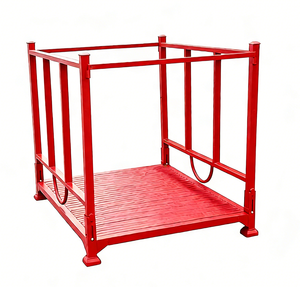
Heavy auto parts, stamping dies, and raw metal coils require extreme load capacities. FlexBeam’s Heavy Duty Rigid Containers and custom Structural Cantilever Racks deliver uncompromised storage safety for long, heavy, or non-standard industrial components.
Selecting the optimal space-saving storage architecture requires balancing pallet density against individual SKU selectivity. The engineering matrix below summarizes how FlexBeam's solutions perform under Tokyo's typical warehouse parameters:
| Racking Architecture | Cubic Density | SKU Selectivity | Rotation Principle | Ideal Tokyo Industry Application |
|---|---|---|---|---|
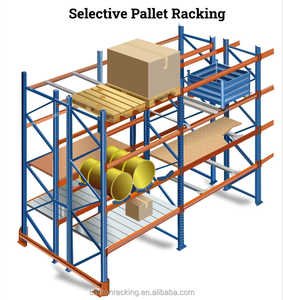
| SK2000® Selective Pallet Rack | Moderate (50%) | 100% Direct Access | Any (FIFO / LIFO) | General 3PL Distribution, Pharma, High SKU E-commerce |
| Double-Deep Selective Rack | High (65%) | 50% Immediate Access | LIFO | Bulk Raw Materials, Consolidated Wholesale Storage |
| SK3000® Pushback Racking | Very High (75%) | 20% - 50% Access | LIFO (2–6 Deep) | Cold Storage, Food & Beverage, High-Value Consumer Goods |
| Gravity Pallet Flow Racking | Very High (80%) | Lane Dependent | Strict FIFO | Perishable Goods, Expiry-Sensitive Pharmaceuticals |
| Pallet Shuttle Automated Racking | Maximum (85%+) | System Automated | FIFO or LIFO | High-Density Buffer Storage, Automated Logistics Hubs |
| Heavy Duty Cantilever Racks | Specialized | 100% Side Load | N/A | Lumber, Steel Tubing, Machinery, Extrusions |
The Japanese logistics market is undergoing a structural shift driven by legislative reforms limiting commercial truck driver overtime hours (widely known in Japan as the 2024 Problem). To mitigate transport delays, logistics operators are transitioning from long-distance direct haulage to regional distribution consolidation hubs around the Tokyo Outer Ring Road (Gaikan Expressway) and Ken-O Expressway.
This shift requires regional facilities to handle dramatically higher inventory turnover rates and larger safety stocks. Key technical trends adopted by Tokyo buyers include:
FlexBeam Warehouse Equipment Co., Ltd. serves as a trusted engineering partner and exporter for international B2B buyers, EPC contractors, and logistics integrators. When sourcing racking systems destined for Tokyo, our overseas clients benefit from complete end-to-end export support:
Our structural engineers review your building dimensions, column spacings, forklift turning radiuses, sprinkler clear heights, and floor slab load capacity to generate optimal CAD layouts maximizing pallet count.
From high-tensile cold-rolled steel coils to structural channel profiles, all steel raw materials undergo rigorous yield strength, tensile stress, and weld integrity testing prior to production.
Components are color-coded, bundled, and strapped onto heavy duty timber cradles engineered specifically for ocean shipping containers, preventing transit damage and enabling rapid on-site offloading at Tokyo or Yokohama ports.
Seismic-resistant racking in Tokyo requires high dynamic load calculation under Japanese seismic coefficients (K-values). FlexBeam provides heavy-duty structural baseplates, high-tensile anchor bolts, and specialized frame bracing geometries that prevent rack swaying or structural collapse during earthquake acceleration events.
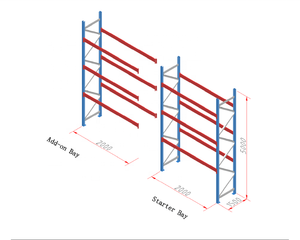
We specifically design beam spans (such as 2,300mm or 2,500mm clear lengths) and frame depths (1,000mm to 1,100mm) tailored precisely to hold Japanese standard T11 pallets with ideal front/back overhang and clearance margins, optimizing both safety and space utilization.
Production cycles generally range from 20 to 30 days depending on project volume. Ocean freight shipping from our primary export ports to Tokyo or Yokohama Port typically takes 4 to 7 transit days, making international delivery remarkably fast and reliable.
Every export order is accompanied by detailed structural load capacity plaques, step-by-step CAD assembly drawings, complete component bill of materials (BOM), and certified steel material quality test certificates (MTC).
For high SKU volume with standardized pallets, Radio Shuttle automated racking and Pushback racking systems offer the highest cubic density, recovering up to 85% of usable space by eliminating multiple access aisles.
Send us your warehouse CAD drawings, pallet specifications, or project requirements today. Our senior structural engineers will engineer a customized, high-density storage plan tailored to your budget and operational goals.