


Heavy-duty factory-direct rack systems, gravity carts, and lineside roller flow modules engineered for Philippine manufacturing hubs and 3PL fulfillment logistics.
An authoritative technical analysis of nested-cart dynamics, kinetic tilt rails, and high-density Last-In, First-Out (LIFO) pallet operations for modern Philippine logistics hubs.
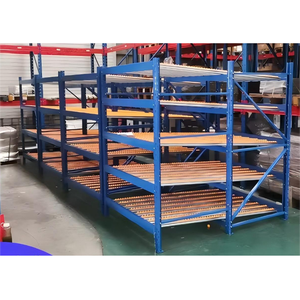
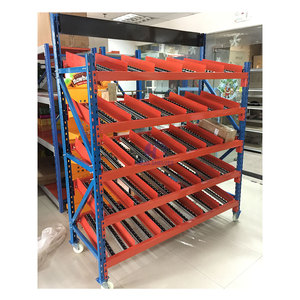
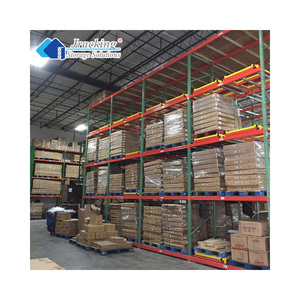
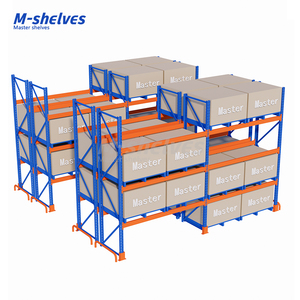
Pushback pallet racking systems operate on an inclined structural rail network integrated with a series of nested, telescoping wheeled carts. When a forklift loads the first pallet into a lane, it rests on the top nested cart. To load the second pallet, the forklift operator physically pushes the first pallet backward using the weight of the new load, exposing the second cart nested beneath it. This dynamic process continues for 2-deep, 3-deep, 4-deep, 5-deep, or 6-deep structural configurations.
Upon unloading, gravity automatically glides the remaining pallets forward to the aisle face at a controlled speed. Our engineering utilizes precision-ground steel or heavy-duty polyurethane wheels equipped with encapsulated dynamic bearings. This guarantees frictionless movement under heavy loads (up to 1,500 kg per pallet position) while preventing track binding or cart derailment during daily high-frequency operations.
Unlike traditional Drive-In racking—which forces forklifts to physically enter the rack structure—Pushback racking operates entirely from the external access aisle. This fundamental mechanical difference delivers significant operational and economic advantages for warehouse operators across Metro Manila, Laguna, Cavite, and Batangas:
Tailoring industrial racking structures to mitigate natural hazards, high tropical humidity, and floor slab variations across Luzon, Visayas, and Mindanao.
The Philippine archipelago sits directly along the Pacific Ring of Fire, classifying major logistics corridors (Metro Manila, Davao, Cebu) under Seismic Zone 4. Our Pushback rack systems are engineered in strict accordance with the National Structural Code of the Philippines (NSCP 2015) and RMI (Rack Manufacturers Institute) standards.
We utilize heavy-gauge structural steel columns (Q235B / Q355B grades), enlarged base plates, heavy-duty floor anchor bolts, and specialized cross-aisle seismic bracing to absorb spectral acceleration during seismic events without cart dislodopment or frame buckling.
With average annual relative humidity exceeding 80% and coastal salty winds in port areas like Manila North Harbor and Batangas Port, corrosion poses a critical threat to rack structural integrity. FlexBeam applies a proprietary 5-stage automated surface pretreatment process followed by thermosetting electrostatic powder coating (epoxy-polyester hybrid).
For wet food processing plants and sub-zero cold storage facilities in Valenzuela or General Santos City, we offer Hot-Dip Galvanizing (HDG) per ISO 1461, ensuring over 25 years of corrosion-free performance under continuous moisture exposure.
Many industrial warehouses in non-PEZA zones face uneven concrete floor slabs or insufficient slab thickness. Installing pushback racking requires precise pitch alignment (typically 1.5° to 2° incline) so carts return smoothly under gravity.
Our localized engineering service includes total-station laser floor surveys, customized shimming solutions, and chemical anchor bolt calculations to safely distribute heavy concentrated point loads across existing warehouse slabs without cracking concrete foundation layers.
Evaluating Pushback Racking against standard warehouse storage systems for procurement directors, supply chain managers, and 3PL executives in the Philippines.
| Storage Technology | Pallet Storage Density | SKU Selectivity Ratio | Forklift Damage Risk | Optimal Inventory Rotation | Suitability for PH Cold Storage |
|---|---|---|---|---|---|
| Pushback Racking (2-6 Deep) | High (+75% vs Selective) | Medium (Lane Level LIFO) | Very Low (External Aisle Only) | LIFO / Fast FMCG Batching | Excellent (Maximizes kWH Density) |
| Standard Selective Racking | Low (Baseline 100%) | 100% Direct Access | Moderate to High | FIFO / High SKU Variety | Poor (Wastes Refrigerated Air Volume) |
| Drive-In Racking | Very High (+85%) | Very Low (Block LIFO) | High (Forklift Enters Rack) | Bulk Single-SKU Storage | Moderate (High Maintenance Costs) |
| Pallet Flow Racking (Gravity) | Very High (+80%) | Medium (Full FIFO) | Very Low (Dedicated Entry/Exit) | Strict Expiry Date FIFO | Good (Higher Mechanical Complexity) |
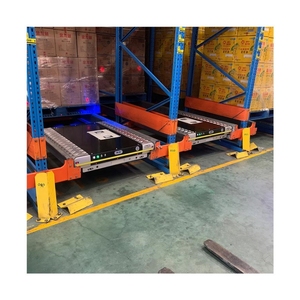
| Four-Way Radio Shuttle Rack | Maximum (+90%) | Automated Control | Extremely Low | Flexible FIFO / LIFO | Premium (High Capital Investment) |
*Data based on empirical floor utilization studies for 1,000 sqm warehouse modules under 9-meter clear building height.
Direct OEM factory manufacturing capabilities guaranteeing structural reliability, certified steel origins, and rigorous non-destructive testing for overseas export projects.
All pushback rack components—including load beams, nested cart frames, support rails, and vertical upright columns—are rolled from structural grade high-tensile steel supplied exclusively by top-tier steel mills (SS400 / Q235B / Q355B structural channel steel). MTR (Mill Test Reports) are supplied with every container shipment.
Critical structural joints, cart wheel brackets, and rail slope connectors are welded using Panasonic automated multi-axis robotic welding cells. This eliminates human welding flaws, ensures consistent weld penetration, and complies with AWS D1.1 structural welding standards.
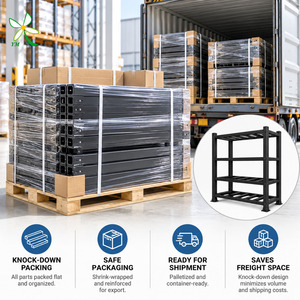
Shipping heavy structural steel across international sea routes to Manila South/North Harbor or Cebu International Port requires specialized export protection. FlexBeam utilizes rigid steel dunnage framing, heavy plastic shrink-wrap, protective corner guards, and steel strapping to secure upright frames and roll channels inside sea containers.
Every bundle is individually tagged with color-coded assembly markers and paired with detailed 3D installation blueprints, piece-count packing lists, and maximum safe uniform distributed load (UDL) plaques for rapid on-site assembly.
Addressing critical technical, logistics, engineering, and compliance inquiries from warehouse managers and procurement agents in the Philippines.
Our pushback cart frames are custom-engineered to accommodate all standard pallet footprints commonly used across the Philippines and Southeast Asia. This includes the standard ISO/GMA pallet (1000mm x 1200mm), standard Australian/Asian pallet (1100mm x 1100mm), Euro pallets (800mm x 1200mm), and custom plastic or wooden skids. Our engineering team customizes the cart nest dimensions and wheel-track spacing to match your specific pallet bottom-runner orientation (2-way or 4-way entry).
Yes, absolutely. Pushback racking is one of the most cost-effective storage solutions for refrigerated and sub-zero cold storage facilities in Metro Manila, Laguna, and GenSan. Operating in cold environments requires special low-temperature lubricants for cart bearings, synthetic low-freeze wheel materials, and high-impact structural steel grades that resist cold-temperature embrittlement. By increasing pallet storage density by up to 75%, operators dramatically reduce the electricity cost per pallet position needed to maintain sub-zero temperatures.
All structural systems designed for delivery to the Philippines undergo rigorous finite element analysis (FEA) and static load calculations based on the National Structural Code of the Philippines (NSCP 2015) for Seismic Zone 4. We calculate maximum soil bearing pressure, anchor shear capacities, dynamic seismic response factors, and frame deflection limits. We supply formal structural calculation sheets and PE-stamped drawings upon project request to assist your local building permit filings.
Our standard factory manufacturing timeline ranges from 20 to 30 days depending on total tonnage and custom powder coating requirements. Direct ocean freight shipping from our port to Manila North/South Harbor typically takes 7 to 12 days; shipping to Batangas or Cebu Port takes approximately 10 to 14 days; and shipping to Davao or Cagayan de Oro takes 12 to 16 days. Complete door-to-door or door-to-port DDP/CIF terms can be fully managed by our logistics team.
Yes. We offer comprehensive engineering support for installation. Along with detailed component labeling and CAD assembly manuals, we can dispatch qualified structural racking installation supervisors directly to your site in Metro Manila, Laguna, Cavite, Batangas, Bulacan, or Pampanga. Alternatively, we provide remote real-time video engineering supervision to guide your local third-party contractor through precise rail incline leveling, cart testing, and anchor torque setting.
Delivering end-to-end industrial storage engineering, high-yield material handling systems, and reliable factory direct supply chains.
Our senior warehouse structural engineers generate complete 2D floorplan layouts and 3D BIM models based on your building dimensions, clear height under sprinklers, column grids, and forklift turning radius specs—maximizing total pallet position yields.
Every product design undergoes destruction testing, dynamic impact loading analysis, and weld fatigue testing. All beam connections feature safety lock pins to prevent accidental dislodgement during fast-paced forklift unloading operations.
By eliminating intermediate distributors and trading markups, FlexBeam delivers premium structural steel rack systems directly from our automated factory floor to your Philippine installation site at highly competitive per-pallet-position costs.
Contact our structural engineering design team today. Receive a customized 2D/3D warehouse layout blueprint, precise seismic load calculations, and a complete factory-direct quotation tailored to your project requirements.