


Precision-manufactured pallet racks engineered for high clearance, maximum volume utilization, and forklift impact resistance across Philippine distribution hubs.
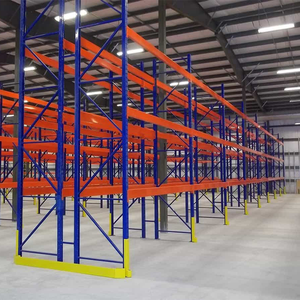
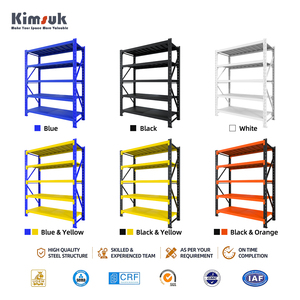
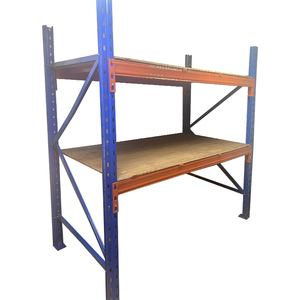
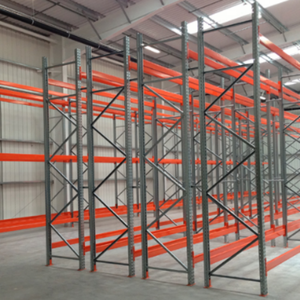
As the Greater Manila Area—encompassing Metro Manila, Bulacan, Cavite, Laguna, and Batangas—solidifies its position as the principal logistics hub of the Philippines, industrial real estate values have escalated exponentially. Prime logistics parks in Taguig, Paranaque, Valenzuela, and Santa Rosa command elevated lease rates, compelling third-party logistics (3PL) providers, cold chain operators, fast-moving consumer goods (FMCG) conglomerates, and manufacturing entities to optimize vertical spatial footprint. Horizontal warehouse expansion is no longer economically viable; high-density pallet accumulation racking systems represent the ultimate structural intervention to maximize storage density per square meter.
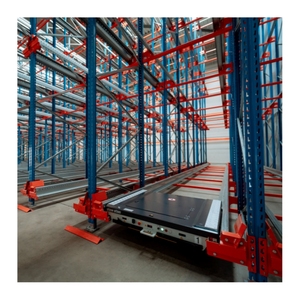
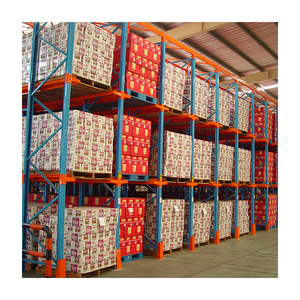
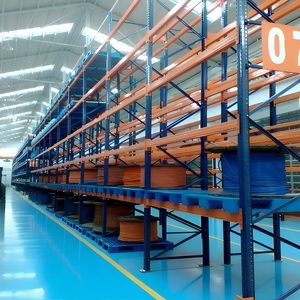
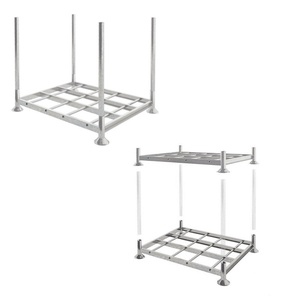
Pallet accumulation racking refers to dynamic, deep-lane storage frameworks engineered to hold multiple pallets deep within a single aisle profile. Unlike standard selective pallet racking—which dedicates up to 60% of floor space to forklift access aisles—accumulation racking architectures such as Push-Back Cart Racking, Pallet Gravity Flow Racks, Drive-In/Drive-Through Systems, and Automated Radio Shuttle Racks reclaim wasted aisle space, elevating volumetric storage efficiency to over 85%.
Information Gain Insight: Deploying engineered accumulation racking in Manila industrial zones reduces cost-per-pallet position by 38% over a 5-year operational lifecycle compared to conventional selective rack expansion, while mitigating severe seismic risk factors inherent to the Philippine archipelago.
Exporting structural and boltless tubular racking to Manila requires specialized structural engineering tailored to local environmental realities: severe seismic forces governed by Seismic Zone 4 of the National Structural Code of the Philippines (NSCP), hyper-humid tropical atmospheric conditions causing rapid oxidation, and heavy reliance on standardize LPR/CHEP 1200mm x 1000mm wooden and plastic industrial pallets. As a premier original equipment manufacturer (OEM) and global exporter, FlexBeam delivers fully engineered, certified, and corrosion-resistant accumulation racking systems tailored specifically for Philippine commercial buyers.
Selection of the optimal accumulation racking architecture depends heavily on stock-keeping unit (SKU) velocity, inventory rotation criteria—First-In, First-Out (FIFO) versus Last-In, First-Out (LIFO)—and forklift fleet dynamics. Below is an authoritative comparative matrix detailing the engineering principles of modern high-density accumulation storage.
| Racking Architecture | Rotation Strategy | Depth Capacity | Floor Space Utilization | Best Local Manila Application |
|---|---|---|---|---|
| Push-Back Cart Racking | LIFO (Last-In, First-Out) | 2 to 6 Pallets Deep | Up to 75% Utilization | FMCG Distribution & Medium-Velocity Batch Storage |
| Pallet Gravity Flow Racking | FIFO (First-In, First-Out) | 2 to 20+ Pallets Deep | Up to 85% Utilization | Perishable Food & Beverage, Cold Storage, Pharma |
| Drive-In / Drive-Through | LIFO / FIFO | 5 to 10+ Pallets Deep | Up to 80% Utilization | Bulk Raw Materials, Single-SKU High-Volume Goods |
| Radio Shuttle Automated Racking | LIFO or FIFO Flexible | 20 to 50+ Pallets Deep | Up to 90% Utilization | Deep-Freeze Cold Storage (-25°C), High-Throughput 3PL |
Push-back racking utilizes nested, inclined steel carts riding on structural telescoping channels. Forklift operators push the front pallet back using the incoming pallet. Upon retrieval, gravity gently feeds the remaining pallets forward to the pick face. Reduces lift truck travel distance and eliminates rack entry collisions.
Engineered with full-width steel rollers or heavy-duty dual-lane inline wheels set on a precise pitch gradient (typically 3.5% to 4%). Integrated centrifugal speed controllers regulate descent velocity, while mechanical separation brakes at the discharge face prevent pressure accumulation during unloading.
Combines structural heavy-duty guide rails with self-propelled battery-powered shuttle vehicles. Controlled via RF remote or warehouse management software (WMS), shuttle carts transfer pallets along deep lanes independently, maximizing forklift driver productivity and lane density.
Supplying industrial equipment to Metro Manila and surrounding economic zones governed by the Philippine Economic Zone Authority (PEZA) demands strict engineering modifications to ensure structural integrity and long-term durability under harsh tropical conditions.
The Philippines rests along the Pacific Ring of Fire. FlexBeam racking frames undergo Finite Element Analysis (FEA) to withstand high dynamic seismic ground accelerations ($S_s, S_1$). We supply oversized, heavy-duty baseplates, anchored with chemical anchor bolts engineered for thick reinforced concrete slabs.
Manila's high humidity (often exceeding 85% RH) and coastal saline air near Manila Bay accelerate metal oxidation. FlexBeam structural components undergo multi-stage zinc phosphate pretreatment followed by electrostatic epoxy powder coating baked at 200°C, or hot-dip galvanizing (HDG) for cold chain applications.
Racking systems deployed in Laguna or Bulacan must accommodate standard Philippine wood (LPR/CHEP) and plastic pallets (1200mm x 1000mm) without excessive beam deflection. FlexBeam structural beams maintain beam deflection limits tighter than L/240 under full rated payload (up to 3,000kg/level).
Forklift impacts are the primary cause of racking structural failures. Our closed-section tubular uprights (SK2000 standard) provide 44% greater torsional strength and significantly higher front-and-side impact resistance than standard open roll-formed steel channels.
As a global racking exporter with dedicated shipping channels into Manila North Harbor, South Harbor, and the Port of Batangas, FlexBeam provides seamless end-to-end procurement, custom OEM engineering, and direct factory pricing.
Find authoritative answers regarding structural compliance, shipping timelines, local installation, and seismic engineering for warehouse operations in Metro Manila and Philippine provinces.