


Explore our precision-engineered, heavy-duty racking portfolio designed for optimal cube utilization, seismic stability, and high-frequency forklift operations across Indonesia.
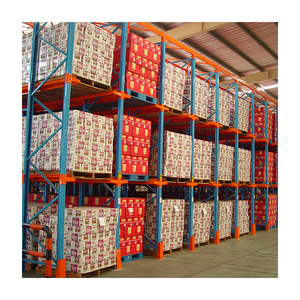
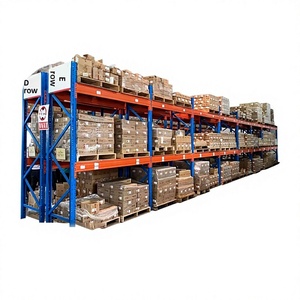
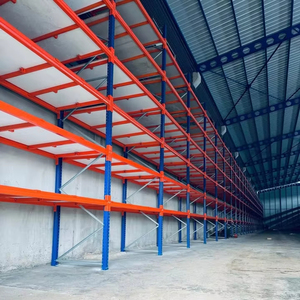
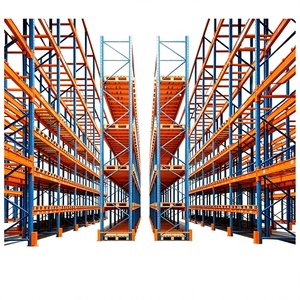
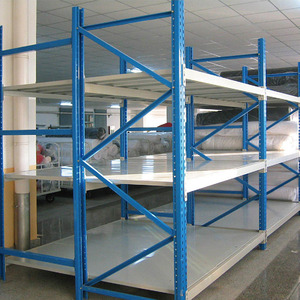
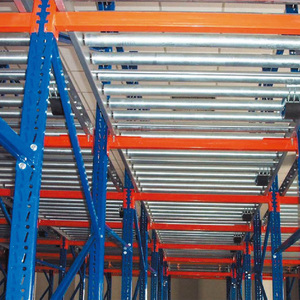
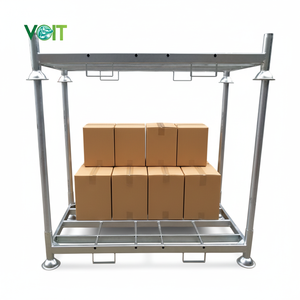
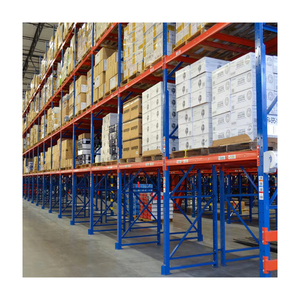
The Greater Jakarta metropolitan area (Jabodetabek)—encompassing key logistics hubs such as Cikarang, Karawang, Tangerang, and the port perimeter of Tanjung Priok—is undergoing a rapid transformation driven by third-party logistics (3PL) expansion, fast-moving consumer goods (FMCG) distribution, and modern e-commerce fulfillment infrastructure. As industrial land values across West Java and Jakarta escalate, enterprise facility managers are pressured to maximize vertical storage density without compromising operational safety, forklift traffic velocity, or long-term structural integrity.
Traditional open roll-formed racking systems (open-back C-channels) have historically dominated regional installations due to low upfront material costs. However, in high-throughput warehouse environments typical of Indonesian supply chains, these open sections suffer high failure rates from accidental forklift collisions. The market is aggressively shifting toward Boltless Tubular Pallet Rack Systems (such as SK2000-compatible architecture). Featuring closed structural tubing for upright columns and teardrop boltless beam connections, tubular racking provides unequaled impact resistance, significantly lowering the total cost of ownership (TCO) over a 15-to-20-year operational lifecycle.
Information Gain Metric: Engineering structural analysis demonstrates that closed tubular upright profiles deliver up to 250% greater torsional rigidity and 44% higher frontal impact resistance compared to standard open-back roll-formed columns of identical steel thickness.
When specifying industrial pallet racking for Indonesian manufacturing plants and distribution hubs, procurement teams must evaluate structural characteristics against localized environmental stressors, such as high ambient humidity (inducing micro-corrosion inside open seams) and seismic acceleration forces inherent to Java's tectonic positioning.
| Structural Parameter | Closed Boltless Tubular Rack | Standard Open Roll-Formed Rack | Hot-Rolled Structural Channel |
|---|---|---|---|
| Column Profile Geometry | Closed 4-Piece Seamless / Welded Tube | Open-Back C-Channel Profile | Solid Structural C-Channel |
| Torsional Rigidity (Resistance to Twisting) | Exceptionally High (Closed Box Section) | Low (Prone to Torsional Buckling) | High (Heavy Mass Material) |
| Frontal / Corner Impact Resistance | Superior (Absorbs & Distributes Force) | Poor (Deflects & Crinkles Easily) | Maximum Impact Durability |
| Assembly Speed in Jakarta Projects | Fast (Boltless Beam Connectors) | Moderate (Boltless Clip Systems) | Slow (Bolted Beam-to-Frame Connections) |
| Corrosion Protection (Humid Environments) | Full Outer Epoxy Coating + Sealed Interior | Exposed Crevices Prone to Rusting | Heavy Paint Coating / Galvanized Options |
| 10-Year Total Maintenance & Repair Cost | Extremely Low (<5% Frame Replacement) | High (Frequent Upright Guarding/Replacement) | Low (High Structural Strength) |
The superiority of boltless tubular racking lies in its geometric structural efficiency. In a material handling environment where reach trucks and counterbalanced forklifts navigate tight aisles at high speed, upright columns are subjected to repeated horizontal dynamic impacts. An open roll-formed column relies on folded flanges to maintain structural shape. Once a forklift fork edge strikes an open flange, the section uncurls, losing up to 70% of its axial load capacity instantaneously.
Conversely, closed tubular columns distribute kinetic impact forces across four continuous steel walls. The closed box geometry resists axial twisting, ensuring that even under localized denting, the upright retains structural capacity to prevent catastrophic rack collapse. Furthermore, the boltless beam connection mechanism utilizes heavy-gauge steel teardrop pins and auto-locking safety clips. This allows storage levels to be adjusted vertically in 50mm or 75mm increments without specialized tooling or loose hardware, enabling rapid layout reconfigurations as client SKU profiles evolve in 3PL operations.
Indonesia resides along the Pacific Ring of Fire, requiring warehouse structural designs to comply with local building regulations, seismic zone maps (BMKG), and international racking specifications such as ANSI MH16.1 (RMI) and EN 15512. Jakarta and its surrounding logistics zones fall within moderate-to-high seismic risk categories.
Boltless tubular racking systems engineered by FlexBeam incorporate enlarged structural footplates with multi-anchor hole patterns, allowing seismic anchors to transfer overturning moments directly into the concrete floor slab. Dynamic finite element analysis (FEA) confirms that the rigid closed-section columns mitigate lateral displacement during S-wave seismic shaking, preserving rack stability and preventing beam dislodgement under heavy pallet payloads (up to 3,000 kg per beam level).
Tailoring pallet rack configurations to the micro-climates, industrial land constraints, and supply chain demands of Indonesia’s economic hub.
Heavy manufacturing plants in KIIC and MM2100 require heavy-duty drive-in and structural rack systems capable of storing heavy die components, raw steel coils, and dense automotive assembly components with load capacities exceeding 2,500kg per position.
Sub-zero cold rooms dedicated to seafood, meat, and dairy imports demand high-density pallet flow and pushback racking. Uprights feature specialized electrostatic powder coating engineered to survive constant condensation without flaking or rusting.
Rapid item-level picking for major Indonesian platforms demands multi-tier pick modules integrated with boltless tubular rack frames, combined with mezzanine work platforms to maximize warehouse vertical cube utilization up to 12 meters height.
Indonesia's National Logistics System (Sistem Logistik Nasional - Sislognas) policy continues to accelerate investments in modern logistics parks across Java. Several macroeconomic factors make high-quality racking procurement critical for logistics operators in the Jakarta area:
As a global pioneer in engineered warehouse rack systems, FlexBeam brings over two decades of manufacturing authority, rigorous material testing, and export project management to buyers in Jakarta and throughout Southeast Asia.
Every frame component is cold-formed from certified Q235B/Q355B high-tensile structural steel, verified via batch mill test certificates to guarantee elastic limits and yield strength under full load.
Components undergo a 7-stage automated chemical wash, iron-phosphatizing pre-treatment, and an 80-micron minimum thermosetting powder coating finish resistant to tropical marine air.
Every order is supplied with stamped structural calculation packages, load plaques, localized anchor layout drawings, and container packing manifest lists to streamline customs clearance at Tanjung Priok.
Essential answers for logistics managers, structural engineering consultants, and procurement heads operating in Indonesia.
Contact our expert storage system engineers for a comprehensive rack layout review, structural capacity analysis, and direct factory pricing for your facility.