


Precision-engineered automated racking systems and structural heavy-duty solutions configured for Belgian warehouse standards.
Belgium stands as the undisputed logistical beating heart of Europe. Home to the Port of Antwerp-Bruges—the second largest seaport in Europe—as well as major distribution nodes across Flanders, Wallonia, and the Brussels capital region, Belgian warehouse operators face a unique combination of economic pressures. Premium industrial land prices, stringent ESG and sustainability directives, expanding cold-chain pharmaceutical requirements, and chronic labor shortages have accelerated the demand for high-density automated intralogistics infrastructure. Among all high-density warehouse automation strategies, the Automated Pallet Shuttle System (including 2D Radio Shuttles, 4D Multi-Directional Shuttles, and Mother-Child Shuttle systems) has emerged as the most scalable, cost-effective, and resilient solution for modern logistics facilities across Belgium.
Key Insight for Belgian Logistics Directors: Transitioning from conventional selective racking or forklift-driven drive-in racking to a semi-automated or fully automated pallet shuttle matrix can increase volumetric storage capacity by up to 220% while cutting forklift travel distance within channels to absolute zero.
Belgian warehouse operations are heavily influenced by geographic positioning and strict regulatory frameworks. As a major gateway for international trade, logistics centers in Antwerp, Genk, Ghent, Liège, and Brussels handle immense throughput volumes. However, operating within Benelux presents several distinct structural challenges:
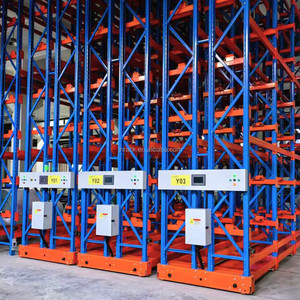
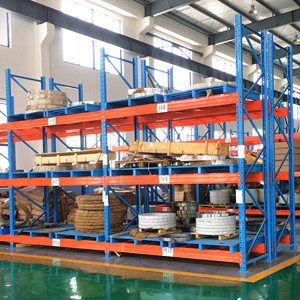
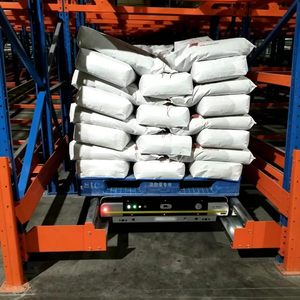
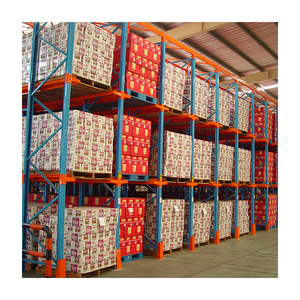
An Automated Pallet Shuttle System is an ultra-dense, semi-automated or fully automated deep-lane storage matrix. The system combines customized structural racking, precision-machined guide rails, self-powered robotic shuttles, and integrated control software (WCS/WMS interface). Unlike traditional drive-in systems where forklifts physically enter racking channels—causing frequent rack structural damage and slow cycle times—the robotic shuttle travels inside the channel underneath the pallets to lift, transport, and deposit goods.
Semi-automated deep-lane storage where a wireless radio shuttle performs channel-level loading and unloading. Forklifts transport shuttles between lanes while the shuttle automatically moves pallets under remote control or WMS commands.
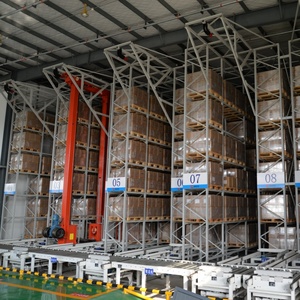
Fully autonomous 4-way robotic shuttles capable of moving longitudinal and transverse directions across the rack lattice. Combined with vertical lifts, 4D shuttle systems eliminate the need for forklifts during storage and retrieval operations.
Integrated with high-speed stacker cranes or vertical reciprocating conveyors (VRCs). Connects directly to enterprise WMS via Wi-Fi/5G private networks, providing real-time inventory tracking, lot management, and zero-touch operation.
Belgium is world-renowned for frozen potato products, chocolate, meat, and dairy exports. Storage of temperature-sensitive goods in cold storage rooms (-18°C to -28°C) incurs astronomical power bills. Conventional racking layout forces cold rooms to maintain massive open aisles for specialized reach trucks or VNA trucks. Automated Pallet Shuttle Systems allow warehouse operators to eliminate up to 80% of inner-aisle spaces. By packing pallets tightly into 20-to-30-pallet-deep channels, the overall refrigerated volume is compressed. Lithium Iron Phosphate (LiFePO4) battery technology built into our cold-chain shuttles guarantees continuous operation in sub-zero conditions without battery degradation.
With major pharmaceutical hubs in Puurs, Wavre, and Ghent, Belgium handles high-value vaccines, biopharmaceuticals, and medical devices under strict Good Distribution Practice (GDP) guidelines. Contamination prevention and accurate trace-and-track functionality are critical. Automated Pallet Shuttles provide gentle acceleration and deceleration (S-curve velocity profiles) to prevent liquid spillages or vial breakage. Integrated RFID/barcode readers verify pallet SKU identity instantly, syncing batch numbers and expiry dates directly to SAP or specialized WMS platforms.
High-turnover consumer goods demand flexible inventory rotation modes. Our shuttle systems support both FIFO (First-In, First-Out) for perishable date-sensitive goods, and LIFO (Last-In, First-Out) for seasonal bulk items. By switching system operating logic in the WCS software interface, warehouse managers can reconfigure lane retrieval sequences on demand without changing structural physical layouts.
To help Belgian procurement executives and supply chain directors make data-backed investment decisions, the following matrix compares key operational metrics:
| Storage System Type | Volumetric Space Utilization | Pallet Access Speed (Cycles/Hr) | Forklift Damage Risk | Cold Storage Energy Efficiency | Relative Capital Investment |
|---|---|---|---|---|---|
| Selective Pallet Racking | 35% - 45% | Low - Medium | High | Poor (High Air Loss) | Baseline (1.0x) |
| Drive-In Racking | 60% - 70% | Very Low | Extremely High | Moderate | Low-Medium (1.4x) |
| Automated 2D Radio Shuttle | 80% - 88% | High | Very Low | Excellent (-40% Power) | Medium (2.2x) |
| Fully Autonomous 4D Shuttle AS/RS | 90% - 95% | Extremely High | Zero (Fully Automated) | Maximum Efficiency | High-ROI Investment (3.8x) |
Delivering heavy-duty automated storage equipment to Belgian enterprise clients requires adherence to stringent European engineering standards, including EN 15512 (Steel static storage systems), EN 15095 (Power-driven mobile racking and systems), and CE machine safety directives. Our manufacturing facilities combine structural steel engineering with robotic precision fabrication:
Investing in automated intralogistics is evaluated based on Payback Period and Internal Rate of Return (IRR). In typical Belgian warehouse operations, an Automated Pallet Shuttle installation delivers a full ROI within 18 to 30 months, driven by three major operational savings vectors:
Yes. All structural rack components are engineered according to EN 15512 structural specifications. Robotic shuttles carry full CE certification and comply with EN 15095 safety regulations, featuring optical obstacle sensors, emergency stop features, and fail-safe mechanical locking mechanisms.
Absolutely. Our Shuttle control layer (WCS - Warehouse Control System) communicates seamlessly via standard API, RESTful web services, Modbus TCP, or OPC UA protocols with SAP, Oracle, Manhattan, or custom proprietary Warehouse Management Systems.
The system is engineered to handle standard Euro Pallets (EPAL 1 - 800x1200mm), EPAL 2 (1200x1000mm), industrial perimeter base pallets, and custom chemical totes up to 1,500 kg load capacity per pallet position.
Our cold-storage configuration shuttle vehicles utilize IP65-rated low-temperature electronics, specialized synthetic low-viscosity lubricants, internal heating elements for optical sensors, and high-capacity LiFePO4 battery packs equipped with integrated thermal management systems.
Because high-density shuttle systems concentrate heavy loads onto smaller floor footprints, concrete slabs typically require C25/30 or C30/37 grade concrete with reinforced rebar mesh or steel fiber reinforcement, meeting flatments according to DIN 18202 or FEM 9.831 standards.
Custom engineering and layout drawings take 1-2 weeks. Manufacturing and FAT testing require 4-6 weeks. Container shipping to the Port of Antwerp takes approximately 4 weeks, followed by on-site assembly and commissioning by local certified engineering partners.
Send your CAD floor plan, ceiling clear heights, and pallet specifications. Our senior intralogistics engineers will deliver a customized 3D layout simulation and preliminary cost calculation within 48 hours.
Get Catalog