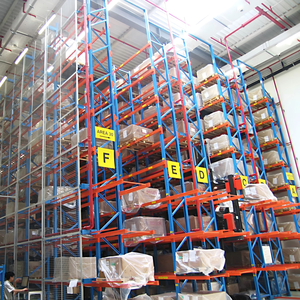
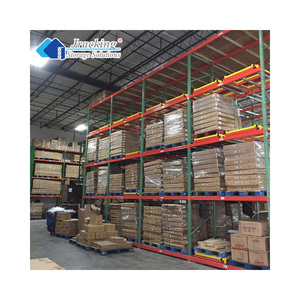
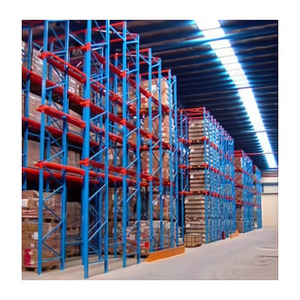
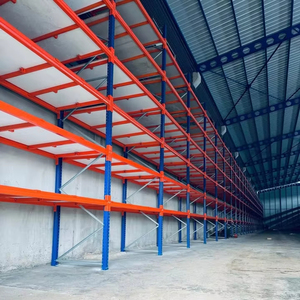
Engineered Heavy-Duty Storage & Shuttle Racking Systems
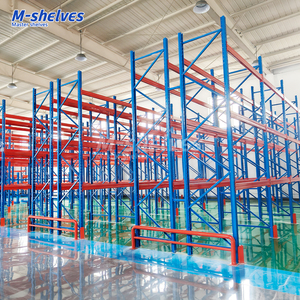
Discover our industrial-grade, impact-resistant pallet racking systems tailored for high-density logistics, cold chain warehouses, and automated distribution hubs.
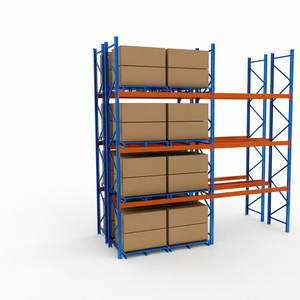
Metal Rack Storage Shelf Heavy Duty Selective Pallet Beam Racking
Direct 100% pallet access engineered with roll-formed or structural tubular columns for maximum impact resistance in high-turnover logistics hubs.
Executive Technical Whitepaper: The Evolution of Radio Pallet Shuttle Racking
Modern global logistics and cold-chain distribution centers face an unprecedented challenge: skyrocketing real estate acquisition costs, rising energy overheads in cold storage facilities, and acute labor shortages in material handling operations. Traditional selective pallet racking, while offering direct 100% SKU access, consumes upwards of 60% of total warehouse floor area in dedicated forklift travel aisles. Conversely, legacy deep-lane storage methodologies such as traditional Drive-In racking maximize cubic density but impose severe operational bottlenecks, including slow material handling cycles, elevated risks of structural rack damage due to forklift collisions inside channels, and honeycombing inventory inefficiencies.
Key Engineering Metric: Semi-automated Radio Pallet Shuttle Racking increases warehouse storage density by up to 85% compared to selective rack layouts, while reducing forklift cycle times inside deep storage channels to zero.
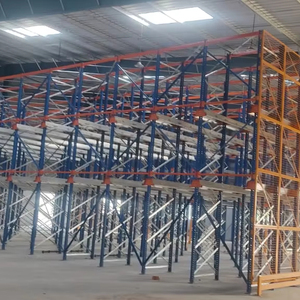
The semi-automated Radio Pallet Shuttle system represents a quantum engineering leap forward in ultra-high-density storage technology. By decoupling the horizontal travel of pallets deep within storage channels from the vertical lift operations of conventional forklifts, pallet shuttle systems convert dead aisle space into revenue-generating storage positions. An autonomous, battery-powered shuttle carriage travels along specialized structural guide rails within the rack channels, lifting, transferring, and placing heavy palletized payloads (up to 1,500 kg–2,500 kg per pallet position) under precise RF remote or WMS software control.
As a premier global supplier and exporter of heavy-duty storage infrastructure, our structural design framework references rigorous international engineering standards, including ANSI MH16.1 (Specification for the Design, Testing and Utilization of Industrial Steel Storage Racks) published by the Rack Manufacturers Institute (RMI), EN 15512 (European Standard for Steel Static Storage Systems), and AS 4084 (Australian Standard for Steel Storage Racks). Our engineering teams employ Finite Element Analysis (FEA) to simulate dynamic wheel stresses, seismic lateral forces (Zone 4 compliant), and frame buckling behaviors under maximum design loads.
Our shuttle racking channels feature custom-extruded, high-precision guide rails with integrated optical sensor reflectors and mechanical anti-derailment stops. This ensures millimeter-accurate shuttle positioning at speeds up to 1.2 m/s under full rated load.
Engineered specifically for harsh refrigerated and deep-freeze environments. Our radio shuttles incorporate thermal insulation jackets, automatic internal heating circuits, and high-discharge LiFePO4 batteries offering up to 10 hours of continuous operation per charge cycle.
Turnkey Export Packaging & Engineering Compliance
Every export project receives fully detailed CAD installation layouts, 3D structural assembly schematics, component-coded container bundling, and stamped load-capacity plaques compliant with destination building code authorities.
Future Trends: The Strategic Roadmap for Pallet Shuttle Racking (2025–2030)
As global supply chains transition toward Industry 4.0 paradigms, procurement directors and logistics warehouse planners must anticipate technological shifts in automated material handling equipment. The convergence of autonomous mobility, internet of things (IoT) sensors, and green energy management is rapidly transforming pallet shuttle racking from static storage racks into dynamic smart automation assets.
1. Convergence of Pallet Shuttles with Autonomous Mobile Robots (AMR) & AGVs
The next frontier in warehouse material handling is the seamless integration of shuttle rack systems with floor-level Autonomous Mobile Robots (AMRs) and automated guided forklifts. In traditional shuttle operations, a human forklift driver moves the shuttle cart between different rack bays or channels. In fully automated 3D Shuttle-AGV architectures, automated vertical lifts and AMRs transport both the pallet load and the radio shuttle carriage autonomously across multi-tier rack structures. This completely eliminates manual forklift driving in the warehouse, achieving true 24/7 dark warehouse fulfillment capabilities.
Emerging structural health monitoring (SHM) technology incorporates embedded strain gauges, accelerometers, and wireless telemetry sensors directly into critical upright frames and beam connectors. These smart sensors transmit real-time stress data, floor slab displacement, and shock impact alerts to facility management dashboards. If an accidental forklift collision occurs, the system immediately registers the precise impact location, logs the G-force magnitude, and notifies safety managers to execute targeted maintenance before catastrophic frame failure can occur.
3. Battery Management System (BMS) Innovations & Wireless Supercapacitor Charging
Future procurement cycles will see a massive shift from traditional lithium battery manual swapouts to automated in-channel inductive wireless charging. Advanced shuttle shuttles equipped with high-energy supercapacitors will execute fast micro-charges (15–30 seconds) automatically every time the shuttle returns to the front picking face to deposit a pallet. This continuous energy replenishment cycle enables perpetual continuous operation without battery swapping downtime or dedicated charging stations.
Modern pallet shuttle systems no longer rely on standalone handheld RF remote controls. Enterprise-grade shuttle controllers are equipped with open RESTful APIs and OPC UA communication protocols, enabling direct bi-directional synchronization with cloud-based Warehouse Management Systems (WMS) and Warehouse Control Systems (WCS). AI-driven slotting algorithms dynamically reassign high-velocity SKUs to lower shuttle channels near dispatch docks during peak shifts, while automatically migrating slow-moving inventory to upper deep storage zones during off-peak night cycles.
Global Procurement FAQ: Technical Guidance for Importers
Essential engineering and commercial answers to help procurement managers evaluate pallet shuttle racking specifications and export requirements.
What concrete floor slab specifications (thickness, load capacity, levelness) are required for Pallet Shuttle Racking installation?
Pallet shuttle systems impose concentrated point loads under the upright baseplates and high dynamic rolling wheel loads inside channel guide rails. Standard installations require a reinforced concrete slab thickness of at least 150mm to 250mm, with a compressive strength of C25/C30 (minimum 3,000–4,000 PSI). Slab levelness should satisfy standard DIN 18202 or ACI F-min specs (typically FM2 or FF/FL ratings above 35/25) to prevent rail misalignment or shuttle sensor errors.
Can a single Radio Pallet Shuttle carriage operate across multiple storage levels and channels?
Yes. A single radio shuttle carriage can easily be relocated between different channels and vertical storage levels using a standard forklift or specialized stacker crane. For optimal operational throughput, typical warehouse ratios range between 1 shuttle carriage per 200–500 pallet positions, depending on your hourly pallet throughput requirements.
How does the Pallet Shuttle System switch between FIFO and LIFO inventory rotation modes?
Pallet shuttle channels can be configured for either First-In, First-Out (FIFO) or Last-In, First-Out (LIFO) operation via software configuration. For LIFO mode, pallets are loaded and retrieved from the same aisle face. For FIFO mode, pallets are loaded from the rear loading aisle and retrieved from the front picking aisle. The shuttle’s onboard optical sensors automatically locate the next available pallet position or empty slot.
What key structural parameters are required for FlexBeam engineers to calculate a customized rack quote?
To prepare an engineered CAD layout and precise load proposal, we require: (1) Pallet dimensions (Width x Depth x Height including cargo overhang), (2) Maximum payload weight per pallet, (3) Clear building height beneath roof trusses or sprinkler lines, (4) Forklift lift height and aisle turning radius, (5) Desired total pallet storage capacity, (6) Operating temperature range (ambient vs cold storage), and (7) Local seismic zone ratings.
What safety sensors and mechanisms are built into the automated radio shuttle cart?
Our radio shuttles feature multi-layered safety redundancy: front and rear obstacle-detection laser scanners, anti-collision ultrasonic sensors, mechanical end-of-rail travel bumpers, pallet edge proximity sensors, automatic cargo height check sensors, and low-battery auto-return emergency protocols.
How are structural racking components bundled, protected, and loaded for overseas export container shipments?
Upright frames, beams, and shuttle rails are packed in heavy-duty steel-strapped bundles with protective corner board edging, plastic film wrapping, and timber dunnage to prevent transit friction. Small hardware, baseplates, and shuttle electronics are packed in heavy-duty wooden crates. Component shipping labels match your assembly drawings for effortless on-site sorting and unloading.
What are the ongoing maintenance requirements for pallet shuttle carriages and racking structures?
Racking structures should undergo annual visual inspections for column deflection or beam damage compliant with RMI / EN 15635 standards. Shuttle carriages require basic monthly preventative maintenance: cleaning optical sensor lenses, checking wheel bearing lubrication, inspecting drive belt tension, and running battery health diagnostic checks.
Are your heavy-duty pallet racking systems compliant with North American RMI and European CE certifications?
Absolutely. FlexBeam storage systems are manufactured from certified structural steel grades (Q235B, Q355B) conforming to ANSI MH16.1 (RMI), EN 15512, and AS 4084 design codes. Certified mill test certificates (MTC), ISO 9001 quality compliance documentation, and CE certification marks are provided with all export project deliveries.
Transform Your Warehouse Storage Density Today
Consult with our senior structural racking engineers to receive a free custom CAD layout, structural capacity analysis, and factory-direct export quote for your upcoming storage project.