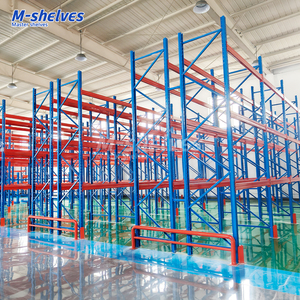
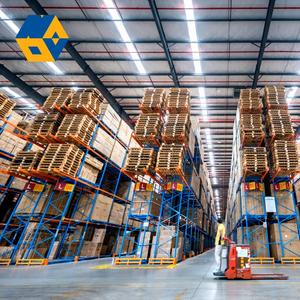
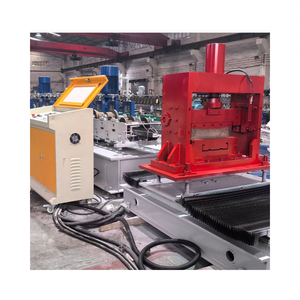
Explore our precision-engineered structural and roll-formed pallet racking solutions manufactured for cold storage, pharmaceutical logistics, and heavy industrial distribution hubs.
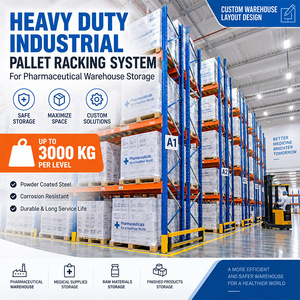
In modern high-throughput fulfillment hubs, cold storage operations, and pharmaceutical distribution networks, square footage is an expensive operational line item. Traditional selective pallet racking, while providing 100% immediate selectivity, sacrifices up to 60% of usable building floor volume to forklift loading aisles. As a premier Pallet Live Storage Racking Manufacturer & Factory, our structural engineering team focuses on solving this space efficiency dilemma through precision dynamic gravity flow systems.
Pallet Live Storage (commonly categorized as Pallet Flow Racking or Dynamic Flow Systems) represents the pinnacle of high-density passive material handling. Operating on a First-In, First-Out (FIFO) inventory control methodology, pallet live storage utilizes inclined steel roller tracks set within structured racking frames. Pallets are loaded from the high-end loading aisle and gracefully travel down a controlled slope via natural gravitational kinetic force toward the picking face.
Information Gain Insight: Unlike standard static racking, dynamic Pallet Live Storage operates as an automated conveyor without motor consumption. The system delivers up to 60% floor space footprint reduction while maintaining absolute batch and date-code traceability for perishable products.
Designing a safe, reliable, and smooth-operating gravity flow live storage system requires precise mechanical engineering. A single pallet carrying 1,500 kg to 3,000 kg accumulating momentum down a 30-meter lane presents significant kinetic force. Our factory engineers integrate critical mechanical safety components into every flow lane:
Positioned along the incline lane at calculated intervals, indirect-drive braking rollers automatically regulate pallet descent speeds to a consistent, safe velocity of 0.25 m/s to 0.3 m/s, regardless of pallet weight variations.
Installed at the picking unloading face, the mechanical separator isolates the front pallet from the hydraulic back-pressure exerted by trailing pallets in the lane. This allows forklift drivers to extract the front pallet cleanly without dangerous friction or binding.
Utilizing our proprietary boltless closed-tubular upright profile (SK2000 series technology), our frames deliver 250% higher torsional resistance against forklift impact than open roll-formed C-channel uprights common in commodity racking.
Selecting the optimal steel profile is crucial when procuring pallet live storage and selective racking systems. Industrial facilities operating under high ambient stress, seismic zones, or extreme sub-zero temperatures require specialized metallurgical and structural configurations:
| Technical Specification | SK2000 Boltless Tubular Rack | SK3000 Structural Steel Rack | Pallet Live Storage Flow Lanes |
|---|---|---|---|
| Steel Fabrication Method | Roll-Formed Closed Structural Tube | Hot-Rolled Structural C-Channel Steel | Heavy-Duty Galvanized Roller Tracks |
| Yield Strength (Steel Grade) | Minimum 50,000 PSI High-Tensile | Hot-Rolled Structural Channel Steel | High-Impact Alloy Steel Axles & Rollers |
| Forklift Impact Resistance | High (Closed Tube Column) | Maximum (Heavy Channel Web) | Integrated Rub-Rails & Guide Channels |
| Load Capacity Per Level | Up to 3,000 KG / Layer | Up to 5,000 KG / Layer | 1,500 KG to 3,000 KG Per Pallet Position |
| Optimal Applications | High-traffic selective distribution, Pharma | Freezers, heavy manufacturing, Pushback | FIFO FMCG, perishables, high-density hubs |
| Global Standard Compliance | ANSI MH16.1, EN 15512, AS 4084 | ANSI MH16.1, RMI, EN 15512 | EN 15512, CE Marking Safety Directives |
As a specialized global manufacturer and OEM factory of dynamic pallet live storage racking systems, we manage the complete lifecycle from mechanical CAD simulation and finite element analysis (FEA) to automated roll-forming and robotic welding.
Every engineering layout is engineered with strict adherence to regional building codes, seismic hazard zones, and international specifications including US ANSI MH16.1 (RMI), European EN 15512, and Australian AS 4084 design standards.
Components undergo an automated multi-stage chemical wash, zinc-phosphate pretreatment, and thermosetting epoxy-polyester powder coating. For cold storage and humid environments, hot-dip galvanizing provides complete lifetime corrosion protection.
Our systems incorporate fully integrated heavy-duty column protectors, structural floor rub rails, pallet backstops, and overhead mesh safety screening to safeguard warehouse personnel and minimize facility downtime.
Racking frames, beams, and dynamic flow tracks are bundled with heavy-duty protective wraps, color-coded by component zone, and optimized for maximum cube utilization inside 40ft High Cube sea shipping containers.
The industrial storage landscape is undergoing a rapid evolution driven by labor shortages, rising land acquisition costs, and the integration of automated guided vehicles (AGVs) and autonomous mobile robots (AMRs). Global procurement managers must anticipate several transformative trends when specifying pallet live storage racking over the next decade:
Modern distribution facilities are rapidly replacing manual counterbalanced forklift operations with Automated Guided Vehicles (AGVs) and high-reach Autonomous Mobile Robots (AMRs). Pallet Live Storage systems are uniquely suited for AGV loading faces. However, automated positioning requires tighter tolerances in rack fabrication—often down to ±1.5 mm across beam spans. Future-proof flow racks feature laser-aligned entry guides, photoelectric sensor reflectors, and specialized load plates that interface seamlessly with AGV fork mechanisms.
Industry 4.0 digitizes the physical warehouse rack. Advanced pallet live storage installations are beginning to incorporate micro-sensor-enabled smart speed controllers. These self-powered rollers monitor pallet travel speeds, lane occupancy, thermal friction variations in cold storage rooms, and mechanical braking wear. Maintenance teams receive real-time predictive notifications before a roller fails, preventing lane blockages in automated logistics lines.
Sustainability mandates are pushing logistics managers to reduce electric power consumption. While automated storage and retrieval systems (AS/RS) require continuous kilowatt-hour power for crane motors, Pallet Live Storage utilizes 100% passive gravitational force to move inventory across multi-deep lanes. Combining gravity live storage with AGVs provides the optimal balance: maximum automated throughput with zero electrical energy expenditure for horizontal pallet transit.
Pallet Live Storage operates on a First-In, First-Out (FIFO) logistics model. Pallets are loaded from the rear loading aisle and flow down inclined roller tracks to the front picking aisle. Pushback racking operates on a Last-In, First-Out (LIFO) model, where pallets are loaded and retrieved from the same front aisle by pushing back nested carts. Live storage requires two dedicated access aisles but ensures complete stock rotation for date-sensitive goods.
To produce an engineered proposal and CAD layout, our engineering team requires: (1) Pallet dimensions (Length x Width x Height including overhang), (2) Minimum and maximum weight per pallet, (3) Pallet bottom runner orientation (2-way or 4-way entry, wood vs. plastic material), (4) Clear ceiling height under building steel, (5) Forklift lift height and aisle turning radius specs, (6) Floor slab concrete thickness/strength, and (7) Operating environment temperature range (ambient vs. sub-zero freezer).
Yes. Pallet live storage is exceptionally valuable in cold storage environments down to -30°C (-22°F) because cold storage volume is extremely expensive to chill. For freezer applications, we specify specialized low-temperature synthetic lubricants inside sealed speed controller bearings, anti-freeze roller materials, and hot-dip galvanized structural steel frames to prevent thermal condensation corrosion.
Lane control is achieved through two engineered devices: First, indirect-drive speed controllers (braking rollers) maintain a constant, controlled descent speed of ~0.25 m/s along the length of the lane. Second, a mechanical safety separator at the discharge end physically holds back trailing pallets, ensuring zero pressure on the front pallet so the forklift operator can remove it safely without binding.
Our engineering department conducts structural finite element analysis (FEA) based on localized seismic coefficient data (acceleration parameters Ss and S1). We utilize enlarged structural baseplates, heavy-duty wedge anchor bolts, braced upright frames, and high-tensile steel grades certified to meet ANSI MH16.1, EN 15512, or AS 4084 requirements based on your facility's exact geographic location.
Submit your CAD floor plan, pallet specs, and storage goals. Our structural engineering team will prepare a full high-density layout proposal with structural load capacity calculations.