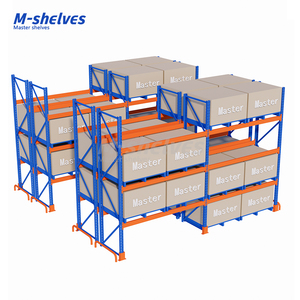


Explore engineered high-density pallet racks, custom shuttle systems, and heavy-duty stacking frames designed for maximum structural stability and space utilization.
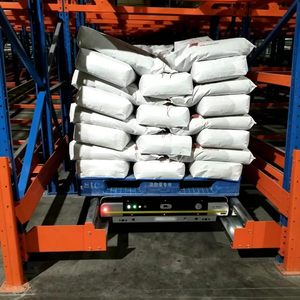
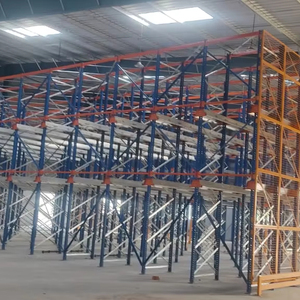
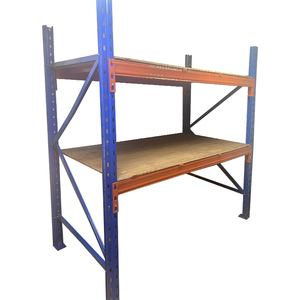
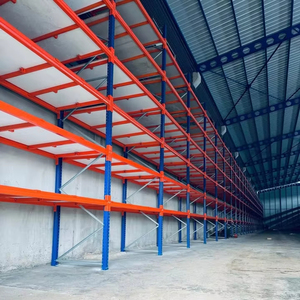
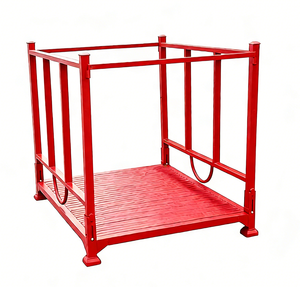
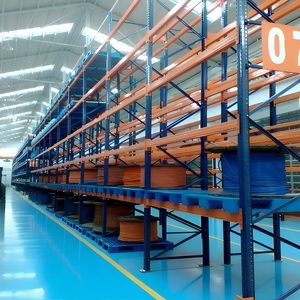
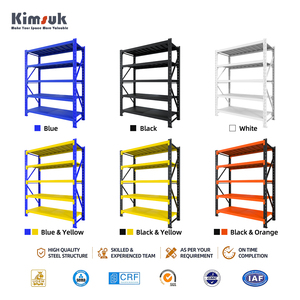
In modern industrial logistics, warehouse floor area represents one of the most significant recurring capital expenditures. Traditional floor-based block stacking—stacking pallets directly on top of one another without intermediate steel framing—presents severe operational challenges: bottom-unit crushing, instability above two tiers, zero selectivity, and strict Last-In, First-Out (LIFO) constraints. As a world-leading Block Stacking Racking System Manufacturer & Exporter, FlexBeam re-engineers this paradigm by combining high-density volumetric stacking mechanics with heavy-duty structural steel frame integrity.
Core Information Gain Concept: Engineered block stacking racks utilize targeted vertical stress transfers via hot-rolled steel channels (Q235B/Q355B) and structural closed-section tubular uprights. This eliminates live-load crushing on lower tier goods while retaining up to 85% of warehouse cube density without structural racking deflection under peak dynamic loads.
Our heavy-duty block stacking frames and drive-in racking channels are fabricated strictly using certified high-yield structural steel. Upright columns undergo precision roll-forming or structural channel welding with yield strength ratings reaching 355 MPa (Q355B grade steel). Under standard ANSI MH16.1 specifications, structural frame deflection under combined live load and seismic acceleration must not exceed maximum design parameters (L/200 deflection ratio).
Choosing the correct high-density storage layout requires balancing throughput speed, pallet selectivity, capital expenditure (CapEx), and cubic utilization rate. Below is an engineering evaluation compiled by our senior structural logistics design team:
| Storage System Type | Cubic Density Rate | Pallet Selectivity | Max Load per Tier | Inventory Flow | Forklift Collision Risk |
|---|---|---|---|---|---|
| FlexBeam Block Stacking Frame | 80% – 90% | Moderate (Lane Level) | 3,000 kg / layer | LIFO / Block FIFO | Very Low (Reinforced Guide Rails) |
| Floor-Based Direct Stacking | 65% – 75% | Extremely Low (Top-Only) | Unstable > 1,000 kg | Strict LIFO | High (Unprotected Pallet Stacking) |
| Standard Selective Pallet Rack | 35% – 50% | 100% Direct Access | 1,500 – 4,000 kg | FIFO / LIFO | Moderate (Exposed Upright Legs) |
| Wireless Automated Shuttle Rack | 85% – 95% | High (Automated Lane) | 1,500 kg / pallet | FIFO or LIFO | Minimal (Shuttle Autonomous Control) |
| Heavy Drive-In LIFO Rack | 75% – 85% | Low (Deep Corridor) | 25,000 kg total lane | LIFO | High (Forklift Drives Inside Frame) |
Global B2B procurement in logistics infrastructure is shifting rapidly toward automated compatibility, environmental sustainability, and modular elasticity.
Procurement officers are increasingly standardizing rack designs to support AGV and Autonomous Mobile Robot alignment. Next-generation block stacking systems incorporate laser-guided entry funnels and sub-millimeter structural tolerance to prevent robotic arm misplacement during high-speed pallet retrieval.
With refrigerated real estate costs escalating by 15-20% annually globally, block stacking shuttle and drive-in racks maximize air circulation pathways while doubling storage density per cubic meter, drastically lowering power consumption per pallet position in deep-freeze facilities.
Modern warehouses demand layout flexibility for seasonal demand spikes. Modular boltless stacking shelf units and portable stackable pin racks enable rapid assembly without floor anchors, allowing quick conversion of open floor space into rigid, multi-layered vertical storage blocks.
As a verified primary manufacturer and exporter with over two decades of metallurgical structural manufacturing experience, FlexBeam provides end-to-end technical oversight—from 3D CAD stress calculations to overseas container shipping optimization.
Engineered strictly in compliance with ANSI MH16.1 (RMI), European standard EN 15512, and Australian AS 4084 regulations, backed by full structural load capacity documentation and PE stamping.
State-of-the-art robotic welding cells guarantee 100% seam penetration across beam connector hooks, upright base plates, and heavy horizontal bracing, eliminating structural micro-fractures under cyclic stress.
Every rack bundle is steel-strapped, protected with heavy plastic wrapping, color-coded by component ID, and loaded using custom forklift ramps to prevent transit abrasion during sea freight.
In-depth answers to critical technical questions asked by warehouse operators, structural engineers, and international procurement managers.
The maximum allowable height of a block stacking rack is determined by four key structural parameters: concrete floor slab thickness and compressive strength (PSI/MPa), the slenderness ratio of the upright steel columns, local seismic acceleration coefficients ($S_{DS}$), and the dynamic lift height cap of your forklift fleet. FlexBeam engineers perform site-specific Finite Element Analysis (FEA) to ensure dynamic structural stability up to 12+ meters under peak load configurations.
Boltless tubular uprights (such as our SK2000 series) feature a closed 360-degree tubular geometry that offers significantly higher torsional rigidity and impact resistance than open roll-formed C-channels. However, for extreme duty environments—such as heavy cold storage, bulk beverage distribution, or drive-in channels carrying 25,000 kg total lane weights—hot-rolled structural steel channels (SK3000 series bolted frames) provide superior structural mass, thicker flange dimensions, and extreme shear strength.
To prepare an accurate engineering drawing and pricing quote, we require: (1) Pallet dimensions (Width x Depth x Height including cargo overhang), (2) Maximum weight per unit pallet, (3) Clear height of the building underneath sprinkler lines and building trusses, (4) Forklift specifications (minimum aisle turning radius and maximum lift height), and (5) Operational flow (FIFO vs. LIFO rotation preferences).
All raw steel batches undergo tensile and yield testing prior to fabrication. Following robotic welding, components pass through a 7-stage automated chemical cleaning and phosphating line prior to electrostatic epoxy powder coating. For ocean freight export, components are bundled with steel strapping, corner protectors, and moisture-barrier shrink films to eliminate rust risk during long-distance maritime shipping.
Yes. We specialize in custom OEM/ODM racking systems tailored for non-standard loads such as heavy steel coils, long lumber/pipe bundles (Cantilever racks), automotive engine containers, and chemical bags. Custom beam spans, drop-in wire decking, heavy-duty coil cradles, and pallet support bars are engineered specifically around your product footprint.
Absolutely. Every international shipment is delivered complete with detailed step-by-step 3D assembly manuals, component identification tags matching shipping packing lists, and ANSI/EN compliant structural load capacity plaques. Load plaques must be installed prominently on the rack structure to ensure operational safety and compliance during local warehouse inspections.
Send us your warehouse CAD drawing or load specifications. Our engineering team will deliver a customized storage layout and price quotation within 24 hours.