


Precision-crafted structural and boltless storage systems certified to international engineering standards.
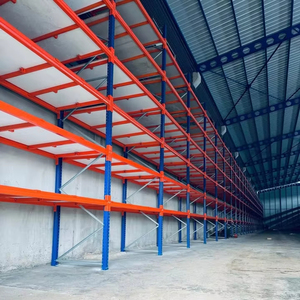
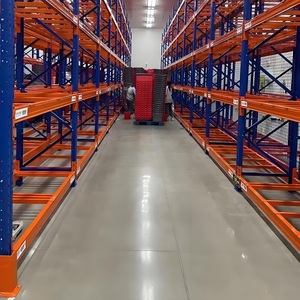
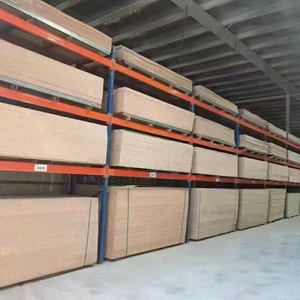

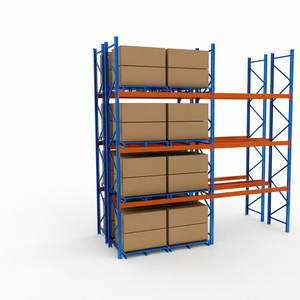
Selecting an automated storage racking manufacturer requires a rigorous evaluation of structural integrity, engineering compliance, and operational lifecycle costs. Modern distribution centers operate under strict throughput timelines and heavy forklift traffic. Substandard storage infrastructure risks catastrophic frame deflection, unscheduled operational downtime, and severe liability.
Every racking layout is custom-engineered and certified in accordance with recognized structural guidelines including ANSI MH16.1 (RMI), European standard EN 15512, and Australian standard AS 4084. Load capacity calculations account for dead load, live payload, seismic spectral acceleration, and rack-structure interaction.
We supply two core structural architectures: SK2000® Boltless Tubular Pallet Rack featuring high-yield closed-box columns for optimal impact resistance, and SK3000® Structural Steel Pallet Rack constructed from hot-rolled structural C-channels, ideal for harsh freeze storage and heavy manufacturing loads.
Export projects are delivered with comprehensive structural calculations, stamped layout drawings, certified assembly sequence guides, and high-visibility load plaques detailing maximum unit load capacities per beam level and bay elevation.
Selecting the optimal warehouse storage architecture based on SKU density, turnover velocity, and automation readiness.
| Racking Architecture | Storage Density | Selectivity | Inventory Rotation | MHE / Automation Synergy | Optimal Industry Application |
|---|---|---|---|---|---|
| Selective Pallet Racking | Standard (1x) | 100% Direct Access | FIFO / LIFO | Standard Counterbalance, Reach Trucks | 3PL Warehousing, E-commerce, Retail DCs |
| AS/RS Pallet Shuttle Racking | Ultra-High (4x) | Programmatic / Batch | FIFO or LIFO | Automated Radio Shuttles, AGVs, Stacker Cranes | Cold Storage, FMCG, High-Bay Logistics Centers |
| Pushback Racking (2-6 Deep) | High (2.5x) | Filtered by Lane | LIFO | Standard Forklifts (Gravity Carts) | Buffer Storage, Manufacturing WIP, Frozen Food |
| Pallet Flow Racking (Gravity Roller) | High (3x) | Filtered by Lane | Strict FIFO | Separate Loading & Retrieval Forklifts | Perishable Goods, Pharmaceuticals, Beverage Plants |
| Structural Drive-In / Drive-Through | Very High (3.5x) | Low (Block Storage) | LIFO (Drive-In) / FIFO | Specialized Narrow-Aisle Forklifts | Seasonal Inventory, Uniform High-Volume SKUs |
Designed for rapid erection and dynamic reconfiguration, the SK2000 system utilizes closed tubular steel frames. The step beam connectors feature multi-tooth hooks that lock securely into teardrop column punches. Because closed tubes have no open structural flanges, they offer 44% more resistance to torsional twisting under severe forklift impact compared to standard open-back roll-formed columns.
Engineered for high-abuse environments, SK3000 utilizes hot-rolled structural steel C-channels for uprights and horizontal beams. Heavy-gauge structural steel provides high structural stiffness and resilience against repetitive forklift impacts in cold-storage freezers (-30°C) and heavy manufacturing facilities handling metal coils, casting dies, and bulk liquids.
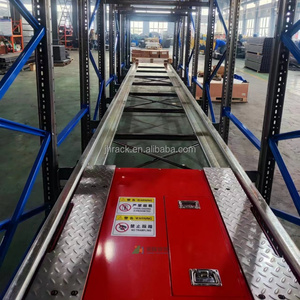
Our automated pallet shuttle racking system serves as the core framework for Industry 4.0 dark warehouses. Deep-lane storage racks are integrated with precision-guided radio shuttles controlled via WMS software. This eliminates forklift entry into storage aisles, maximizes cubic utilization, cuts labor overhead, and enables retrieval speeds of up to 1.2 m/s.
Procurement directors and supply chain executives must look beyond initial capital expenditure (CapEx) when specifying storage hardware. Emerging trends in warehouse automation, facility sustainability, and operational resilience are changing how enterprise racking is evaluated.
Global enterprises are setting ambitious Scope 3 emission targets. Future procurement frameworks prioritize racking manufactured from recycled high-grade steel, utilizing low-VOC powder coating processes, and optimized for minimal shipping carbon footprints through modular flat-pack export bundle engineering.
The boundary between traditional static racking and autonomous robotics is dissolving. Procurement specs increasingly request bottom-level clearance profiles specifically dimensioned for Autonomous Mobile Robots (AMRs), alongside rack-guided AGV channels and sensor-equipped load beam supports.
Forward-thinking supply chain managers reject low-upfront-cost roll-formed racks that fail within 18 months of installation. Evaluating purchase decisions through TCO models highlights the long-term savings of impact-resistant tubular profiles and structural column cores that minimize ongoing rack maintenance expenses.
Automation and material science are driving rapid upgrades in industrial storage engineering. Manufacturing factories are transforming static steel frames into dynamic, smart structural assets.
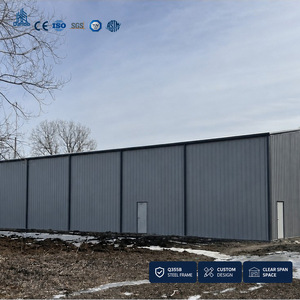
Rather than erecting a standard building shell and installing internal racking, modern logistics developments build Rack-Supported Buildings (Clad Racking). In these systems, the structural steel storage framework supports both the internal pallet loads and the external building roof and wall cladding. This cuts civil construction timelines by up to 30% and permits vertical storage heights exceeding 40 meters.
Standard liquid paint fails in humid, coastal, or chemically aggressive industrial environments. Leading factories employ automated multi-stage pre-treatment wash lines followed by electrostatic thermo-set epoxy powder coating (80–120 microns depth) or continuous hot-dip galvanizing (HDG) per ASTM A123 standards, delivering salt-spray resistance exceeding 500 hours.
In high-seismic zones (such as Pacific Rim regions), static anchor bolting is insufficient. Advanced high-density racking incorporates heavy-duty seismic baseplates, anchor-embedment calculations based on ACI 318 code, and optional friction-pendulum base isolators that absorb horizontal ground acceleration during earthquake events.
Addressing technical specs, structural engineering standards, and international delivery protocols.
To provide a load-certified structural layout and quotation, our engineering team requires: 1) Pallet dimensions (Width x Depth x Height including cargo), 2) Maximum and average gross pallet weight, 3) Desired total pallet storage capacity, 4) Clear building height beneath roof trusses or sprinkler systems, 5) Material Handling Equipment (MHE) specification (forklift type, minimum aisle turning radius, maximum reach height), 6) Concrete floor slab thickness and compressive strength (PSI/MPa), and 7) Facility geographic location for local seismic and wind load compliance.
Open roll-formed uprights (such as standard teardrop channels) possess open back flanges vulnerable to torsional twisting when struck sideways by forklift outriggers. Closed-section tubular uprights (like the SK2000® design) feature fully enclosed structural geometry, providing 44% greater resistance to torsional twisting and over 250% greater frontal impact strength. This significantly reduces column buckling, maintenance frequency, and structural replacement costs over the rack lifecycle.
Our manufacturing processes adhere strictly to recognized global engineering codes. In North America, structural calculations follow the ANSI MH16.1 Specification for the Design, Testing and Utilization of Industrial Steel Storage Racks (RMI). For European projects, engineering complies with EN 15512, EN 15620, and FEM 10.2.02 standards. Australian and Oceanian projects are engineered to AS 4084-2012. Independent finite element analysis (FEA) and physical destructive load testing validate all custom beam-to-column connectors.
Export components undergo strict bundle packing and protection. Uprights and beams are bundled using heavy-duty steel strapping, protective corner edge guards, and heavy-gauge plastic wrapping. Small hardware components, baseplates, beam safety clips, and row spacers are packed in reinforced wooden crates or heavy corrugated cartons strapped to export pallets. Bundles are color-coded and tagged with part numbers matching installation drawings to ensure efficient container unloading and rapid site assembly.
Drive-in racking requires forklift operators to physically drive inside narrow racking lanes, increasing the risk of structural frame damage and slowing down load/retrieval cycles. Automated pallet shuttle racking replaces drive-in lanes with a self-propelled motorized shuttle operating on internal rails. The shuttle carries pallets deep into the racking structure. This setup eliminates rack collision risks, improves pallet retrieval speeds by up to 50%, supports both FIFO and LIFO rotation, and dramatically improves operator safety.