


High-precision manufactured selective, drive-in, pushback, and automated shuttle racking engineered to international RMI (ANSI MH16.1), EN 15512, and AS 4084 structural specifications.
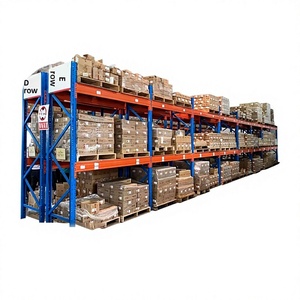
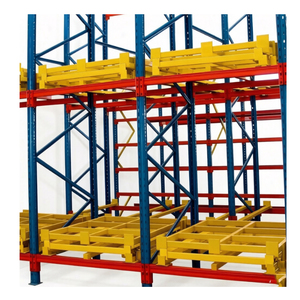
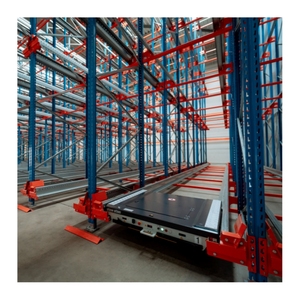
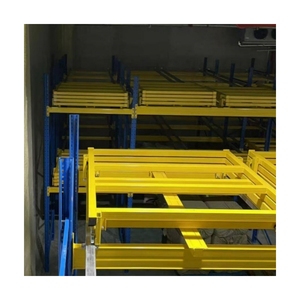
An authoritative technical analysis for procurement directors, logistics engineers, and warehouse operations managers seeking structural integrity, seismic safety, and optimal Total Cost of Ownership (TCO).
Information Gain Insight: Single deep selective pallet racking remains the cornerstone of modern material handling systems, providing 100% immediate pallet access across high-SKU distribution centers. However, over 42% of lifetime rack damage stems from unverified steel yield strength and inadequate column impact design. Selecting a certified manufacturer requires looking beyond basic price-per-kilo quotes.
When specifying heavy-duty single deep pallet rack systems, structural performance begins at the steel mill level. Leading Chinese exporters utilize high-tensile Q355B (equivalent to S355JR / ASTM A572 Grade 50) cold-rolled structural steel or hot-rolled steel channels for demanding high-bay applications. Lower-grade Q235 steel profiles often require thicker walls to achieve equivalent load metrics, increasing dead weight without offering superior torsional strength.
Single deep upright columns are available in two primary engineering geometries:
Cross-beams in single deep racking must be engineered to comply strictly with standard structural deflection limits. Under maximum Uniformly Distributed Load (UDL), the maximum allowable deflection is calculated using the formula $\delta = L / 180$, where $L$ is the clear span length between upright columns. Exceeding this threshold induces plastic deformation and fatigue on end-plate welds.
| Structural Parameter | Cold-Rolled Teardrop / Step Beam | Hot-Rolled Structural Channel Beam | Impact On Warehouse ROI |
|---|---|---|---|
| Steel Grade Standard | Q355B Cold-Formed Steel | ASTM A36 / Structural Steel Channel | Higher yield strength minimizes frame warping. |
| Beam Connection Type | Boltless Multi-Claw Locking Pins | Heavy Hex Bolted Structural End Plates | Boltless speeds up installation; bolted withstands shear force. |
| Column Torsional Resistance | Standard to High (Tubular) | Maximum Heavy Structural Strength | Extends lifetime by preventing fork-truck impact buckling. |
| Optimal Application | General Logistics, E-commerce, FMCG | Cold Storage, Heavy Metal/Stone, Outdoor | Matches rack duty cycle with inventory load profiles. |
Integrity in steel manufacturing. Advanced robotic welding, automated continuous roll-forming lines, and comprehensive export compliance for international projects.
All single deep storage rack projects are engineered with reference to ANSI MH16.1 (RMI), EN 15512, and AS 4084 specifications, providing stamped structural calculations for local planning permits.
Automated Panasonic robotic welding cells ensure 100% weld penetration on beam end-plates and base connectors, eliminating manual welding cold-lap flaws and fatigue points.
Pre-treated with a 9-stage phosphate wash process followed by electrostatic epoxy-polyester powder coating (80-100 μm thickness), delivering over 500 hours of ASTM B117 salt spray protection.
Components are bundled in steel cradles with protective corner guards, moisture-barrier wrapping, and color-coded labels mapped directly to container loading lists for effortless site unloading.
How smart logistics, environmental mandates, and automation are reshaping single deep racking design and B2B sourcing strategies.
The traditional single deep rack profile is evolving from a static structural frame into an integrated component of automated warehousing. Standard narrow-aisle (VNA) reach trucks are rapidly being supplemented or replaced by Autonomous Mobile Robots (AMRs) and automated guided vehicles. This transformation demands tighter fabrication tolerances ($\pm 0.5\text{mm}$) across beam spans and upright plumbness to avoid sensor misalignments during high-speed robot pallet drop-offs.
Leading single deep pallet rack exporters are embedding IoT strain-gauge sensors and RFID tags directly into high-risk column bases. These smart sensors wirelessly broadcast micro-deformation alerts and impact data to facility management dashboards, enabling predictive maintenance before structural failures occur.
Global supply chains now prioritize suppliers that publish verified Environmental Product Declarations (EPDs). Modern racking factories are adopting green steel production methods, closed-loop water treatment in pretreatment lines, and solar-powered powder coating ovens to assist multinational clients in achieving Scope 3 carbon reduction targets.
As industrial land costs near metropolitan ports climb, warehouse planners are shifting from horizontal footprint expansion to vertical density. Single deep racking systems are increasingly configured up to 18 meters in height, supported by specialized seismic base plates, heavy-duty floor anchoring anchor bolts, and top-tie roof support trusses.
Technical clarification on safety ratings, layout engineering, lead times, and global shipping.
Single deep selective racking features one-pallet-deep access from an aisle, offering 100% immediate selectivity for all stored SKUs. Double deep racking places two pallets back-to-back, increasing storage density by roughly 26% while requiring specialized deep-reach forklifts and adopting a Last-In, First-Out (LIFO) inventory model.
To engineer an optimized, compliant racking system, our design team requires: (1) Pallet dimensions (W x D x H) including load overhang, (2) Maximum and average weight per pallet, (3) Clear building height beneath roof joists or sprinklers, (4) Forklift model, turning radius, and max lift height, (5) Warehouse slab thickness and concrete psi rating, and (6) Local seismic zone data.
Base plate sizing depends on the combined dead and live frame loads, floor slab compressive strength, and seismic uplift forces calculated according to RMI / ASCE 7 specifications. High-seismic zones demand enlarged, heavy-gauge steel base plates with multiple wedge anchor points to distribute shear forces evenly across the concrete slab.
While electrostatic epoxy powder coating is standard for indoor dry ambient facilities, we offer Hot-Dip Galvanizing (HDG) per ASTM A123 for outdoor yards, high-humidity processing plants, and cold-storage freezers. HDG provides a thick zinc-iron alloy barrier that self-heals against scratches and prevents rust formation for over 25 years.
Standard production lead time is 20 to 30 days for 2-5 Forty-Foot High-Cube (40HQ) containers. Components are tightly nested, strapped onto custom steel pallets, and wrapped with protective film, maximizing container weight capacity (up to 26 metric tons per 40HQ) while safeguarding painted surfaces during ocean transit.
Contact our engineering team today for a free CAD layout design, structural load calculation report, and direct factory-direct project quotation.