Engineered to support automated satellite radio shuttles, selective warehousing, and high-load distribution environments across global supply chains.
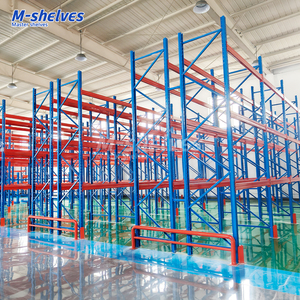
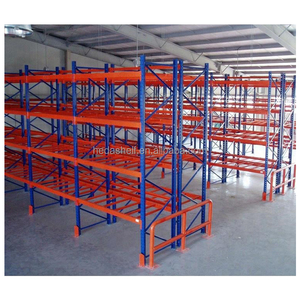
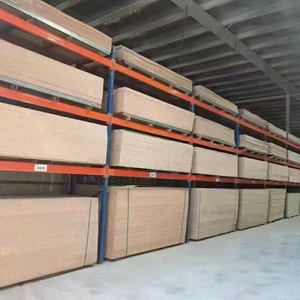
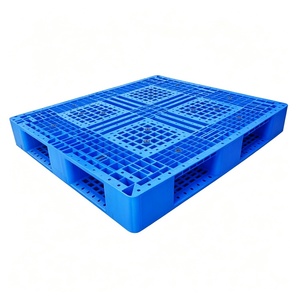
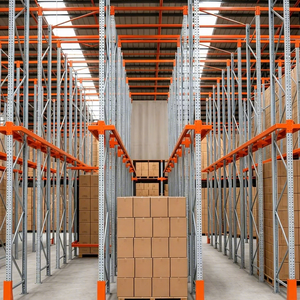
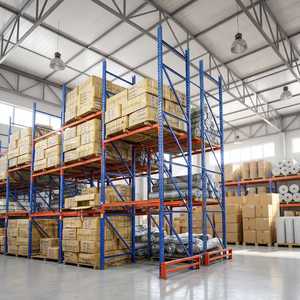
In modern industrial logistics, warehouse managers face an ongoing challenge: maximizing storage density without sacrificing operational throughput or structural safety. Satellite Pallet Racking, commonly referred to as Radio Shuttle Racking System, represents the pinnacle of semi-automated semi-selective high-density storage technology. By combining precision-engineered cold-formed steel racking channels with self-powered radio-controlled shuttle carts (satellites), this architecture achieves up to 85% cubic space utilization while reducing forklift travel distance by up to 50%.
Unlike traditional Drive-In racking systems—which require forklifts to enter structural storage channels and risk collision with upright columns—Satellite Pallet Racking relies on autonomous shuttle vehicles operating along dedicated precision guide rails integrated into the rack depth. The shuttle retrieves or deposits unit loads (pallets weighing up to 1,500 kg per position) under the direction of RF remotes, tablet interfaces, or automated Warehouse Management Systems (WMS).
Technical Insight (Information Gain): Modern 4-Way Satellite Shuttle systems utilize Lithium Iron Phosphate (LiFePO4) power modules capable of continuous 10-hour operation in sub-zero cold storage environments down to -30°C. Structural rail deflections must strictly abide by FEM 10.2.02 and ANSI MH16.1 standards, maintaining maximum longitudinal deflection ratios under L/200 to prevent shuttle tracking misalignment.
Engineering considerations for global export projects require rigid compliance with international structural standards including ANSI MH16.1 (RMI) in North America, EN 15512 across Europe, and AS 4084 in Australasia. Steel grade selection (typically Q355B or high-yield structural channel steel), zinc-plating thickness for cold-chain resistance, seismic zone bracing design, and floor slab point-load calculations form the engineering foundation of every satellite system project.
An authoritative industry evaluation based on structural engineering specs, export capabilities, manufacturing capacity, dynamic shuttle technology, and global compliance standards.
FlexBeam stands out as an engineering-driven manufacturer specializing in heavy-duty structural steel (SK3000 series) and closed tubular uprights (SK2000 series) designed to absorb forklift impacts in high-traffic satellite shuttle environments.
Headquartered in Germany, SSI Schaefer is a global logistics systems provider known for high-end automated warehouse solutions and integrated Schaefer Orbiter satellite shuttle systems suited for large-scale distribution centers.
Jungheinrich offers integrated intralogistics solutions featuring Under Pallet Carrier (UPC) shuttle technology coupled with precision-manufactured cold-rolled steel racking engineered for FIFO and LIFO operations.
Mecalux is one of the world's largest storage solution companies, producing high-density Pallet Shuttle systems backed by extensive software suites (Easy WMS) for international warehouse operations.
Stow Group combines traditional rack engineering with Movu Robotics shuttle technology (Movu atlas 2D/4D satellites), catering to high-density distribution hubs across retail, food, and 3PL sectors.
Interroll specializes in dynamic material handling components, providing heavy-duty shuttle channels, speed controllers, and dynamic flow modules used by major rack integrators globally.
As a powerhouse in global logistics automation, Daifuku manufactures ultra-high reliability AS/RS systems and shuttle-rack combinations designed for fully automated high-bay warehouses.
BITO delivers modular racking structures and compact pallet shuttle systems engineered for high-density storage in pharmaceutical, food distribution, and cold storage facilities.
Dambach manufactures multi-level shuttle systems and heavy-duty rack structures engineered for demanding payload capacities and complex cold-chain automated warehouses.
Dematic supplies enterprise-grade automated shuttle racking solutions integrated with software suites, optimized for omnichannel retail and high-volume grocery fulfillment centers.
Compare operational characteristics across major high-density storage configurations to determine optimal ROI for your facility layout.
| Racking Architecture | Storage Density | Selectivity | Rotation Method | Forklift Impact Risk | Primary Application |
|---|---|---|---|---|---|
| Satellite Radio Shuttle | Very High (85%) | Medium-High (By Lane) | FIFO or LIFO | Very Low (Shuttle Operates Inside) | Cold Storage, Food & Beverage, FMCG Bulk |
| SK2000 Boltless Selective | Moderate (40-50%) | 100% Direct Access | Any (Direct Access) | Low (Tubular Profile Resists Collisions) | High SKU Count, General Distribution, E-Commerce |
| SK3000 Structural Rack | High (65-75%) | System Dependent | FIFO / LIFO | Minimal Impact Structural Channel | Heavy Loads, Industrial Manufacturing, Freezers |
| Pushback Rack (2-6 Deep) | High (70-75%) | Medium (By Lane) | LIFO | Low (Gravity Cart System) | Medium Velocity SKUs, 2-6 Pallets per SKU |
| Pallet Flow Rack | High (75-80%) | Medium (By Lane) | Strict FIFO | Low (Separate Load/Unload Aisles) | Perishable Goods, Expiration-Sensitive Goods |
| Traditional Drive-In Rack | High (75-80%) | Low (By Tunnel) | LIFO | High (Forklift Enters Storage Structure) | Homogeneous SKUs, Seasonal Bulk Storage |
Selecting a satellite racking exporter requires evaluating more than just raw steel tonnage. Importers, general contractors, and logistics directors demand predictable installation, precise dimensional tolerances, and verified load ratings. FlexBeam Warehouse Equipment Co., Ltd. addresses these global export criteria through strict engineering methodologies:
1. Dual Engineering Profiles (SK2000 vs. SK3000): FlexBeam manufactures both closed-section tubular uprights (SK2000) and hot-rolled structural steel channels (SK3000). Closed tubular uprights offer up to 44% greater torsional strength than open roll-formed columns, drastically reducing rack damage downtime in busy satellite loading bays.
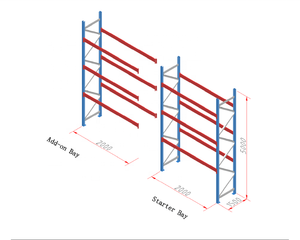
2. Structural Integrity for Satellite Rails: Satellite shuttle performance depends on millimeter-accurate rail alignment. FlexBeam engineered rail beams feature customized heavy-gauge steel section profiles that minimize lateral sway and beam deflection, ensuring continuous shuttle battery contact and optical sensor alignment.
3. Export Logistics & Installation Security: Export shipments are bundled with color-coded component tagging, precise bundle weight labeling, and container loading diagrams. Every project is accompanied by structural assembly drawings, maintenance procedures, and load capacity plaques referencing ANSI MH16.1, EN 15512, or AS 4084 based on the destination market.
Key technological shifts reshaping automated high-density warehouse storage strategies over the coming decade.
1. Shift from 2-Way to 4-Way Autonomous Satellites: Modern logistics hubs are migrating from traditional 2-way longitudinal shuttle carts to fully autonomous 4-way satellite fleets. 4-way shuttles can change channels independently using integrated vertical lifts, allowing dynamic fleet scaling without adding dedicated cranes to every aisle.
2. Microservice WCS Integration & Real-Time Telemetry: Satellite shuttle systems are no longer isolated hardware islands. Modern shuttle controllers transmit battery status, motor temperature, load center positioning, and rail vibration diagnostics directly to cloud-based WCS microservices via 5G or industrial Wi-Fi 6 networks.
3. Cold-Chain Sustainability & Energy Recovery: With rising energy costs, cold storage operators rely on dynamic satellite racking to shrink overall refrigerated building footprint by up to 40%. Next-generation shuttle carts utilize regenerative braking energy recovery systems, expanding operation cycles while reducing peak electrical loads.
Essential technical and logistical insights for procurement teams evaluating satellite pallet racking systems.
Satellite racking systems concentrate heavy point loads on narrow anchor footings due to multi-deep pallet stacking (often 10 to 25 pallets deep). Floor slabs generally require reinforced concrete with a minimum compressive strength of 30–35 MPa (C30/C35 grade) and a minimum slab thickness of 200 mm to 250 mm. Floor flatness must conform to FM2 or VNA tolerances (DIN 15185 / TR34) to prevent shuttle tilting and rail misalignment.
While satellite racking has a higher initial capital expenditure due to shuttle cart mechanics, it yields a significantly higher ROI over 3 to 5 years. Drive-In racking suffers high ongoing upright damage costs due to forklifts driving inside narrow tunnels. Satellite racking eliminates forklift entry entirely, cutting structural repair downtime by over 80% while increasing pallet loading speed by 35-50%.
Yes. Custom satellite shuttles are equipped with cold-room packages including internal thermal heaters for control electronics, specialized low-temperature lubricants, IP65 sealed enclosures, and high-capacity Lithium Iron Phosphate (LiFePO4) batteries engineered to perform efficiently in temperatures down to -30°C (-22°F).
Export projects are engineered specifically for destination country building codes. In the United States and North America, systems conform to ANSI MH16.1 (RMI). In Europe and international markets following ISO, design specs align with EN 15512 / FEM 10.2.02. In Australia and New Zealand, systems adhere to AS 4084 steel storage racking standards.
The number of shuttle carts depends on hourly pallet throughput requirements rather than total pallet positions. Typically, one radio shuttle cart can comfortably serve between 500 to 1,500 pallet positions in a standard warehouse operating environment. High-velocity operations may add extra shuttles or utilize automatic 4-way systems.
Send us your building CAD floor plan and load specifications. Our structural engineers will prepare a custom satellite pallet racking layout, pallet count analysis, and quotation within 24 hours.