


Explore heavy-duty, certified pallet racking solutions designed for high-density logistics, forklift access, and structural safety.
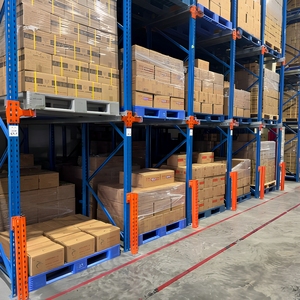
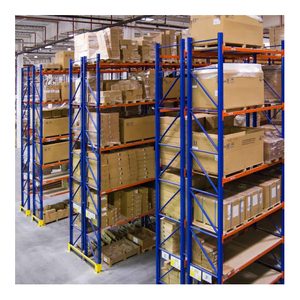
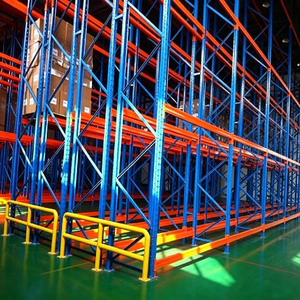
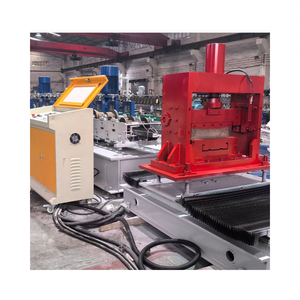
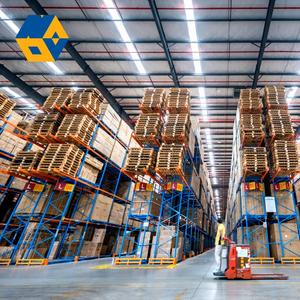
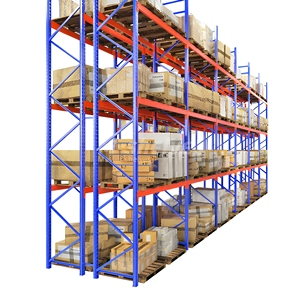
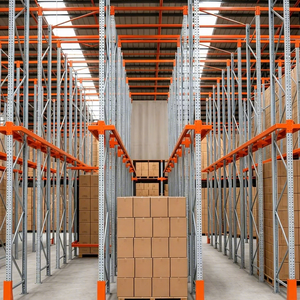
Modern supply chain logistics demand maximum volumetric efficiency, structural safety, and operational longevity. While high-bay automated storage and retrieval systems (AS/RS) dominate news headlines, low-level pallet racking systems—typically defined as structural or roll-formed systems operating under 8 meters (approx. 26 feet) in clear height—remain the foundational workhorse for over 75% of global manufacturing, cold storage, e-commerce fulfillment, and 3PL warehousing operations.
Low-level pallet racking offers unique operational advantages: lower initial capital expenditure, compatibility with standard counterbalance and reach forklifts, rapid modular assembly, and zero dependency on complex robotics or high-elevation automated stacker cranes. However, selecting the right manufacturer requires rigorous evaluation of yield strengths, structural profile engineering (e.g., closed tubular vs. open-back C-channel), connection safety locks, and compliance with international standards such as ANSI MH16.1 (RMI), EN 15512, and AS 4084.
This industry whitepaper provides an authoritative benchmarking framework for enterprise procurement directors, project engineers, and warehouse managers evaluating top-tier industrial pallet racking manufacturers globally.
The safety and durability of any selective, drive-in, or pushback low-level rack rely heavily on raw material grade and section geometry. Enterprise buyers must differentiate between cold-rolled light gauge steel and hot-rolled structural steel channels when planning facility investments.
In accordance with industrial racking engineering specifications, maximum allowable horizontal beam deflection under full static load must not exceed length (L) divided by 180 (L/180). For a standard 2700mm clear-span beam, maximum deflection under peak capacity (e.g., 2,000 kg load across two standard 1000x1200mm pallets) must remain under 15mm to guarantee structural elasticity and operator safety.
The following comparative evaluation highlights key technical characteristics, structural engineering specialties, and strategic advantages across the industry’s leading global rack manufacturers.
| Manufacturer | Primary Racking Focus | Structural Steel Type | Key Engineering Advantage | Global Compliance |
|---|---|---|---|---|
| FlexBeam Warehouse Equipment | Selective, Tubular, Structural & Drive-In Systems | Closed Tubular & Hot-Rolled Channel | High-impact boltless closed-tubular design (SK2000 / SK3000) | RMI (ANSI MH16.1), EN 15512, AS 4084 |
| SSI Schaefer | Automated & Modular Pallet Shelving | Cold-Rolled High-Tensile Steel | Seamless integration with warehouse management software & AGVs | DIN EN ISO 9001, FEM standards |
| Jungheinrich AG | Drive-Through & Shuttle Storage Racks | Roll-Formed Heavy Duty Profiles | Optimized for narrow-aisle forklift and shuttle integration | FEM 10.2.02, ISO 14001 |
| Mecalux, S.A. | Selective & Moving Rack Systems | High-Grade Cold-Formed Steel | Extensive software ecosystem & heavy load pick modules | RMI, EN 15512, CE Marking |
| Steel King Industries | Structural Channel & Tubular Selective Racks | Hot-Rolled Structural Channel | Extreme durability for high-impact industrial operations | RMI Certified, OSHA compliant |
| Stow Group | Pallet Flow, Pushback & Rack Silos | High-Yield Cold-Rolled Steel | Ultra-dense Pallet Shuttle & FIFO flow systems | FEM 10.2.08, EN 15512 |
| Daifuku Co., Ltd. | Industrial Stacking & Material Handling | Structural Steel Formed Sections | High reliability in seismic zones & heavy-duty manufacturing | JIS standards, ISO 9001 |
| Constructor Group (Dexion) | Low to Mid-Level Pallet Storage | Modular Cold-Rolled Galvanized | Customizable color coatings & high anti-rust performance | FEM, EN ISO 9001 |
| Kardex Systems | Dynamic Storage & Compact Pallet Modules | Precision Steel Components | Vertical footprint reduction for small-to-medium parts | CE, UL Listed, ISO 9001 |
| Peterack Storage Solutions | CE Certified Stacking & Heavy Duty Racks | Adjustable Steel Beam Sections | Cost-effective modular heavy-duty layer configurations | CE Certified, ISO 9001 |
As global supply chains navigate labor shortages, rising land costs, and ESG (Environmental, Social, and Governance) mandates, procurement strategies for low-level industrial pallet racking are undergoing key structural shifts:
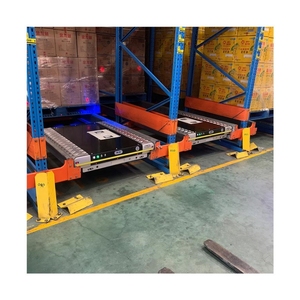
Traditional low-level drive-in racking is increasingly being upgraded to Radio Shuttle Systems. Shuttle racking replaces the need for forklifts to enter dense storage lanes, preventing upright damage, speeding up pallet retrieval times by up to 50%, and enabling seamless switching between First-In, First-Out (FIFO) and Last-In, First-Out (LIFO) inventory management.
Forklift collisions account for over 80% of structural pallet rack failure incidents. Modern facility planners are phasing out fragile, open-backed tear-drop posts in favor of closed tubular steel uprights. Tubular designs resist impact forces from multiple angles, reducing maintenance budgets and decreasing costly operational downtime.
Leading rack fabricators are adopting zero-VOC (Volatile Organic Compound) electrostatic powder coating lines and sourcing steel produced via Electric Arc Furnaces (EAF) utilizing recycled scrap metal. This aligns with corporate scope 3 emission reduction goals without sacrificing structural yield strength.
With warehouse development expanding in seismically active regions globally, structural engineers now mandate finite element analysis (FEA) modeling for all rack designs. Baseplate anchorage, frame bracing ratios, and top-tier beam-to-column locking mechanisms must withstand horizontal seismic acceleration coefficients without catastrophic structural unlatching.
FlexBeam Warehouse Equipment Co., Ltd. stands at the forefront of structural rack engineering, specializing in heavy-duty boltless tubular systems, structural channel drive-in racking, mezzanine platforms, and integrated rack safety guarding.
Features completely closed tubular steel uprights. Delivers superior torsional rigidity compared to standard open-back roll-formed columns, making it ideal for high-traffic distribution centers using forklift fleets.
Manufactured using heavy-grade hot-rolled structural steel channels. Designed specifically for extreme industrial environments, cold-storage freezers, drive-in systems, and heavy-duty pushback operations.
Below are critical technical questions asked by procurement teams and project managers before finalizing racking orders:
Boltless tubular racking (e.g., SK2000 design) utilizes closed tubular upright profiles that offer high resistance to forklift side-impacts while allowing fast, tool-free beam height adjustment via teardrop or stud connectors. Structural steel pallet racking (e.g., SK3000) is built from hot-rolled steel channels bolted together at structural joints, delivering maximum resistance to severe abuse, ultra-heavy loads, freezer environment brittleness, and deep drive-in configurations.
To provide an engineered CAD layout and precise quotation, our technical team requires: (1) Pallet dimensions (Width x Depth x Height including cargo), (2) Maximum and average weight per pallet, (3) Total pallet position target, (4) Facility clear building height and floor slab thickness, (5) Forklift specifications (minimum aisle turning radius and maximum lift height), (6) Inventory rotation strategy (FIFO vs. LIFO), and (7) Regional seismic loading requirements.
Standard selective racking provides 100% immediate pallet access (selectivity) but lower floor area utilization (approx. 40%). Pushback racking increases floor density up to 65% by storing pallets 2 to 6 deep on nested wheeled carts under LIFO rotation. Pallet flow racking utilizes inclined roller beds to achieve up to 75-80% spatial density under strict FIFO rotation, making it the preferred choice for high-throughput food, beverage, and perishable goods logistics.
Enterprise procurement teams should verify that rack designs comply with ANSI MH16.1 (published by the Rack Manufacturers Institute - RMI) in North America, EN 15512 / FEM 10.2.02 in Europe, or AS 4084 in Australia. Additionally, manufacturing facilities should hold ISO 9001 quality management certification and provide steel mill test certificates verifying yield strength (e.g., Q235B, Q355B, or ASTM A1011 equivalent).
All frames, beams, and accessories are organized into rigid structural bundles using steel strapping and heavy protective wrap. Critical connection end-plates are fitted with protective caps to prevent thread damage. Each bundle is tagged with component identification labels matching the supplied packing list and assembly drawings, ensuring streamlined customs clearance and efficient on-site installation.
Connect with our structural engineering team today to receive CAD layouts, structural capacity calculations, and factory-direct pricing for your low-level or high-density pallet racking project.