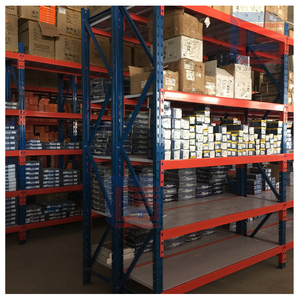
Engineered to maximize vertical cubic footprint, optimize throughput, and reduce structural damage in global distribution networks.
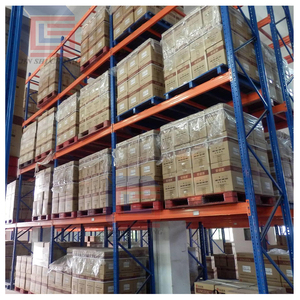
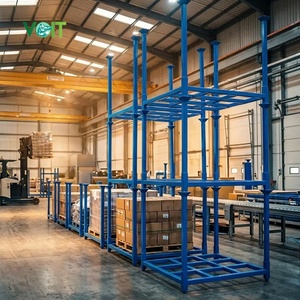
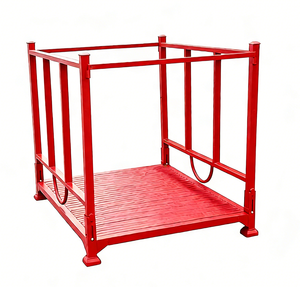
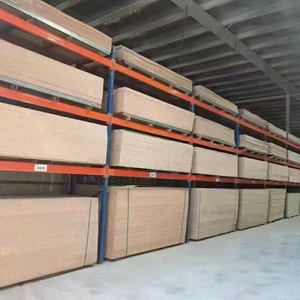
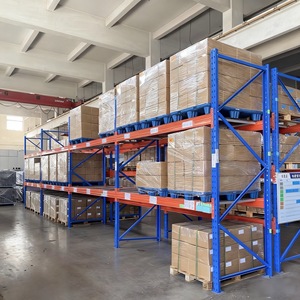
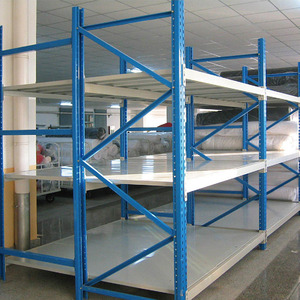
Direct OEM/ODM manufacturing capabilities backed by rigorous structural testing, high-yield steel sourcing, and custom engineering support.
We source premium Q235B and Q355 structural steel grades to manufacture closed tubular and hot-rolled channel frames capable of handling ultimate load dynamics without structural deflection.
From aisle width optimization and seismic zone baseplate designs to custom powder-coat RAL matching, our engineering team translates your CAD floor plans into turnkey physical infrastructure.
Our proprietary closed-section upright designs resist forklift strikes far effectively than standard open-c roll-formed columns, lowering operational downtime and lifecycle maintenance costs.
Fully automated robotic welding cells, continuous roll-forming lines, and eco-friendly electrostatic powder coating plants ensure uniform tolerances within +/- 0.5mm across all structural beams.
Engineered bundle bundling, protective corner guards, steel-strapped crating, and precise container space loading algorithms guarantee damage-free international transit and zero import delays.
Modern enterprise logistics demands a drastic reduction in cost per pallet position while accelerating throughput speeds. As industrial land prices escalate globally, warehouse operational leaders can no longer rely on horizontal expansion. The critical path to profitability lies in maximizing the vertical clear height of existing real estate using custom-engineered space-efficient pallet racking systems.
Core Logistics Principle: Achieving optimal volumetric storage efficiency requires balancing cubic space utilization against absolute pallet accessibility (selectivity). A tailored OEM/ODM engineering approach ensures system geometry matches exact forklift turning radii, floor slab load thresholds, and stock rotation methodologies (FIFO vs. LIFO).
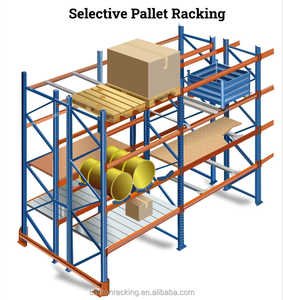
Selecting the optimal pallet racking configuration requires a detailed analysis of SKU velocity, total inventory volume, and handling equipment capabilities. Below is an engineering evaluation of the primary storage topologies manufactured within our direct OEM/ODM factories:
| Racking Architecture | Storage Density (%) | SKU Selectivity | Rotation Method | Forklift Aisle Requirement | Recommended Application |
|---|---|---|---|---|---|
| Standard Selective | 40% - 50% | 100% Direct | FIFO / LIFO | 3.0m - 3.5m (Standard) | High SKU variety, fast-moving retail DCs |
| Double-Deep | 60% - 65% | 50% Direct | LIFO Preferred | 3.3m - 3.8m (Deep Reach) | Bulk manufacturing, secondary storage |
| Drive-In Racking | 75% - 85% | Low (Per Lane) | Strict LIFO | Eliminated inner aisles | Cold storage, seasonal low-SKU goods |
| Pushback Racking | 70% - 75% | Moderate | LIFO | 3.0m - 3.2m Front Aisle | Medium-velocity multi-lane distribution |
| Pallet Flow Racking | 80% - 85% | Moderate | Strict FIFO | Separate Load/Unload Aisles | Perishables, FMCG, date-sensitive stock |
| Automated Radio Shuttle | 85% - 92% | High System-Driven | FIFO or LIFO | Single Perimeter Aisle | Freezer rooms, high-capacity automated hubs |
Procurement directors and intralogistics planners face evolving macro-economic challenges. Sourcing industrial pallet racking systems requires long-term planning aligned with upcoming supply chain shifts:
Middleman distribution channels are rapidly shrinking. Procurement leaders now demand direct contract manufacturing with factories capable of full-suite OEM/ODM customization. Factory-direct sourcing enables rapid engineering modifications, custom structural beam profiling, dynamic static load calculations, and substantial cost savings on large capital expenditure projects.
Future-proof racking designs must accommodate automated systems. Even standard selective systems are now manufactured with tightened beam deflection tolerances ($L/200$ to $L/300$), floor anchor positioning for robotic AGV guidance, and specialized structural upright bracing to withstand continuous automated crane cycling in high-bay AS/RS installations.
ESG compliance has entered industrial steel procurement. Global buyers now favor manufacturers utilizing recycled green steel billets, energy-efficient roll-forming machinery, and zero-VOC heavy-metal-free electrostatic powder coating finishes that resist corrosion while upholding strict international environmental regulations.
Structural integrity defines warehouse safety. As an established OEM/ODM manufacturer, our R&D focus centers on continuous metallurgical and structural enhancements:
Technical guidance for warehouse managers, structural engineers, and international procurement specialists.
To engineer an accurate layout, our structural design team requires: (1) Pallet footprint dimensions including overhang (L x W x H), (2) Maximum and average weight per pallet, (3) Clear height of the warehouse building and sprinkler obstruction clearances, (4) Forklift model, maximum lift height, and minimum turning aisle width, (5) Warehouse floor slab thickness and concrete compressive strength, and (6) Local seismic requirements.
Cold-rolled steel allows for precise, light-weight, high-yield beam profiles ideal for standard selective and dynamic storage up to moderate heights. Hot-rolled structural steel (C-channel frames) offers extreme durability against severe forklift impact and handles ultra-heavy loads, making it preferred for harsh industrial environments, outdoor staging, and heavy-duty drive-in racking.
Our OEM/ODM manufacturing processes adhere strictly to global engineering standards, including ANSI MH16.1 (Rack Manufacturers Institute - RMI), FEM 10.2.02 (European Design Code), EN 15512 (Steel Static Storage Systems), and AS 4084-2012 (Australian Standard for Steel Storage Racking).
All racking components undergo a multi-stage pre-treatment wash followed by thermosetting epoxy-polyester powder coating (60–80 microns thick). For sea transport, components are tightly strapped into wooden/steel bundled skids, wrapped in heavy-duty moisture-barrier plastic wrap, fitted with corner edge protectors, and loaded onto containers using custom wooden ramps to eliminate transport scuffs.
Yes. Our beam-to-upright connections utilize teardrop or slotted lock pins that permit toolless vertical beam adjustability (typically in 50mm or 75mm pitch increments). Uprights and frame bracing can be extended or reinforced to convert standard selective racking into double-deep or pick-module multi-tier structures as inventory expands.