


Explore our heavy-duty, impact-resistant industrial racking systems engineered for maximum space utilization and seamless logistics flow.
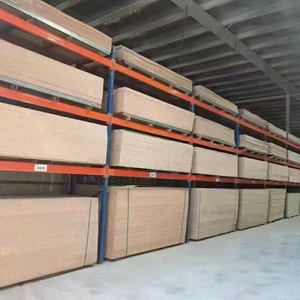
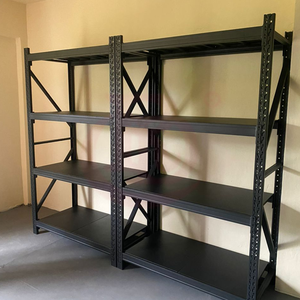
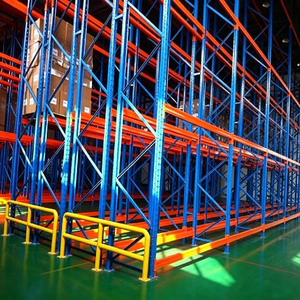
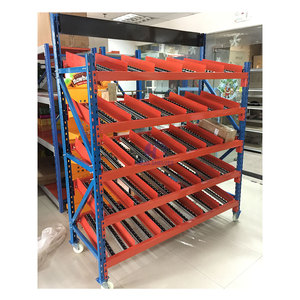
Why Tier-1 logistics providers, cold-chain operators, and industrial distributors source custom structural storage solutions directly from our manufacturing facilities.
Our flagship SK2000 boltless tubular pallet rack utilizes continuously welded closed-section tubular steel columns. Independent torsional testing proves closed tubular uprights deliver 44% greater torsional strength and 250% higher resistance to forklift fork impacts compared to open roll-formed C-channel uprights, dramatically cutting operational repairs and downtime.
Engineered for high-volume distribution centers, cold storage, and heavy industrial loads, SK3000 racking is constructed from hot-rolled structural steel channels. Featuring heavy-gauge bolted structural frames and high-yield beam-to-column connectors, this platform thrives in brutal industrial environments and intense forklift traffic corridors.
Every racking configuration is engineered with direct reference to global structural standards including ANSI MH16.1 (RMI), European EN 15512, and Australian AS 4084. We perform finite element analysis (FEA) to ensure structural integrity across custom seismic zones, dynamic loading, and specialized rack-supported building applications.
As a specialized B2B OEM/ODM manufacturer, our engineering capabilities bridge the gap between high-capacity structural fabrication and bespoke logistics automation requirements. Global supply chain procurement managers face unique operational constraints: high slab load limitations, extreme temperature fluctuations in freezer storage, high-density SKU layout mandates, and stringent rack safety compliance enforced by local authorities. We solve these challenges through precision structural steel engineering, automated robotic welding lines, and rigorous finite element analysis (FEA) stress modeling.
Our OEM/ODM services empower global brand owners and integration partners to supply fully customized rack profiles, custom-matched powder-coated colors, custom connector punch patterns, and heavy-gauge column baseplates tailored to specialized floor anchor requirements. Every system leaves our production line complete with engineering calculation packages, stamped load capacity documentation, and step-by-step installation manuals for rapid field execution.
Technical evaluation of industrial pallet storage architectures for procurement decision-makers.
| Racking Architecture | Storage Density | SKU Selectivity | Stock Rotation | Structural Profile Type | Ideal Application |
|---|---|---|---|---|---|
| SK2000 Boltless Selective | Standard (1x) | 100% Direct Access | FIFO / LIFO | Closed Tubular Steel | High-velocity distribution & general warehousing |
| SK3000 Structural Drive-In | Maximum (3.5x) | Low (Bulk SKUs) | LIFO / FIFO | Hot-Rolled Structural Channel | Cold storage, beverage bulk, uniform pallet goods |
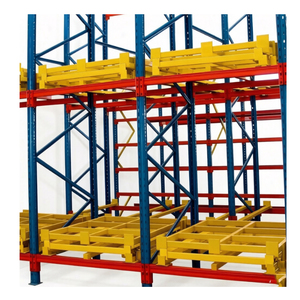
| Push-Back Racking Systems | High (2.5x) | Medium (2-6 deep) | LIFO | Nested Wheel Carts / Structural Frame | Medium-velocity multi-pallet SKU storage |
| Pallet Flow Gravity Systems | High (3.0x) | Medium (Lane based) | Strict FIFO | Full-width Steel Rollers & Speed Controllers | Perishable food, pharmaceuticals, expiration-tracked goods |
| Double-Deep Heavy Duty | Moderate (1.8x) | 50% Immediate | LIFO | Tubular or Structural Steel | Reach-truck operations & standardized dual-pallet lots |
| I-Beam Cantilever Racking | Specialized | 100% Linear Access | Any Rotation | Heavy Duty I-Beam Structural Steel | Lumber, steel pipe, bar stock & continuous raw materials |
The global industrial warehouse landscape is experiencing a structural paradigm shift. High real estate acquisition costs, climbing construction overheads, and the rapid expansion of automated logistics hubs have transformed how multinational procurement directors approach bulk material racking purchases. Sourcing decisions are no longer guided solely by initial steel price per kilogram; instead, total cost of ownership (TCO), life-cycle impact resilience, structural modularity, and automation readiness govern top-tier supply contracts.
Warehouse operators are increasingly requesting rack structures engineered for seamless integration with Automated Storage and Retrieval Systems (AS/RS), Autonomous Mobile Robots (AMRs), and crane-guided pallet shuttles. OEM structural designs now demand ultra-tight manufacturing tolerances (+/- 0.5mm), rigid rack beam deflection criteria (L/300 to L/400), and integrated guide rail channels.
Forklift damage represents the single largest unbudgeted operational expenditure in busy logistics facilities. Procurement trends show a decisive shift toward closed-section tubular columns and heavy-duty structural steel base guards. Investing in impact-resistant profiles reduces annual rack repair budgets by up to 70% while satisfying stringent workplace safety compliance audits.
With global cold-chain logistics expanding rapidly to support frozen foods and bio-pharmaceuticals, storage density per cubic meter of refrigerated space is critical. High-density push-back, pallet flow, and drive-through structural systems finished with specialized low-temperature powder coatings or hot-dip galvanizing have become standard specification requirements.
Looking ahead into the next decade of industrial material handling, racking systems are evolving from static structural frames into dynamic, sensor-enabled warehouse backbones. As an OEM/ODM innovator, our engineering team is actively advancing manufacturing capabilities to align with these emerging technological paradigms:
Green Steel & Decarbonized Production: Environmental, Social, and Governance (ESG) mandates are transforming global industrial sourcing. Future industrial racking manufacturing prioritizes recycled structural steel inputs, high-efficiency cold-roll forming lines, zero-VOC electrostatic powder coat chemistry, and solar-powered manufacturing facilities to reduce Scope 3 embodied carbon emissions across customer supply chains.
Smart Racking & Structural Load Monitoring: Integrating IoT strain-gauge sensors directly into critical upright columns and load beams allows real-time structural health monitoring. Smart rack networks alert facility operations to dynamic overload conditions, seismic displacement, or unrecorded forklift impacts before structural failures occur, delivering unprecedented safety assurance.
Hybrid Modular Work Platforms & Mezzanines: Modern fulfillment centers demand multi-tier pick modules that combine pallet storage on ground levels with elevated automated order-picking work platforms above. Modular, bolt-together structural designs ensure facilities can reconfigure vertical space effortlessly without structural demolition or extended facility shutdown.
A streamlined 5-stage engineering workflow from initial floor plan consultation to global site delivery.
We evaluate pallet dimensions, load weights, slab specs, clear building height, seismic parameters, and forklift turning radii.
Our structural engineers develop optimized CAD layouts and FEA load capacity calculations tailored to your exact operational requirements.
High-yield cold-rolled or structural steel channels are roll-formed, laser-cut, robotically welded, and powder-coated to specification.
Every batch undergoes dimensional verification, weld integrity testing, coating thickness audits, and test assembly checks.
Components are heavy-duty bundled, color-coded, labeled, and sea-freight packed with detailed installation assembly drawings.
Detailed technical answers for industrial engineering, facility, and purchasing managers.
Boltless tubular racking (such as our SK2000 series) utilizes closed-section hollow structural tubing for upright columns. It features snap-in teardrop or proprietary beam connectors that assemble rapidly without tools while offering superior resistance to torsional twisting and forklift impacts. Structural racking (our SK3000 series) is manufactured from heavy hot-rolled C-channel steel assembled with grade-5 structural bolts. Structural racking is explicitly engineered for extreme heavy-duty capacities, intense freezer storage conditions, and demanding push-back or drive-in high-density layouts.
To provide certified structural drawings and load capacity quotes, our engineering team requires: (1) Pallet footprint dimensions (Width x Depth x Height including cargo overhang), (2) Maximum and average load weights per pallet, (3) Clear building height beneath overhead trusses or sprinklers, (4) Forklift specifications including maximum lift height and aisle turning radius, (5) Ambient operating temperature (standard warehouse vs. cold store), (6) Concrete floor slab thickness and strength rating, and (7) Destination geographic location for local seismic code compliance.
Our engineering design calculations can be performed in strict alignment with regional governance standards according to project destination. These include the Rack Manufacturers Institute (RMI) ANSI MH16.1 for North American installations, European Standard EN 15512 for steel static storage systems across EMEA, and Australian Standard AS 4084 for steel storage racking. Official stamped engineering calculations are available upon project request.
All OEM/ODM export orders undergo heavy-duty export bundling. Upright frames and beams are nested with protective cardboard corner guards, wrapped in heavy polyethylene stretch film, and banded with heavy steel strapping onto custom dunnage blocks. Accessories, hardware, and baseplates are packed in reinforced wooden crates or heavy corrugated cartons. Each shipping container includes a detailed packing list categorized by component part numbers for swift on-site inventorying.
Spatial efficiency depends on SKU mix and inventory rotation methods. For high-volume single SKUs, Drive-In/Drive-Through structural racking provides up to 85% cubic space utilization by eliminating intermediate forklift aisles. For multi-SKU applications requiring strict First-In, First-Out (FIFO) control (such as food or pharmaceuticals), Pallet Flow Gravity racking offers maximum density while keeping picking faces active. For Last-In, First-Out (LIFO) applications stored 2 to 6 pallets deep, Push-Back cart systems achieve superior density with faster selectivity than drive-in configurations.
Connect directly with our senior structural design team to optimize your facility layout, review CAD plans, and receive direct manufacturer pricing for your upcoming racking project.