


Explore our heavy-duty, high-precision racking systems manufactured for stacker cranes, radio shuttles, and automated material handling.
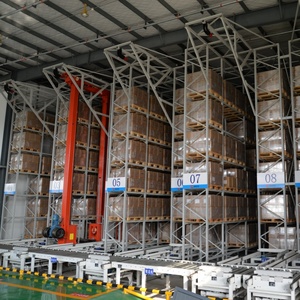
Engineered for unit-load stacker cranes with deflection tolerances within FEM 9.831 limits. High-bay structural integration up to 40 meters.
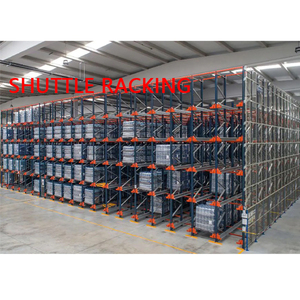
Omnidirectional 4-way pallet shuttle automation designed for intense SKU volume, minimizing aisle space and maximizing floor cube utilization.
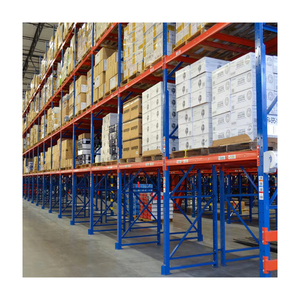
Heavy-gauge structural channel steel frames supporting load capacities up to 4,500kg per beam level with boltless locking safety mechanisms.
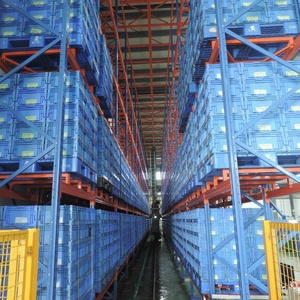
Turnkey ASRS structure configured for dual-deep and single-deep stacker cranes with integrated guide rails and safety stop bumpers.
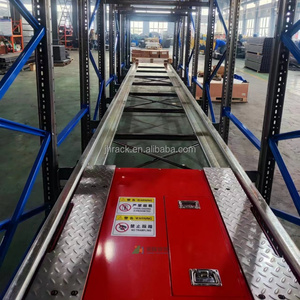
Modular OEM/ODM shuttle rack matrices designed for rapid installation, seamless WCS sensor alignment, and high throughput fulfillment.
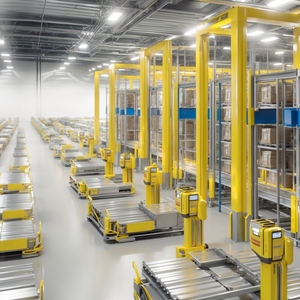
Smart warehouse solution incorporating deep-lane shuttle tracks, robust column protectors, and automated AGV transfer stations.
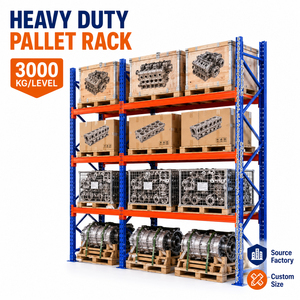
Extra heavy-capacity structural racking engineered with reinforced beam profiles and heavy-duty wire decking for heavy manufacturing SKUs.
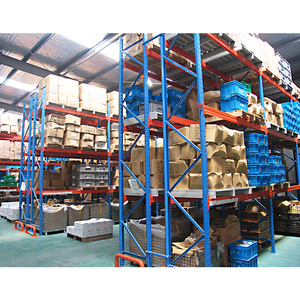
Versatile SK2000 boltless tubular section racking featuring closed-upright design for enhanced resistance against accidental forklift impact.
Combining heavy metallurgical engineering, precision automated roll-forming, and strict structural standard compliance.
Every ASRS rack matrix is custom-designed using Finite Element Analysis (FEA) to match your specific building slab capacity, clear heights, sprinkler layout, and stacker crane dynamic loading profiles.
Automated stacker cranes demand tight tolerances. Our cold-roll forming mills produce upright channels maintaining straightness within L/1000, preventing crane positioning errors and mechanical downtime.
Engineered and manufactured in full compliance with international storage standards including ANSI MH16.1 (RMI), EN 15512, FEM 9.831, and AS 4084, guaranteeing seamless regulatory approval worldwide.
Compare operational efficiency, volume ratio, and automation compatibility across high-density storage technologies.
| Racking System Type | Storage Density | Selectivity | Automation Level | Throughput (Pallets/Hr) | Best Application |
|---|---|---|---|---|---|
| Unit-Load ASRS (Crane) | Maximum (90%+) | 100% Direct Access | Fully Automated (WCS/WMS) | 200 - 500+ | High-Bay Distribution Centers & Cold Storage |
| 4-Way Radio Shuttle ASRS | Ultra-High (85%+) | High / Managed LIFO/FIFO | Semi/Fully Automated | 150 - 350 | High SKU Volume, Food & Beverage, FMCG |
| SK3000 Structural Drive-In | High (75%) | Low (LIFO) | Manual / Forklift Driven | 30 - 60 | Bulk Homogeneous Goods, Seasonal Stock |
| SK2000 Boltless Selective | Moderate (45%) | 100% Direct Access | Manual / Reach Truck | 40 - 80 | General Distribution, Mixed SKU Warehouses |
| Pushback / Pallet Flow | High (70%) | Moderate (FIFO/LIFO) | Gravity Dynamic / Semi-Auto | 60 - 100 | Perishable Goods, Date-Sensitive Inventory |
As logistics operations transition toward fully autonomous supply chains, the structural frame of an Automated Storage and Retrieval System (ASRS) changes from a passive storage rack into an active, high-precision robotic guiding infrastructure. In high-bay ASRS installations reaching heights up to 40 meters, the steel racking structure must withstand not only static dead loads and live pallet loads, but also dynamic horizontal acceleration, emergency braking forces, and sway harmonics generated by high-speed stacker cranes operating at velocities exceeding 240 meters per minute.
As a specialized OEM/ODM ASRS Pallet Racking System Factory & Supplier, our structural design methodology integrates advanced Finite Element Modeling (FEM) to analyze sway deformation, joint stiffness, and beam torsional buckling. Selecting the optimal steel profile—whether cold-rolled high-tensile Q355B steel or hot-rolled structural channel sections—is vital for guaranteeing operational uptime and preventing crane mast jamming.
Designing an ASRS rack structure requires far more rigorous engineering tolerances than standard selective racking. Key parameters include:
The global automated warehousing landscape is evolving rapidly under the influence of AI, robotics, and energy preservation requirements. B2B procurement leaders and supply chain directors should account for four primary strategic trends:
1. Dark Warehouses and Autonomous AI Fleets: The rise of fully unlit "dark warehouses" demands ASRS racking equipped with integrated retro-reflective markers, barcoded bay location tags, and IoT vibration sensors. Modern OEM/ODM suppliers must deliver rack systems ready for plug-and-play integration with Warehouse Control Software (WCS) and Autonomous Mobile Robot (AMR) fleets.
2. 4-Way Omnidirectional Shuttle Architectures: Traditional single-deep stacker cranes are increasingly complemented or replaced by multi-tier 4-way radio shuttle systems. These systems utilize specialized high-flatness cold-rolled track profiles that allow shuttles to change aisles horizontally and vertically via lift shafts, drastically improving throughput redundancy.
3. Sustainability and Carbon-Neutral Steel Manufacturing: Scope 3 emissions reporting is compelling enterprise buyers to source racking fabricated from low-carbon green steel processed with electrostatic powder coating systems that eliminate Volatile Organic Compounds (VOCs) and reduce thermal curing energy consumption.
4. Modular Boltless Design for Rapid Scalability: Modern OEM/ODM design prioritizes modular upright frames and self-locking beam connectors that accelerate on-site installation speeds by up to 35%, minimizing operational downtime during warehouse retrofits.
Technical guidance for logistics managers, structural consultants, and global procurement teams.
Contact our senior structural engineers today for a complimentary ASRS feasibility analysis, finite element structural review, and competitive OEM factory pricing.