


Explore our precision-manufactured OEM pallet racking solutions, engineered for maximum payload capacity, high seismic resistance, and seamless warehouse optimization.
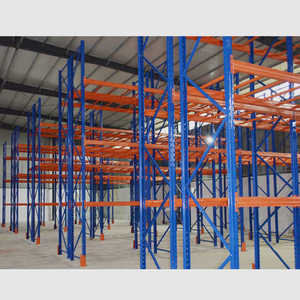
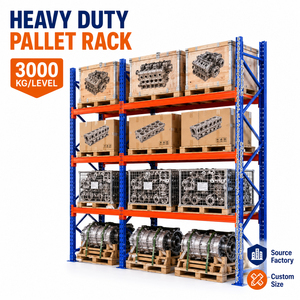
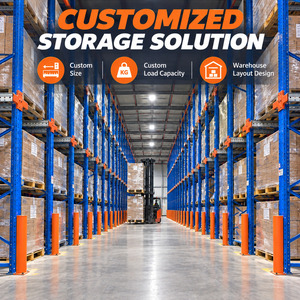
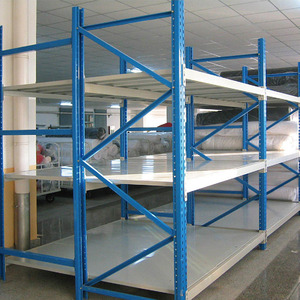
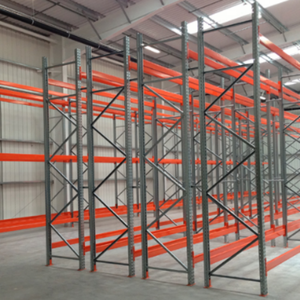
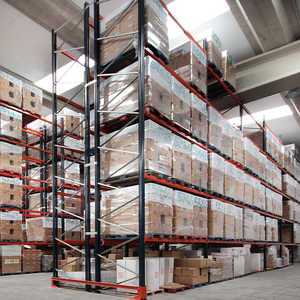
When specifying high-density warehouse storage systems in active seismic regions, basic load-bearing calculations are fundamentally insufficient. As a premier Custom OEM Seismic Pallet Racking Manufacturer & Factory, FlexBeam engineers structural storage architectures that actively absorb, dissipate, and survive ground motion accelerations dictated by regional International Building Codes (IBC) and ASCE 7 seismic design categories (A through F).
Industrial pallet racks behave as unbraced dynamic structures in the down-aisle direction and semi-rigid braced frames in the cross-aisle direction. During a seismic event, high peak ground accelerations (PGA) exert massive lateral shear stresses, dynamic uplift forces, and horizontal torsional loads upon the upright frames. Without specialized seismic dynamic modeling, conventional cold-rolled storage racks risk progressive catastrophic collapse, frame buckling, or pallet shedding.
Our SK2000 closed-section tubular uprights and SK3000 hot-rolled structural steel C-channels offer superior torsional resistance ($J$) over open C-sections, resisting forklift impacts and dynamic seismic twisting.
Engineered with enlarged surface footprints, multi-anchor bolt patterns, and integrated shear lugs to distribute extreme vertical moment forces and shear transfer into the concrete slab.
Patent-pending beam end connectors feature high-tensile locking pins and extended moment-resisting hooks that prevent beam disengagement under violent vertical ground accelerations.
Every OEM racking project leaving our factory undergoes finite element analysis (FEA) and dynamic response spectrum evaluations. We rigorously calculate the system's natural fundamental period ($T$), soil site class coefficients ($S_s, S_1$), and the force reduction factor ($R$). By referencing global regulatory standards such as ANSI MH16.1 (RMI), EN 15512, and AS 4084-2023, our structural engineering team guarantees that your installation satisfies local Structural Engineer of Record (SEOR) approvals and municipality permitting.
FlexBeam operates an advanced, vertically integrated manufacturing plant dedicated to steel rack fabrication. As a direct OEM factory, we bypass intermediary markups to provide industrial-grade high-density storage solutions tailored precisely to your facility’s unique dimensions, inventory load profiles, and automated material handling equipment (MHE).
Multi-axis robotic welding cells execute continuous fillet welds compliant with AWS D1.1 structural welding standards, eliminating stress concentration points in load-bearing beam connectors and column splices.
Our 14-stage automated pre-treatment and powder coating line applies a 70–100 micron protective barrier, providing impact, scratch, and corrosion protection suitable for ambient, humid, or cold-storage environments.
We exclusively process high-grade prime steel coils (Q235B, Q355B, Grade 50 ASTM A1011) tested for tensile strength, elongation ductility, and impact toughness prior to cold roll-forming.
Whether you require custom pitch perforations (e.g., 50mm, 75mm, 3-inch teardrop), bespoke frame depths, specialized wire decking support bars, or specialized hot-dip galvanized finishes for blast freezers (-30°C), our OEM engineering center delivers turnkey drawings, prototypes, and mass production runs within strict lead times.
The global warehousing and logistics sector is undergoing a rapid paradigm shift driven by automated fulfillment, severe land scarcity, climate-induced seismic risks, and stringent ESG (Environmental, Social, and Governance) compliance mandates. Supply chain directors and procurement executives must align racking procurement strategies with these core industry trajectories:
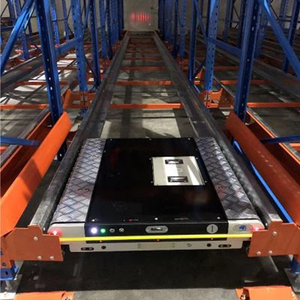
Traditional static selective racking is increasingly giving way to Automated Storage and Retrieval Systems (AS/RS) and two-way dynamic pallet shuttle systems. Future seismic racking must adhere to ultra-tight manufacturing tolerances (+/- 1.5mm frame plumbness) to prevent shuttle vehicle jams during micro-seismic settlement.
Procurement policies are shifting toward lightweight yet ultra-high-yield HSLA steels. By substituting heavy conventional sections with optimized structural geometries, factories lower embodied carbon footprints while preserving structural load margins and lowering cross-border freight costs.
Next-generation seismic racking systems incorporate strain gauges, acceleration sensors, and tilt indicators directly within critical frame columns. These IoT nodes transmit real-time stress data to warehouse managers post-earthquake, enabling immediate structural health assessment before re-entry.
Evaluating the trade-offs between storage density, pallet selectivity, inventory rotation, and dynamic seismic safety is essential during early facility planning. The matrix below outlines how key racking typologies perform under rigorous operational criteria:
| Racking System Type | Storage Density | Pallet Selectivity | Seismic Resistance Rating | Optimal Inventory Rotation | Primary Target Industry |
|---|---|---|---|---|---|
| Selective Pallet Rack (SK2000) | Moderate (1x) | 100% Direct Access | High (Flex-Ductile) | FIFO / LIFO | E-commerce, 3PL, FMCG Logistics |
| Structural Pallet Rack (SK3000) | Moderate (1x to 2x) | 100% Direct Access | Ultra-High (Heavy Structural) | FIFO / LIFO | Heavy Manufacturing, Cold Storage |
| Double-Deep Pallet Rack | High (1.6x) | 50% Immediate Access | High (Braced Frame) | LIFO | Dry Goods, High-Volume Wholesalers |
| Drive-In / Drive-Through Rack | Very High (2.5x) | Low (Per Lane) | Requires Top/Back Bracing | LIFO (Drive-In) / FIFO | Cold Storage, Bulk Beverage, Produce |
| Pushback Racking System | High (2x - 4x Deep) | 1 SKU Per Lane | Very High (Nested Carts) | LIFO | Food Distribution, Retail Buffers |
| Automated Radio Shuttle System | Maximum (4x - 10x Deep) | Automated Batch Access | Ultra-High (Integrated Rigid Matrix) | FIFO & LIFO Automated | Automated Distribution Hubs, Pharma |
FlexBeam Warehouse Equipment Co., Ltd. has established itself as an authoritative global leader in high-performance warehouse infrastructure engineering. Our focus extends beyond supplying structural steel—we deliver comprehensive engineering certainty to supply chain executives, industrial architects, and logistics operators across over 60 countries.
Every system order includes stamped structural calculations, CAD layout drawings, assembly sequence manuals, and serial-numbered load capacity plaques for straightforward local building permit approval.
Our signature SK2000 boltless tubular racking offers 250% higher torsional stiffness than standard open-back roll-formed columns, drastically reducing forklift impact damage and lifetime maintenance costs.
Structural components are bundled with custom steel banding, protective corner edge guards, and color-coded tags, optimizing sea container cubic utilization while preventing transit damage.
To deliver an accurate structural calculation and layout, our engineering team requires: (1) Pallet dimensions, maximum weight, and load overhang; (2) Clear building ceiling height and sprinkler pipe drop distances; (3) Concrete slab thickness, compressive strength ($f'_c$), and rebar reinforcement detail; (4) Forklift specifications including maximum lift height and aisle turning radius; (5) Facility site location for seismic acceleration coefficient determination ($S_{ds}, S_1$).
SK2000 boltless tubular racking utilizes closed square tubing for upright columns, offering excellent impact resistance and quick boltless beam adjustments ideal for high-traffic distribution centers. SK3000 structural racking is constructed from heavy-duty hot-rolled structural steel C-channels bolted with high-strength fasteners. SK3000 excels in severe cold-storage environments, drive-in systems, and heavy industrial applications subjected to heavy forklift impacts and extreme payloads.
All FlexBeam pallet racking systems are engineered in strict compliance with destination-specific codes. For North American projects, we design according to ANSI MH16.1 (RMI) and IBC 2024 specifications. For European, Middle Eastern, and Asian markets, systems comply with EN 15512, EN 15620, and AS 4084-2023 design standards.
The baseplate is the primary structural interface transferring vertical gravity loads, lateral seismic shear, and overturning uplift moments from the rack column into the building's concrete slab. A seismic baseplate features an enlarged footprint, engineered steel thickness, and multi-hole anchor patterns designed to satisfy ACI 318 post-installed anchor concrete breakout and pullout capacity standards.
Standard OEM order production typically requires 3 to 4 weeks following final CAD drawing approval and engineering sign-off. For urgent facility commissioning, our automated roll-forming and robotic welding lines can accommodate phased container shipments to align with your site construction schedules.
Yes. We provide complete OEM color-matching utilizing RAL powder color codes to align with your brand standards. Furthermore, custom beam perforations, private-label component stamping, and branded packaging are available for distributor and OEM partner orders.
Connect with our senior structural engineering team today to request custom CAD layouts, seismic load calculations, or a competitive factory-direct quotation.
Get a Quote