


Explore our structural and boltless tubular rack configurations optimized for reach trucks, double-deep pantograph handling, and automated warehouse environments.
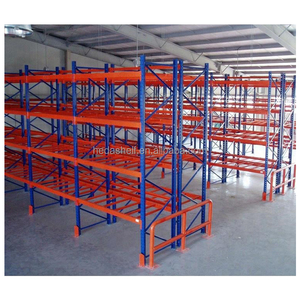
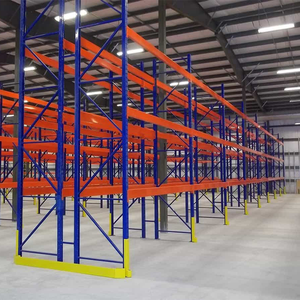
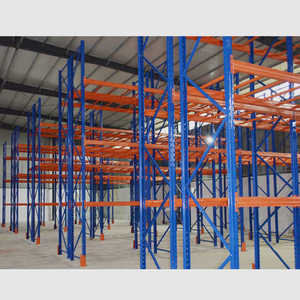
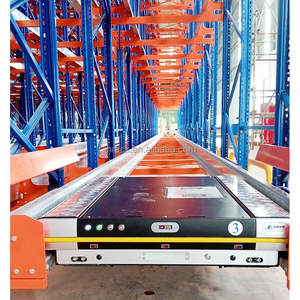
A comprehensive analysis of aisle optimization, structural deflection limits, outrigger clearance, and pantograph weight distribution for modern high-bay logistics centers.
Modern warehouse logistics relies heavily on reach trucks—specifically pantograph reach trucks and moving-mast reach trucks—to achieve high-density storage within reduced aisle dimensions. Standard counterbalanced forklifts require aisle widths between 3.5 to 3.8 meters, whereas reach trucks operate efficiently in narrow aisles ranging from 2.5 to 3.0 meters. However, designing an optimal racking system for reach trucks goes far beyond simply narrowing the aisle. It demands meticulous engineering of structural column profiles, bottom beam heights, outrigger clearance pockets, and dynamic load tolerances under extreme lift heights exceeding 12 meters.
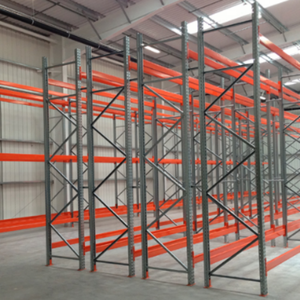
One of the primary failure modes in reach truck racking installations stems from insufficient outrigger clearance. Reach trucks utilize forward-extending base legs (outriggers) equipped with dual load wheels. When placing pallets on the first beam level, the outriggers must either roll under the bottom beam or frame, or fit between the rack columns.
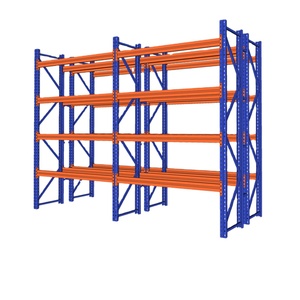
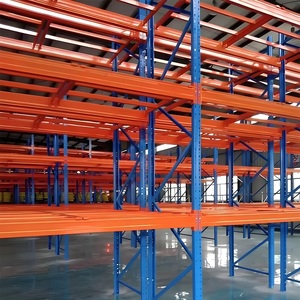
Fabricated using prime cold-rolled Q235B and high-tensile Q355B structural steel channels, delivering high yield strength under dynamic reach-truck loading conditions.
Custom engineering calculations factor in the reduced capacity of reach trucks at maximum mast elevation and full reach extension to ensure structural stability.
All OEM racking layouts are engineered to comply with ANSI MH16.1 (RMI), FEM 10.2.02, EN 15512, and AS 4084 standards for global import compliance.
Selecting the right racking topology requires evaluating pallet density, selectivity percentage, initial capital expenditure, and forklift fleet requirements. The technical matrix below highlights performance metrics across key custom OEM configurations engineered by our manufacturing facility.
| Racking System Type | Aisle Width Requirement | Maximum Lift Height | Pallet Selectivity | Storage Density | Reach Truck Requirement |
|---|---|---|---|---|---|
| Narrow Aisle Selective Rack | 2.6m – 2.9m | Up to 12.5m | 100% Direct Access | Moderate (45-55% Cube) | Single-Reach Truck / Moving Mast |
| Double-Deep Selective Rack | 2.8m – 3.1m | Up to 11.0m | 50% Immediate Access | High (65-75% Cube) | Deep-Reach Pantograph Truck |
| Radio Shuttle High-Density | 3.0m (Transfer Aisle) | Up to 14.0m | Filo / Fifo By Channel | Ultra-High (80-90% Cube) | Standard / Reach Truck Loading |
| Drive-In Structural Racking | Clear Entry Bay | Up to 10.0m | LIFO Rotation | Very High (70-80% Cube) | Narrow-Chassis Reach Truck |
As a specialized manufacturer and global supplier, our engineering team works directly with supply chain directors, industrial architects, and racking distributors to deliver bespoke warehouse infrastructure.
Critical shifts driving procurement decisions, automation integration, and vertical cube expansion over the next decade.
Land acquisition costs are driving warehouses upward. Future reach truck racking systems are engineered for extreme lift heights, incorporating high-rigidity structural ties, camera-assisted positioners, and dynamic deflection dampers to stabilize high-bay operations.
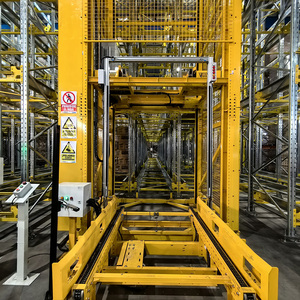
The transition toward Automated Guided Vehicles (AGVs) and Autonomous Mobile Robots (AMRs) with reach capabilities demands tighter rack fabrication tolerances (+/- 1.5mm) and integrated optical positioning targets on frame columns.
Procurement is shifting from pure selective racking to hybrid configurations—combining lower-level reach-truck picking aisles with upper-level automated radio shuttle or pushback storage lanes to maximize velocity and density simultaneously.
Evaluating the long-term economic return of investing in heavy-duty custom OEM racking versus standard off-the-shelf roll-formed steel.
In modern high-throughput logistics, initial purchase price represents only a fraction of total racking life-cycle cost. Frequent forklift impact, frame deformation, downtime during repairs, and product damage caused by beam deflection contribute significantly to operational friction. Investing in engineered reach truck storage racking yields a rapid Return on Investment (ROI) through three primary mechanisms:
Essential technical and commercial answers for warehouse managers, procurement directors, and system integrators.