


Direct factory supply of high-density, selective, dynamic, and automated structural rack systems designed for maximum volumetric storage efficiency.
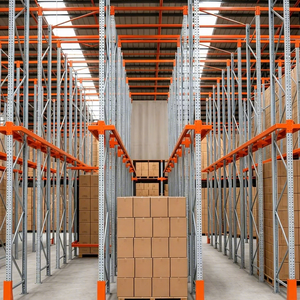
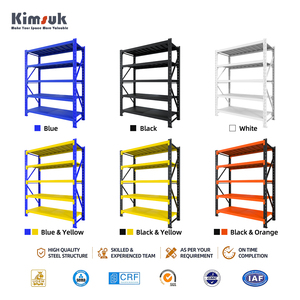
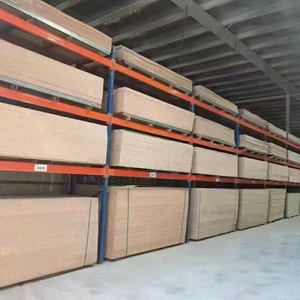
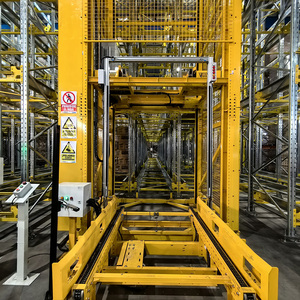
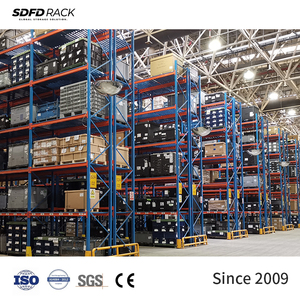
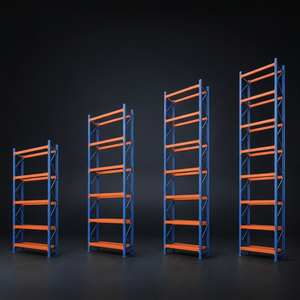
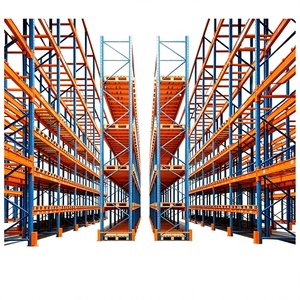
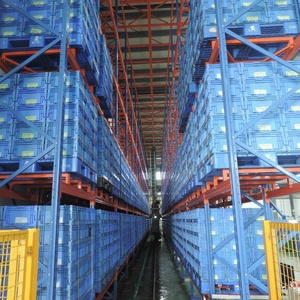
Wide Aisle Pallet Racking—often categorized as standard Adjustable Pallet Racking (APR) or Selective Pallet Racking—remains the global backbone of modern industrial material handling. Engineered specifically for operational flexibility, wide aisle systems provide unimpeded 100% direct access to every individual pallet position. Operating with standard aisle widths typically ranging between 3.0 meters and 4.5 meters (10 to 15 feet), these structures accommodate conventional counterbalanced forklifts, reach trucks, and articulated narrow-aisle equipment without requiring specialized floor guidance systems.
Core Structural Value: Wide aisle pallet racking optimizes high-velocity SKU distribution operations where 100% direct accessibility, rapid stock rotation, and low initial capital expenditure per pallet position supersede maximum cubic volume density.
As a leading China wholesale wide aisle pallet racking manufacturer, structural reliability begins at the metallurgical level. Upright columns are cold-rolled from high-tensile structural steel grades, primarily Q235B and Q355B (equivalent to S235JR and S355JR under EN 10025, or ASTM A1011 Grade 50). Upright profiles feature complex geometry with multiple stiffening ribs to maximize section modulus, torsional rigidity, and buckling resistance under heavy axial compression.
Horizontal and diagonal frame bracing members are formed from structural C-sections or closed tubular profiles, bolted to the upright upright columns using grade 8.8 structural fasteners. This semi-rigid frame construction ensures uniform load redistribution during accidental forklift impacts or seismic load excitations.
Racking beams are engineered utilizing continuous roll-formed box beam profiles or stepped beam sections designed to interface seamlessly with wire mesh decking, steel shelf panels, or pallet support bars. Beam connectors feature precision-stamped heavy-gauge steel claws (3 to 5 claw configurations) that wrap securely around the teardrop or Omega-punched post profile.
Evaluating structural trade-offs between Wide Aisle APR, Very Narrow Aisle (VNA), Drive-In, Push-Back, and AS/RS high-density racking.
| Racking System Type | Aisle Width Required | Direct SKU Accessibility | Capital Cost / Pallet | Forklift Compatibility | Optimal Application |
|---|---|---|---|---|---|
| Wide Aisle (Selective APR) | 3.0m - 4.5m | 100% Direct | Low (Base Index) | Standard Counterbalance / Reach | High SKU variety, fast rotation, distribution centers |
| Very Narrow Aisle (VNA) | 1.5m - 1.8m | 100% Direct | Medium-High | VNA Turret Truck / Wire Guided | High vertical clearance facilities with limited footprint |
| Drive-In / Drive-Through | N/A (Continuous Lane) | Low (LIFO/FIFO) | Medium | Standard Counterbalance | Bulk storage, few SKUs, cold storage (-30°C) |
| Push-Back Racking | 3.0m - 3.5m | Moderate (LIFO) | Medium-High | Standard Reach Truck | Medium SKU density, 2-6 pallet deep lanes |
| Automated AS/RS & Shuttle | Built-in Guide Rails | Automated 100% | High CAPEX | Automated Crane / 4-Way Shuttle | 24/7 Smart logistics, ultra-high bay fulfillment |
Leveraging advanced continuous roll-forming lines, robotic welding infrastructure, and stringent surface treatment standards to deliver long-term industrial reliability.
Equipped with 24 high-speed automatic cold-roll forming production lines, CNC punching units, and robotic laser welding stations that guarantee dimensional tolerances within ±0.5mm across 12-meter upright lengths.
Surface pretreatment utilizes dynamic 6-stage shot blasting and automated iron-phosphate cleaning, followed by thermosetting epoxy-polyester powder coating (60–80 microns thickness) resistant to impact, salt spray, and chemical degradation.
Every custom engineering proposal undergoes rigorous Finite Element Analysis (FEA) testing under ANSI MH16.1, EN 15512, and AS 4084-2012 codes to accurately account for dead loads, live loads, wind actions, and regional seismic zone factors.
As global supply chains transition toward automation, carbon neutrality, and dynamic inventory management, B2B rack procurement is evolving rapidly beyond simple price-per-kilo calculations. Facilities procurement managers and logistics architects must evaluate several emerging structural design and supply chain trends when specifying wide aisle pallet racking systems for 2025 and beyond:
Modern wide aisle layouts are increasingly integrated with Autonomous Mobile Robots (AMRs) and Automated Guided Vehicles (AGVs). This transition demands stricter floor flatness tolerances (Superflat FF/FL standards), low-profile rack baseplate engineering, and retrofitting of optical reflector targets directly onto column uprights for autonomous laser guidance systems.
Multinational enterprise buyers now enforce Scope 3 emissions reporting. China wholesale suppliers are responding by transitioning to raw steel billets forged in Electric Arc Furnaces (EAF) utilizing scrap metal and green energy, significantly lowering the embodied carbon footprint per installed pallet position.
Next-generation high-bay racking systems incorporate embedded IoT load cell sensors and strain gauges into heavy-duty beam profiles. Real-time telemetry alerts facility managers to operational overloading, unintended beam displacement, or dynamic stress spikes caused by seismic micro-tremors.
To reduce overseas site installation labor costs, global buyers prioritize pre-assembled welded frame structures or self-aligning boltless framing connectors. Modular beam configurations allow seamless retrofitting into double-deep, carton flow, or push-back systems as operational needs shift.
Expert technical responses to critical questions asked by international buyers, structural engineers, and logistics procurement teams.
Optimal aisle width depends primarily on your forklift's Right Angle Stacking Aisle Dimension (AST) provided by the MHE manufacturer. The standard formula is: Aisle Width = AST + Load Length + 200mm Safety Clearance. For standard counterbalanced forklifts, typical clear aisles range from 3.5m to 4.2m, whereas reach trucks operate comfortably in 2.8m to 3.2m aisles.
Cold-rolled rack components (Q235B/Q355B coil sheet formed into complex profile shapes) offer superior strength-to-weight ratios, dimensional precision, and lower transportation cost. Hot-rolled structural channel racking (utilizing structural C-channels) offers extreme impact resistance against heavy forklift collisions, making it preferred for high-abuse freezer rooms and heavy industrial yards.
Our engineering team designs specifically according to destination market regulations: EN 15512 / FEM 10.2.02 for Europe and the UK, RMI (ANSI MH16.1) for the United States and North America, and AS 4084-2012 for Australia and New Zealand. Certified structural calculation reports stamped by chartered engineers are supplied upon project request.
Uprights and beams are bundled on structural steel skids with protective plastic strapping, cardboard corner guards, and high-density polyethylene moisture-barrier stretch wrap. Heavy hardware, baseplates, and anchors are packed into reinforced wooden crates labeled with color-coded export shipping marks for efficient container unloading.