


Explore engineered warehouse racking configurations built to international ANSI MH16.1, FEM, and EN standards. Directly manufactured for high-capacity industrial applications.
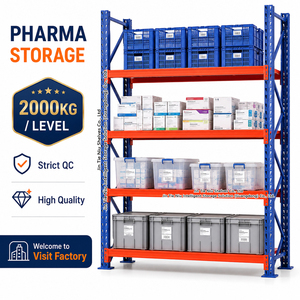
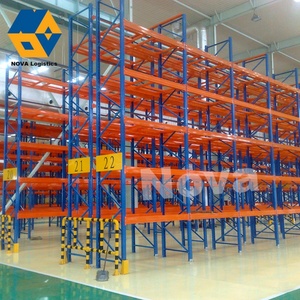
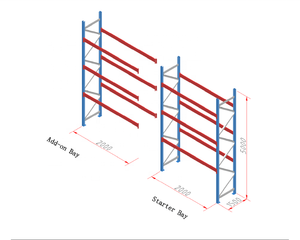
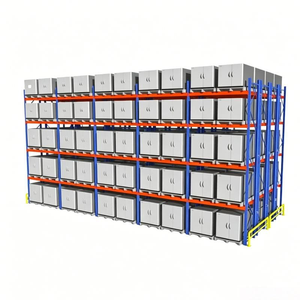
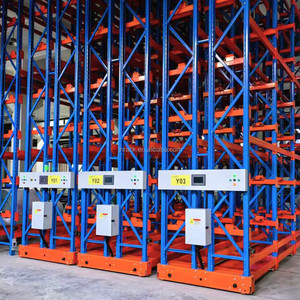
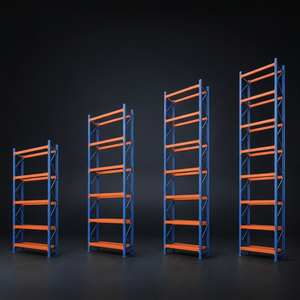
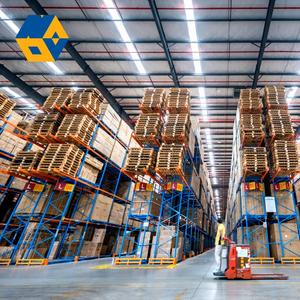
In modern supply chain architecture, structural integrity, spatial optimization, and total cost of ownership (TCO) dictate procurement decisions. As enterprise logistics hubs scale to accommodate automated guided vehicles (AGVs), Autonomous Mobile Robots (AMRs), and ultra-high-density storage configurations, partner selection among China wholesale standard pallet racking manufacturers requires rigorous engineering evaluation. Chinese manufacturing facilities have evolved from basic roll-forming workshops into precision engineering powerhouses equipped with automated continuous cold-roll forming lines, robotic laser welding cells, and electrostatic thermosetting powder-coating systems.
This industrial whitepaper examines the technical metrics, metallurgical criteria, seismic calculations, and procurement strategies essential for global logistics directors, warehouse system integrators, and industrial equipment distributors sourcing industrial storage solutions directly from leading manufacturers like FlexBeam Warehouse Equipment Co., Ltd.
Technical Insight: Standard roll-formed teardrop racking offers versatility, but high-impact environments (such as cold storage or heavy manufacturing) benefit significantly from structural steel (hot-rolled C-channel) racking or closed tubular section uprights (such as the FlexBeam SK2000® profile) which demonstrate up to 250% higher torsional resistance against forklift collisions.
The base performance of any industrial heavy-duty pallet rack depends on the steel chemistry and yield strength. Premier Chinese racking OEMs utilize high-grade certified cold-rolled structural steel coils (primarily Grade Q235B and Q355B, equivalent to SS400 and ASTM A572 Grade 50 respectively).
Structural calculations must align with strict global engineering frameworks:
Continuous multi-station cold-rolling ensures structural profiles exhibit tight geometric tolerances (±0.5mm) along upright columns up to 15 meters in length.
Heavy-duty baseplates, seismic anchor arrays, and integrated column protectors engineered to withstand horizontal shear forces during seismic events.
9-stage pre-treatment washing followed by thermosetting epoxy-polyester powder coating (60–90 microns thick), passing 500-hour salt spray corrosion tests.
Selecting the appropriate storage system requires balancing SKU diversity, inventory turnaround speed, and spatial volume utilization. The table below outlines technical metrics established by senior logistics engineering teams:
| Racking System Type | Storage Density | Selectivity Rate | Stock Rotation | Ideal Load Capacity | Primary Application |
|---|---|---|---|---|---|
| Selective Pallet Racking | Low - Medium (40-50%) | 100% Direct Access | FIFO (First-In, First-Out) | 1,000kg - 4,500kg / level | High SKU variety, fast fulfillment, FMCG distribution |
| Double-Deep Racking | Medium - High (60-65%) | 50% Direct Access | LIFO (Last-In, First-Out) | 1,500kg - 3,000kg / level | Multiple pallets per SKU, reach-truck operations |
| Drive-In / Drive-Through | Ultra High (75-85%) | Low (20-30%) | LIFO / FIFO | 1,000kg - 1,800kg / pallet | Cold storage, seasonal inventory, low SKU volume |
| Pushback Racking | High (65-75%) | Medium (40-50%) | LIFO | 1,500kg / cart position | 2 to 6 deep pallet storage, staging areas |
| Pallet Flow (Gravity) | Ultra High (80-90%) | Medium | Strict FIFO | 1,000kg - 1,500kg / pallet | Perishable food, pharmaceuticals, expiration tracking |
| Electric Mobile Racking | Maximum (85-95%) | 100% when aisle opens | Flexible FIFO / LIFO | Up to 24,000kg / mobile bay | High-cost freezer space, expensive real estate hubs |
FlexBeam Warehouse Equipment Co., Ltd. represents the apex of Chinese manufacturing precision in material handling equipment. By bridging structural design expertise with international shipping logistics, FlexBeam delivers turn-key industrial storage systems engineered specifically for severe warehouse duty cycles.
Unlike standard open-back roll-formed columns susceptible to torsional twist under impact, FlexBeam’s flagship SK2000® system utilizes structural closed tubular steel uprights. Independent lab tests confirm a 44% improvement in torsional resistance and 210% higher resistance to frontal forklift impacts.
Every manufacturing batch undergoes destructive load testing, weld penetration ultrasonic inspections, and coating adhesion lattice tests. Raw materials are verified via mill test certificates (MTC) matching chemical composition standards for S235JR, S355JR, or Q355B steel grades.
To eliminate ocean transit damage, components are bundled with steel strapping, wrapped in protective moisture-barrier film, and nested using custom wood-skid cradles. Each container shipment includes clear piece-mark tags matching CAD assembly drawings for rapid field erection.
Our manufacturing facility integrates 15 continuous roll-forming lines, automated robotic welding cells, and an eco-friendly zero-discharge powder coating plant. With an annual steel processing capacity exceeding 50,000 metric tons, FlexBeam provides global buyers with stable pricing, scalable production volume, and reliable lead-time guarantees.
The international pallet racking market is shifting rapidly due to warehouse automation, rising labor costs, and sustainable supply chain initiatives. Procurement managers working with Chinese manufacturers must consider several technological trends:
Conventional racking is giving way to high-bay structure designs tailored for Automated Storage and Retrieval Systems (AS/RS) and pallet shuttles. Manufacturing tolerances for AS/RS racking are significantly tighter than standard selective racks (±1.5mm vertical plumbness tolerance across a 30-meter high bay). Manufacturers must provide specialized guide rails, precision rack-entry funnels, and rack-integrated sensor brackets.
Corporate sustainability mandates require lower scope 3 carbon emissions across logistics hardware. Tier-1 Chinese racking factories are transitioning to renewable-powered electric arc furnace (EAF) steel mills and implementing heavy-metal-free, low-temperature curing powder coatings that decrease embodied carbon per pallet position by up to 18%.
The next evolution in rack safety involves embedding IoT shock sensors and load-cell monitors directly into rack frame uprights. Real-time telemetry alerts facility managers when a forklift collision exceeds structural strain thresholds, allowing preventive maintenance before structural frame failure occurs.
Roll-formed pallet racking is manufactured from cold-rolled sheet steel formed into C-shapes or open profiles with teardrop or hook connectors. It offers economical cost, fast boltless assembly, and easy beam adjustment. Structural steel racking uses hot-rolled C-channel profiles assembled with structural bolts. Structural racking offers much higher impact resistance, greater load capacities, and superior durability in abusive forklift environments or freezing temperatures.
To produce accurate CAD layouts and capacity engineering calculations, suppliers require: (1) Pallet dimensions (Width x Depth x Height including cargo), (2) Maximum and average load weights per pallet, (3) Building dimensions, clear height below joists/sprinklers, (4) Forklift specifications (lift height, aisle turning radius, mast type), (5) Slab concrete thickness and compressive strength, and (6) Local seismic acceleration parameters (Zone 0 through Zone 4).
Leading manufacturers engage third-party engineering agencies (such as SGS, TÜV, or certified US structural engineers) to conduct physical stub-column tests, beam-to-column connector moment testing, and weld shear tests. Calculations utilize Finite Element Analysis (FEA) modeling software to verify safety factors (typically 1.65 to 2.0 ratio to yield) under full design load combinations.
For sub-zero cold rooms (0°C to -30°C), hot-dip galvanizing (HDG) conforming to ISO 1461 / ASTM A123 is highly recommended due to its self-healing zinc sacrificial protection against condensation corrosion. Specialized epoxy powder coating formulations designed for low-temperature elasticity can also be used for dry freezing environments.
Production lead time typically ranges from 15 to 25 calendar days depending on tonnage. Racking frames, beams, and accessories are bundled using heavy-duty steel strapping, protective plastic wrap, edge guards, and wood skids to ensure stability inside 40ft High Cube containers. Detailed packing lists and container loading software prevent transit damage and maximize ocean freight volume.
Send your warehouse floor plans, load specifications, or project RFQ to our senior engineering team for rapid CAD design and load calculation estimates.
Get Catalog