


Explore our heavy-duty, certified industrial pallet storage solutions designed for optimal density and throughput.
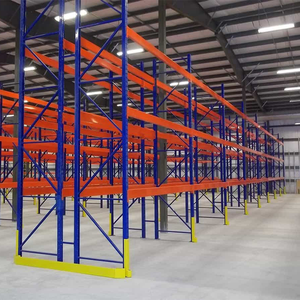
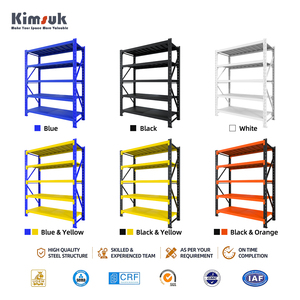
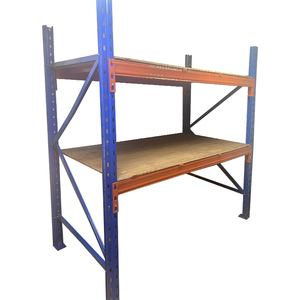
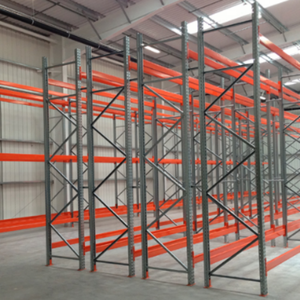
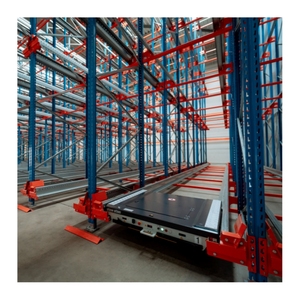
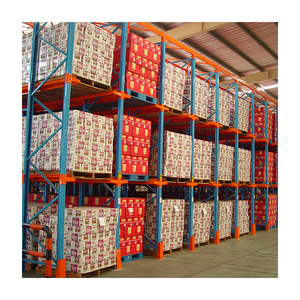
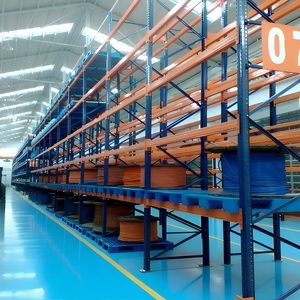
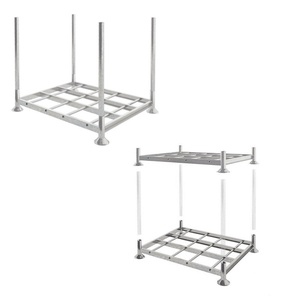
In the era of modern logistics, supply chain volatility, and rapidly expanding e-commerce operations, industrial storage efficiency has transitioned from a structural requirement to a strategic financial asset. As a premier China wholesale pallet accumulation racking factory and direct manufacturer, our engineering division designs, fabricates, and deploys high-density pallet storage solutions engineered to maximize vertical volumetric space while maintaining stringent safety protocols. Pallet accumulation racking systems—including dynamic pallet flow, heavy-duty push-back, radio shuttle racking, and specialized live-roller systems—represent the pinnacle of high-density warehouse architecture.
Unlike traditional selective rack systems that require dedicated aisles for every two rows of storage (yielding a spatial efficiency ratio of merely 35% to 45%), engineered accumulation systems compress storage lanes by eliminating unnecessary fork-truck aisles. By utilizing accumulation physics—leveraging gravity, kinetic dynamic controllers, or automated shuttle mechanics—these systems achieve footprint utilization rates exceeding 75% to 85%. This whitepaper outlines the structural engineering principles, metallurgical choices, compliance frameworks, and economic considerations essential for logistics managers, global procurement teams, and structural engineers specifying wholesale industrial racking systems.
Information Gain Metric: Implementing dynamic pallet accumulation racking reduces warehouse energy and footprint costs by up to 40% in ambient facilities and up to 60% in cold storage freezers due to reduced volumetric thermal dissipation requirements.
The integrity of any high-density accumulation rack depends on the exact metallurgical specifications of the raw steel and the geometric profile of the uprights and beams. Our factory exclusively utilizes high-yield structural steel grades—primarily Q235B (yield strength ≥ 235 MPa) for standard duty applications and Q355B / SS500 (yield strength ≥ 355 MPa) for high-load columns and dynamic shuttle tracks.
Understanding the failure modes under compression and torsional buckling is crucial when selecting between closed-section tubular uprights and hot-rolled structural channels:
In gravity-fed pallet flow accumulation racking, managing kinetic energy build-up is paramount to preventing pallet runaway or structural rack deformation. The storage lane is set at a calculated incline pitch—typically between 3.5% to 4.5% (approx. 3/8 inch per foot)—depending on pallet weight variance and runner friction coefficients.
To maintain constant velocity ($v \le 0.3\text{ m/s}$), custom-engineered dynamic dynamic brake rollers are integrated at predetermined intervals along the flow lane. These centrifugal internal-gear brake rollers automatically increase resistance proportionally to the speed of the descending pallet, ensuring smooth, controlled accumulation without shock loads upon reaching the discharge separator mechanism.
Choosing the optimal accumulation system requires balancing SKU diversity, throughput velocity, inventory rotation methods (FIFO vs. LIFO), and capital investment limits. The engineering benchmarking table below provides clear selection criteria for facility architects:
| Storage System Type | Rotation Logic | Space Density | SKU Selectivity | Floor Load Impact | Relative CAPEX |
|---|---|---|---|---|---|
| Selective Pallet Racking | FIFO / LIFO | Moderate (40%) | 100% Direct Access | Standard Point Loads | Baseline (1.0x) |
| Double-Deep Pallet Rack | LIFO | High (60%) | 50% Immediate Access | Moderate Concentrated Load | 1.25x |
| Push-Back Cart Racking (2-6 Deep) | LIFO | Very High (75%) | 1 SKU per Lane | High Column Loads | 2.1x |
| Gravity Pallet Flow Racking | Strict FIFO | Maximum (85%) | 1 SKU per Flow Lane | Dynamic Point & Impact Loads | 2.8x |
| Automated Radio Shuttle Rack | FIFO or LIFO | Maximum (90%+) | High (Programmed Lanes) | Distributed High Structural Load | 3.5x |
| Drive-In / Drive-Through Rack | LIFO / FIFO | Very High (80%) | Low (Bulk Storage) | Forklift Impact Risk Zone | 1.6x |
As an established original equipment manufacturer (OEM) and global exporter based in China, our production facility combines automated manufacturing precision with rigorous compliance testing. Our engineering team operates under strict International Building Code (IBC) and warehouse safety standards, ensuring seamless project execution across North America, Europe, Australia, and the Middle East.
Equipped with multi-axis Panasonic robotic welding stations and automated continuous roll-forming production lines, we guarantee dimensional tolerances within $\pm 0.5\text{ mm}$ on column punchings and beam connector brackets, eliminating field assembly errors.
Components undergo a rigorous 7-stage pre-treatment wash (including zinc phosphating and deionized rinsing) followed by automated electrostatic powder coating. The resulting 80–120 micron finish delivers superior salt-spray corrosion resistance, chemical stability, and abrasion protection.
All structural calculation models and finite element analysis (FEA) simulations comply strictly with ANSI MH16.1 (Rack Manufacturers Institute - RMI), European standard EN 15512, and Australian Standard AS 4084, including seismic load parameters for active zones.
Using customized heavy-duty steel cradles, protective corner guards, and color-coded bundle labeling, we maximize container loading cubic utilization (reducing ocean freight costs by up to 25%) while preventing transit scuffing and physical damage.
Our in-house QC laboratory conducts ongoing destructive beam shear tests, upright stub column compression testing, weld crack inspections, and coat adhesion cross-hatch testing to ensure 100% material trace verification.
From initial building survey reviews to structural layout optimization in AutoCAD and Revit BIM formats, our dedicated export support team handles customs documentation, freight logistics, and remote installation oversight worldwide.
As international enterprises evaluate supply chain resilience, total cost of ownership (TCO), and automated material handling integration, several macro procurement trends are shaping the future of industrial racking:
While traditional mechanical gravity flow and push-back cart systems remain cost-effective, global procurement is shifting rapidly toward semi-automated radio shuttle racking. Automated shuttles eliminate forklift deep-lane entry entirely, reducing structural frame maintenance by over 70% and increasing pallet movement speeds by 40%. The capability to switch shuttle lanes programmatically between FIFO and LIFO modes provides operational agility unmatched by static gravity lanes.
Environmental, Social, and Governance (ESG) mandates are pushing warehouse operators to specify rack systems fabricated with sustainable, recyclable steel. Our factory utilizes electric arc furnace (EAF) steel production routes where applicable, paired with VOC-free powder coatings and hot-dip galvanized (HDG) coating options (Z275/Z600 standards) that extend service lifespans beyond 25 years without toxic recoating interventions.
Future-proof racking procurement increasingly calls for smart structural integrations. Modern accumulation racks are designed to accommodate optical load-presence sensors, anti-collision laser barriers, and strain-gauge telemetry on critical uprights. These smart nodes alert warehouse operations to subtle structural overloads or forklift impact deformations before catastrophic rack collapses occur.
Enterprise procurement directors are increasingly bypassing third-party regional distributors in favor of direct factory partnerships with established Chinese OEMs. By collaborating directly with factory engineering teams, buyers secure custom rack geometry tailored to specialized pallet dimensions, lower unit costs by 30% to 45%, and maintain full visibility over metallurgical testing and mill test certificates (MTC).
Innovation in accumulation racking is focused on reducing maintenance overhead, enhancing safety margins, and enabling seamless synergy with Autonomous Mobile Robots (AMRs) and Automated Guided Vehicles (AGVs):
Below are technical and commercial responses to common questions encountered during the engineering review and procurement phase of wholesale industrial pallet accumulation racking: