


Explore our top-tier industrial structural steel pallet racking systems, manufactured with high-tensile Q235B/Q355B cold-rolled profiles for superior structural resilience and vertical cube utilization.
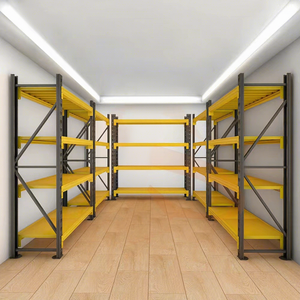
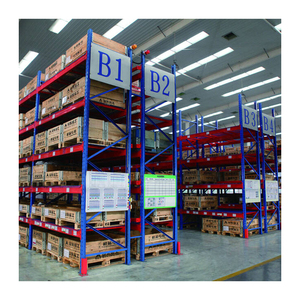
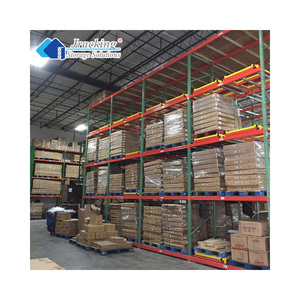
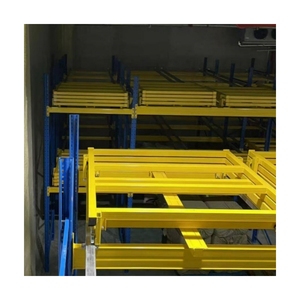
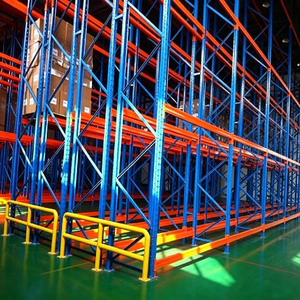
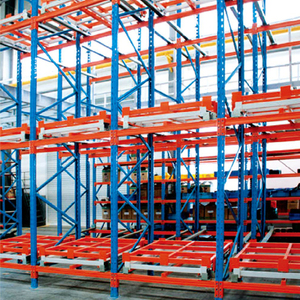
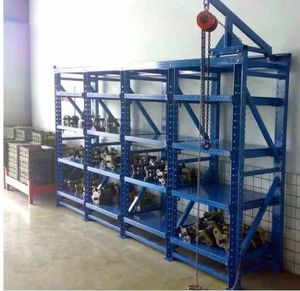
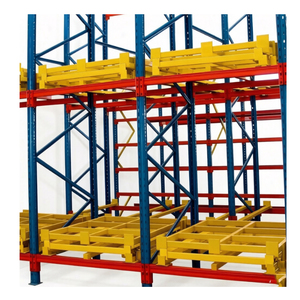
In modern industrial logistics and material handling, optimizing floor space while maintaining high accessibility is a complex engineering challenge. Back-to-Back Pallet Racking represents the structural cornerstone of high-density distribution centers, third-party logistics (3PL) hubs, FMCG manufacturing plants, and cold-storage facilities across the globe. By pairing single rows of selective pallet racking into double-row configurations connected via rigid structural row spacers, warehouse operators eliminate superfluous aisle requirements, instantly boosting volumetric space efficiency by 30% to 45% compared to isolated single-row layouts.
As a leading China Wholesale Back To Back Pallet Racking Supplier & Exporter, our engineering approach integrates finite element analysis (FEA), advanced cold-roll forming, and high-tensile structural steel profiles (Q235B and Q355B) compliant with international standards including ANSI MH16.1 (RMI), EN 15512:2020, and AS 4084:2023.
The primary advantage of back-to-back rack design lies in its enhanced cross-aisle rigidity. Single pallet rack runs are subject to horizontal sway and dynamic deflection caused by forklift operation, seismic excitation, and asymmetrical load distribution. When two frame lines are coupled back-to-back using engineered structural tubular row spacers positioned at frame node points, the coupled structure exhibits a dramatically elevated second moment of area (I-value), reducing structural sway by up to 60%.
Furthermore, back-to-back structures serve as the baseline physical framing for advanced high-density sub-types, including Double-Deep Pallet Racking, Push-Back Cart Systems, and Pallet Pull-Out Unit Integrations. By modifying beam pitch and depth ratios, procurement managers can effortlessly balance first-in, first-out (FIFO) or first-in, last-out (LIFO) inventory velocity demands.
Selecting the optimal industrial rack profile requires rigorous evaluation of structural load metrics, fork truck turning radii (Aisle Width - AST), upright profile geometry, and surface treatment resilience. Below is an engineering comparison matrix executed by our engineering team for global procurement managers.
| System Configuration | Aisle Width Requirement | Selectivity Rate | Storage Density Index | Optimal Steel Profile | Primary Application |
|---|---|---|---|---|---|
| Standard Back-to-Back Selective | 3.2m – 3.8m (Counterbalance / Reach) | 100% Direct Access | Medium (60-65% Footprint) | Cold-Rolled Teardrop / Omega Column | FMCG, High-SKU Distribution, Retail DCs |
| Double-Deep Back-to-Back | 3.0m – 3.4m (Deep-Reach Trucks) | 50% Immediate Access | High (75-80% Footprint) | Heavy-Duty Q355B Box Beam & Upright | Homogeneous Inventory, Bulk Material, Cold Storage |
| Push-Back Back-to-Back (2-6 Deep) | 2.8m – 3.2m (Standard Forklifts) | LIFO (Per Lane) | Very High (80-88% Footprint) | Nested Structural Steel Cart / Rails | Cold Storage Freezers, Batch Manufacturing |
| VNA (Very Narrow Aisle) Back-to-Back | 1.6m – 1.9m (Turret Truck / AGV) | 100% Direct Access | Maximum Vertical (85-90%) | Structural C-Channel / Precision Uprights | E-Commerce Fulfillment, High-Bay Warehouses |
As an authoritative manufacturer and global exporter of high-grade pallet racking, our enterprise combines raw steel procurement leverage with precision automated manufacturing technology. We do not simply fabricate racks; we engineer tailored intralogistics ecosystems that survive rigorous industrial environments.
We source structural raw coils exclusively from tier-1 steel mills (Baosteel, Shougang Group) with certified chemical compositions. Our Q355B grade profiles yield 40% higher tensile strength than standard market steel, ensuring zero frame fatigue under maximum rated tonnage.
Our 18-stage automated cold roll-forming production lines utilize continuous CNC laser punching for pitch precision within ±0.1mm. Robotic Panasonic welding arms deliver 100% penetration welds on connector claws and baseplates, eliminating human fatigue variance.
Components undergo an 8-stage pre-treatment process including chemical degreasing, zinc phosphate coating, and nano-cleaning. Coated with Swiss Gema electrostatic epoxy powder, our rack surface withstands 500+ hours of salt spray testing (ASTM B117 compliance).
International freight protection is engineered into our shipping workflow. Uprights and step beams are bundled with steel strapping, wrapped in heavy-gauge corrugated board, and padded with custom corner protection to eliminate shipping friction damage.
The global material handling sector is undergoing a profound paradigm shift driven by automation, labor costs, and urban real estate premiums. B2B buyers and structural engineers must design warehouse racking layouts with forward-compatible capabilities.
Traditional forklift-operated back-to-back selective racks are rapidly evolving to accommodate Autonomous Mobile Robots (AMR) and Automated Guided Vehicles (AGV). Modern back-to-back designs incorporate floor-level guide rails, magnetic stripe recess clearances, and widened bottom bay node geometries to ensure seamless automated positioning without structural collision risks.
With global demand for frozen food and pharmaceuticals escalating, cold-storage warehouse construction has surged. Because sub-zero refrigeration requires massive electrical energy, back-to-back pushback and double-deep combined systems are replacing basic selective runs to maximize thermal mass density, cut energy spend per pallet position by up to 28%, and prevent thermal bridge corrosion via specialized hot-dip galvanized finishes.
Next-generation back-to-back installations feature integrated strain-gauge sensors embedded directly within critical upright impact zones. These IoT modules send real-time structural health telemetry to warehouse management software (WMS), alerting facilities management instantly if an impact exceeds allowable stress limits or if unlevel settling occurs.
Tier-1 multinational importers now require complete environmental product declarations (EPD) from Chinese racking vendors. Enterprise buyers prioritize manufacturing suppliers utilizing green steel production methods, closed-loop powder recovery systems, and recyclable steel strapping.
Our engineering team addresses the most critical questions asked by procurement officers, project engineers, and logistics managers prior to finalizing overseas racking orders.
Send us your floor plan CAD file or load specifications today. Our engineering team will deliver a comprehensive 3D rack layout, load calculation analysis, and direct-factory wholesale price quote within 24 hours.