[email protected] Engineering & export support for projects worldwide
YouTube LinkedIn Facebook

China Top Multi Way Shuttle Racking System Factory & Suppliers

Next-Generation 3D 4-Way Automated High-Density Storage Engineering | Technical Industry White Paper & Global Sourcing Guide

Engineered High-Density Storage Solutions
Explore our flagship heavy-duty pallet racking frameworks and automated 4-way multi-shuttle ready rack infrastructures engineered for maximum space utilization.
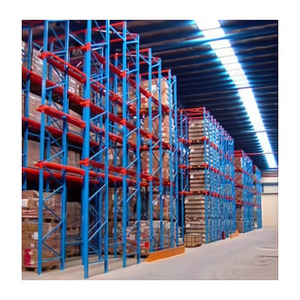
Drive in Racking Steel Warehouse Rack System
Drive in Racking Steel Warehouse Rack Drive Through System Storage Shelf Selective Racks
Get a Quote
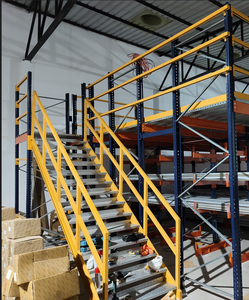
Rack Rollers Heavy Duty Steel Stackable Rack
Rack Rollers Heavy Duty Steel Polished Stackable Double-Sided Drive-Through Pallet Rack Blue Mezzanine
Get a Quote
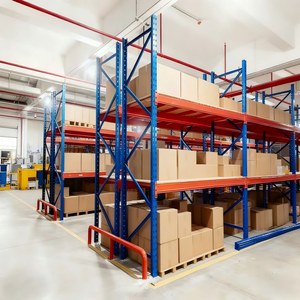
Anti-collision Upright Heavy Duty Rack
Anti-collision Upright Heavy Duty Rack For 1000kg Storage Forklift Working Selective Pallet Beam Racking System
Get a Quote
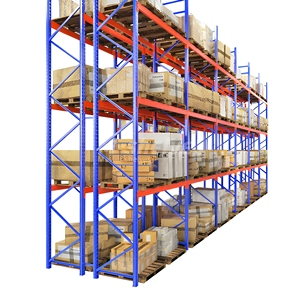
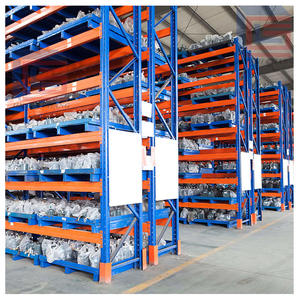
Industrial High Rise Heavy-Duty Steel Pallet Rack
Industrial High Rise Heavy-Duty Steel Pallet Rack Corrosion Protection High Load Storage Shelf Stereo Capacity
Get a Quote
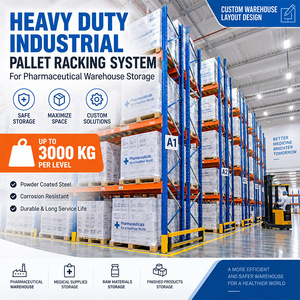
Heavy Duty Industrial Pallet Racking for Pharmaceutical
Heavy Duty Industrial Pallet Racking System for Pharmaceutical Warehouse Storage Powder Coated Steel
Get a Quote
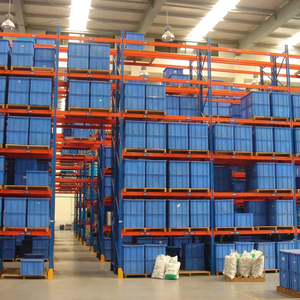
Adjustable Heavy Duty Warehouse Racking System
Adjustable Heavy Duty Warehouse Racking System Custom Steel Pallet Shelves For Factory And Storage
Get a Quote
Steel Pallet Rack Roll Formed Adjustable Beam
Steel Pallet Rack Roll Formed Adjustable Beam Type Heavy Load Capacity CE Certified Powder Coated Storage Rack
Get a Quote
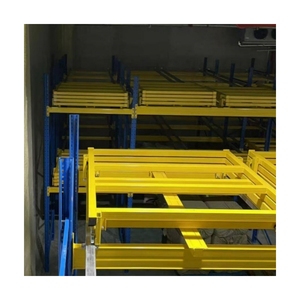
Chinese Manufacturing Supplies Heavy Duty Warehouse Racking
Chinese Manufacturing Supplies Heavy Duty Warehouse Racking Storage Shelf Stacking Racks Push Back Pallet Racks
Get a Quote
95%
Volumetric Footprint Efficiency
1,500kg
Standard Unit Pallet Payload
±1.5mm
Millimeter Rail Alignment Tolerance
30+
Global Export Countries Served

Executive Technical Summary: The Evolution of Multi-Way Shuttle Racking

In modern industrial logistics and supply chain optimization, land procurement costs and warehouse operational expenses have driven a major shift from traditional static storage structures to fully dynamic, automated high-density storage and retrieval systems (AS/RS). Among these advanced automation technologies, the Multi-Way Shuttle Racking System (frequently referred to as the 4-Way or 3D Automated Pallet Shuttle System) represents a transformative breakthrough in volumetric warehouse utilization and flexible throughput scaling.

Manufactured under stringent cold-formed and hot-rolled structural steel specifications, a Multi-Way Shuttle system utilizes intelligent autonomous robot shuttles capable of moving along both longitudinal and transverse sub-tracks within high-bay storage racks. Unlike legacy 2-Way radio shuttles—which only travel linearly in a single deep lane and rely on conventional forklifts for lane changes—the 4-Way Multi-Shuttle navigates complex grid layouts independently. Combined with integrated vertical reciprocating lifts (elevators), smart WCS (Warehouse Control Systems), and real-time WMS (Warehouse Management Systems), this architecture unlocks continuous, fully automated 3D pallet transportation across multiple storage levels without manual intervention.

Information Gain Insight: Sourcing multi-way shuttle systems directly from top-tier Chinese manufacturing hubs provides global buyers with a dual competitive advantage: precision-engineered structural tolerance compliance (ANSI MH16.1, EN 15512, FEM 10.2.02) matched with unmatched OEM/ODM manufacturing agility and cost efficiencies.

Dynamic 4-Directional Maneuverability

Autonomous switching between longitudinal driving tracks and transverse transfer tracks allows single shuttles to service entire rack levels seamlessly.

Volumetric Space Optimization

Eliminates forklift access aisles entirely, elevating cubic space utilization to over 90% compared to traditional 35-40% selective rack layouts.

Smart Fleet Orchestration

WCS algorithms dynamically assign shuttle task allocations, optimizing battery life, preventing bottleneck congestion, and ensuring redundancy.

Structural Engineering Standards & Millimeter-Precision Rail Systems

The operational safety and structural integrity of a Multi-Way Shuttle Racking Infrastructure depend heavily on strict manufacturing tolerances. Because autonomous robot shuttles travel at speeds up to 1.5 m/s while carrying unit payloads exceeding 1,500 kg, even tiny deviations in track horizontal levelness or upright rack squareness can cause sensor errors or physical jams.

Top China factories utilize high-tensile structural steel profiles (Q235B, Q355B, and SS400 grades) processed via fully automated CNC continuous roll-forming lines. The sub-track guide rails are engineered with precise punch holes to accommodate optical positioning reflectors and RFID position markers. Key engineering metrics include:

  • Structural Deflection Ratios: Upright frame and rail beam designs adhere strictly to FEM 10.2.02 and RMI standards, maintaining dynamic load deflections below L/350 to ensure smooth shuttle travel.
  • Sub-Millimeter Assembly Tolerances: Rail section joint gaps are maintained within ±0.5 mm, with overall track gauge variations capped at ±1.5 mm across spans up to 100 meters.
  • Heavy-Duty Surface Protection: Automated Swiss Gema electrostatic powder-coating systems deliver durable, impact-resistant epoxy-polyester coatings (60–90 microns thick), preventing rust and corrosion even in high-humidity or cold-storage environments (-25°C).

System Performance & Operational Comparison Matrix

Storage Architecture Type Cubic Space Utilization Throughput Velocity (Pallets/Hr) Labor Overhead Reduction Capital Expenditure (CapEx) Ideal Inventory Rotation
Multi-Way 4-Way Shuttle AS/RS 88% - 95% High (120+ pallets/hr) Up to 85% Reduction Medium - High (Flexible ROI) FIFO & LIFO Automated
Traditional Selective Racking 35% - 45% Low (Manual Forklift) Baseline High Labor Low Initial CapEx 100% Direct Selective Access
Drive-In Racking System 65% - 75% Very Low (Forklift Bottleneck) Moderate Labor Required Low - Medium Strict LIFO Only
2-Way Radio Shuttle Racking 70% - 80% Medium (Forklift Relocation) 40% - 50% Reduction Moderate CapEx LIFO / Block FIFO
AS/RS Stacker Crane System 85% - 90% High (Fixed Crane Aisles) 80% - 90% Reduction Very High Fixed CapEx Automated FIFO / LIFO

Future Sourcing & Technology Trends in Multi-Way Shuttle Systems

As international supply chains embrace Industry 4.0 automation, global procurement teams and logistics architects are prioritizing modularity, energy efficiency, and artificial intelligence integration. Industry trends shaping future procurement include:

1. AI-Driven Fleet Balancing & Swarm Intelligence

Future multi-way shuttle systems are moving beyond basic central PLC control toward decentralized, swarm-intelligent algorithms. Shuttles communicate via industrial Wi-Fi 6 or private 5G networks, dynamically redistributing work tasks during peak order periods. If one vehicle requires maintenance, adjacent shuttles automatically adjust their travel routes to maintain uninterrupted warehouse throughput.

2. Ultra-Capacitor & LiFePO4 Quick-Charge Power Management

Legacy automated guided vehicles (AGVs) often required hours of offline battery charging. Modern multi-way shuttles utilize lithium iron phosphate (LiFePO4) battery modules coupled with rapid contact charging stations built directly into vertical lift transit points. Shuttles recharge automatically during 15-second pallet transfers, enabling continuous 24/7 operations without battery swapping.

3. Green Cold-Chain Optimization

Cold storage facility operators face escalating electricity costs. Multi-Way Shuttle systems significantly reduce refrigerated room volumes by eliminating operational aisles. Compact footprints reduce thermal dissipation areas, while multi-shuttle fleets generate minimal heat compared to heavy manual forklifts, lowering total cold chain power consumption by up to 40%.

Why Sourcing from China's Top OEM Racking Factories Delivers Competitive Edge

Partnering directly with leading Chinese warehouse equipment manufacturers like FlexBeam provides international buyers with enterprise-grade quality and substantial cost advantages. China’s advanced steel manufacturing ecosystem combines deep engineering expertise with modern automated production capabilities.

ISO 9001 & International Compliance

Fabricated strictly adhering to global codes including ANSI MH16.1 (RMI), EN 15512, Australian Standard AS 4084, and ISO quality management systems.

Comprehensive OEM/ODM Engineering

From initial 3D DWG/BIM floor plan layouts and structural finite element analysis (FEA) to custom powder-coating colors and custom component manufacturing.

Export Containerization Packaging

Uprights, beams, and shuttle tracks are systematically bundled, corner-protected, steel-strapped, and moisture-wrapped to withstand ocean freight shipping.

Frequently Asked Procurement Questions (FAQ)

What is the primary operational difference between a 2-Way Radio Shuttle and a Multi-Way (4-Way) Shuttle system?
A 2-Way Radio Shuttle operates solely back-and-forth within a designated storage lane. Moving it to another lane requires a manual forklift operator to physically relocate the vehicle. In contrast, a Multi-Way 4-Way Shuttle features two sets of drive wheels that enable it to change directions independently across longitudinal and transverse tracks. Integrated with vertical lifts, a 4-Way Shuttle system operates fully automatically across all racks and levels without forklift dependency.
What concrete floor slab specifications and rack installation tolerances are required?
Because shuttle robots rely on laser and optical positioning, floor slab levelness must conform to FM2 or higher specs per TR34 guidelines. Concrete slab thickness typically needs to exceed 200 mm with a minimum compressive strength of 30 MPa to support high point loads under rack footplates. Track alignment tolerances are maintained within ±1.5 mm across the entire rack installation layout.
How does a Multi-Way Shuttle system handle unexpected power outages or vehicle breakdowns?
Our systems include multi-layered safety and redundancy features. In the event of a main power interruption, uninterruptible power supplies (UPS) keep WCS controls and shuttle communication online long enough to safely park active tasks. If a shuttle robot encounters a mechanical issue, an auxiliary rescue shuttle or manual recovery hoist can safely retrieve the stranded vehicle from the rack structure without shutting down the entire warehouse.
Can Multi-Way Shuttle Racking be integrated into sub-zero cold storage facilities?
Yes. Our multi-way shuttle systems and structural steel racks are specially engineered for cold storage operating temperatures down to -25°C (-13°F). Shuttles deployed in freezing environments use low-temperature electrical components, specialized synthetic lubricants, anti-condensation heaters, and cold-resistant LiFePO4 batteries to ensure reliable continuous performance.
What design codes and structural certifications apply to export racking shipments?
All structural design layouts and roll-formed steel components can be customized and verified according to regional standards, including ANSI MH16.1 (RMI standard for the United States), EN 15512 / FEM 10.2.02 (European specifications), and AS 4084 (Australian steel storage racking code). Material test certificates (MTCs) and CE compliance documentation are provided with every shipment.
What WMS/WCS software protocols are used for seamless ERP system integration?
Our Warehouse Control System (WCS) middleware communicates via standard industrial protocols including REST APIs, WebSockets, OPC UA, and Modbus TCP/IP. It interfaces cleanly with major ERP/WMS platforms such as SAP, Oracle WMS, Manhattan Associates, Infor, and custom enterprise databases.

Ready to Modernize Your Warehouse Footprint?

Send your CAD floor plans, pallet dimensions, and target throughput specifications to our structural automation engineers. We will prepare a comprehensive CAD layout and structural cost quotation within 24–48 hours.

Get a Quote