


Explore our cold-resistant, high-load selective, drive-in, push-back, and automated radio shuttle pallet rack systems specifically manufactured for sub-zero freezer environments down to -30°C.
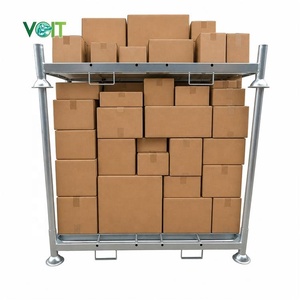
Hot-dip galvanized heavy-duty stackable racking engineered for rigorous cold chain logistics, anti-corrosion protection, and extreme load resilience in deep-freeze facilities.
Get a Quote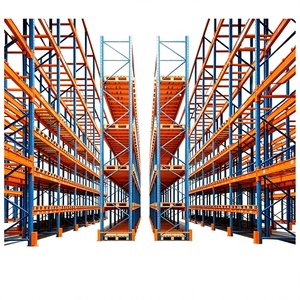
High-density cold-rolled structural steel drive-in racking optimized for maximum cubic volume utilization in refrigerated chambers and high-bay distribution hubs.
Get a Quote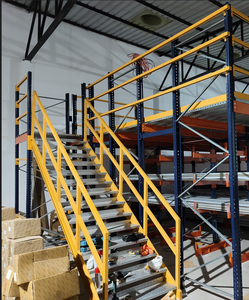
High-capacity drive-through structure integrated with flow rollers and elevated platform mezzanine systems for efficient FIFO/LIFO inventory management.
Get a Quote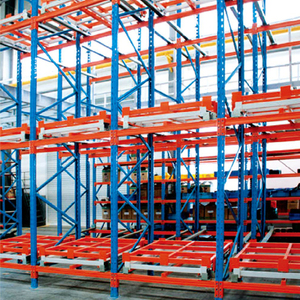
Telescoping cart push-back design enabling multi-pallet deep storage per level, combining high density with elevated picking accessibility in low-temperature warehouses.
Get a Quote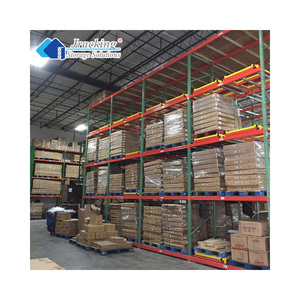
Engineered for cold storage facilities requiring high throughput, structural integrity under dynamic loading, and reduced forklift lane space requirements.
Get a Quote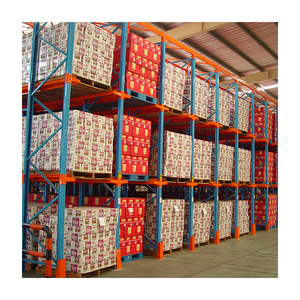
Customized industrial heavy-duty racking built from high-tensile steel channels, tailored for batch pallet storage with optimized thermal energy retention.
Get a Quote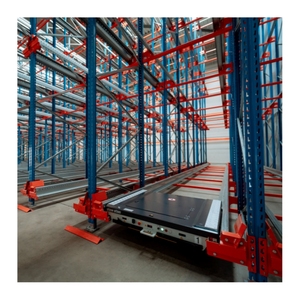
State-of-the-art semi-automated radio shuttle pallet racking system designed for extreme cold storage automation, maximizing cubic storage density and operational efficiency.
Get a Quote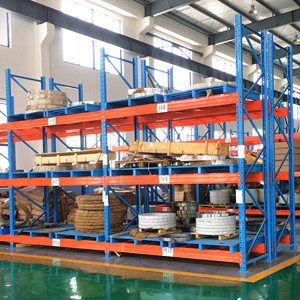
Direct factory wholesale pallet racking engineered to international design codes (RMI, EN 15512, AS 4084) with custom height, beam span, and load rating options.
Get a QuoteOperating a refrigerated or frozen warehouse introduces unique metallurgical, mechanical, and logistical challenges that standard dry-warehouse selective pallet racking cannot withstand. In deep-freeze environments (-18°C to -30°C), structural carbon steel undergoes physical changes that affect ductility, yield strength, and impact resistance. As a primary manufacturer in China specializing in cold storage equipment, our engineering design principles prioritize long-term structural integrity, seismic safety, and operational total cost of ownership (TCO).
Standard commercial cold-rolled steel (such as standard Q235B) experiences a reduction in Charpy V-notch impact toughness when subjected to sub-zero temperatures. At temperatures below -20°C, ordinary steel risks entering its Ductile-to-Brittle Transition Temperature range. Under forklift impact, a brittle rack upright will crack or snap rather than deform plastically.
Our cold storage racking systems utilize certified fine-grain steel alloys (such as Q355D or Q355E) combined with closed tubular or hot-rolled structural channel profiles (C-channels). These steel grades feature higher manganese contents and strict carbon equivalent control to ensure that impact toughness remains high even at -30°C operating conditions.
Freezer facilities experience severe moisture condensation during defrost cycles, door transitions, and temperature fluctuations. Moisture combined with residual moisture on pallets accelerates oxidation. Standard powder coating can micro-fracture under extreme low-temperature thermal contraction, allowing moisture to reach the raw steel underneath.
Cold storage energy costs scale with cubic volume ($/m³ per year). Choosing the correct structural storage configuration directly dictates operational efficiency and floor space yield.
Eliminates operating aisles by allowing forklifts to drive directly into storage lanes. Ideal for high-density, low-SKU batch cold storage where LIFO (Last-In, First-Out) or FIFO rotation is acceptable. Achieves up to 75% space utilization.
Semi-automated deep-lane storage system using independent battery-powered shuttles to navigate pallets inside channels. Maximizes storage density while keeping forklifts out of aisles, preventing rack impact damage in sub-zero environments.
Pallets are loaded onto nested carts riding on inclined rails. When a new pallet is loaded, it pushes the preceding pallet back. Provides 2-to-6 pallet deep storage with dynamic gravity retrieval and superior SKU selectivity over drive-in systems.
Use the quantitative breakdown below to evaluate structural, operational, and thermal efficiency trade-offs across common freezer pallet racking configurations.
| Racking Topology | Storage Density | SKU Selectivity | Forklift Risk | Thermal Efficiency | Best Application |
|---|---|---|---|---|---|
| Selective Pallet Rack | Low (35% - 45%) | 100% Direct Access | Medium | Moderate | High SKU variety, fast-fulfillment distribution centers. |
| Drive-In Racking | High (65% - 75%) | Low (Per Lane) | High | Very High | Bulk food processing, frozen seafood/poultry batch storage. |
| Push-Back Racking | High (60% - 70%) | Moderate (Per Level) | Low | High | Medium SKU turnover with limited floor footprint. |
| Pallet Flow Rack (FIFO) | High (70% - 80%) | Moderate | Very Low | Very High | Expiration-sensitive dairy, meats, and pharmaceuticals. |
| Radio Shuttle System | Maximum (80% - 85%+) | Controlled Batch Access | Minimal | Maximum | Automated cold rooms, high-volume logistics hubs. |
As global cold chain demands expand driven by biological pharmaceuticals, frozen food e-commerce, and globalized seafood trade, procurement trends for industrial warehouse racking are undergoing rapid technological evolution. B2B buyers and logistics engineers must account for the following emerging trends:
The cost of human labor inside sub-zero environments is rising alongside health and safety regulations limiting operator shift durations in deep-freeze conditions (-25°C). High-bay AS/RS racking systems, reaching heights up to 40 meters, utilize automated cranes, shuttle vehicles, and conveyor networks. Chinese manufacturers are increasingly supplying ultra-precise tolerance structural racking designed for AS/RS stacker crane interfaces.
Instead of constructing a cold storage building and installing racking inside, procurement teams are shifting toward Rack-Supported Warehouses (Clad-Rack). In these structures, the pallet racking itself forms the load-bearing framework that supports the insulated wall panels, roofing, and refrigeration units. This eliminates the need for separate structural steel columns, saving up to 20% in capital expenditure and maximizing building footprint efficiency.
Modern sub-zero installations are integrating IoT stress sensors, thermal sensors, and strain gauges directly into critical upright columns. Sub-grade freezing can cause frost heaving in concrete floor slabs, causing vertical displacement of rack footings. Advanced anchor plate assemblies with micro-adjustable leveling shims and thermal break insulation under baseplates prevent cold transfer from the rack to the sub-slab heating cables.
Global logistics operators are requiring lower embodied carbon metrics across supply chains. Chinese manufacturers are expanding the use of Electric Arc Furnace (EAF) recycled steel and low-VOC thermosetting powder coatings to support LEED and carbon-neutral warehouse certifications.
Partnering with an established Chinese pallet racking manufacturer provides global buyers with significant engineering versatility, structural safety compliance, and cost competitiveness. Our manufacturing facilities operate under strict international engineering standards:
Racking structures are engineered in compliance with global standards including ANSI MH16.1 (RMI) in North America, EN 15512 in Europe, and AS 4084 in Australia/New Zealand. Seismic calculations (FEA stress analysis) are adapted to project location ground acceleration coefficients.
Automated roll-forming lines, continuous laser cutting, and robotic welding cells ensure consistent weld penetration on heavy beam connectors and baseplates, preventing structural weak points in critical cold storage joints.
Components are bundle-coded with durable export labels, steel-strapped, and wrapped in protective moisture-barrier membranes to withstand ocean shipping humidity and streamline on-site assembly logic.
Consult with our senior logistics engineers today. We provide complimentary CAD layout design, structural FEA load analysis, and competitive factory-direct pricing for international procurement projects.