


Precision-crafted, load-certified storage architecture built for extreme industrial payload demands and maximum vertical space utilization.
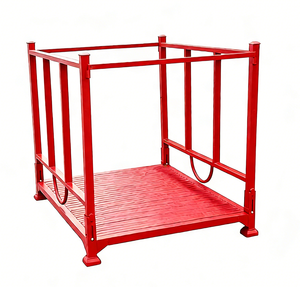
6-level high-density modular stackable steel pallet rack system engineered with anti-corrosion powder coating for harsh industrial environments.
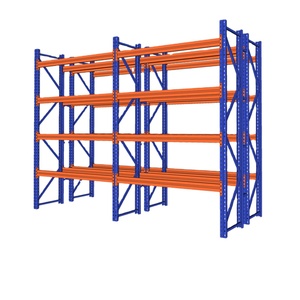
High-load capacity selective pallet rack configured with heavy-duty step beams and tear-drop frame uprights for universal warehouse application.
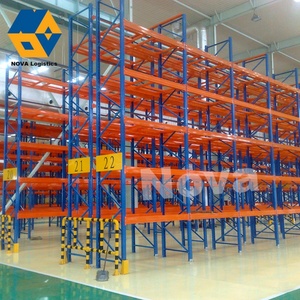
Tailor-engineered structural steel racking built to custom bay spans, beam levels, and specialized seismic baseplate design requirements.
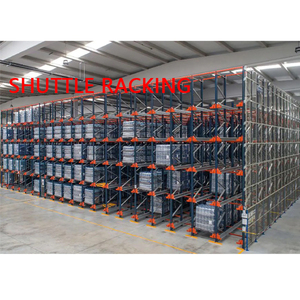
Automated 4-way radio shuttle high-density rack system maximizing volume storage for automated warehouse and cold storage fulfillment hubs.
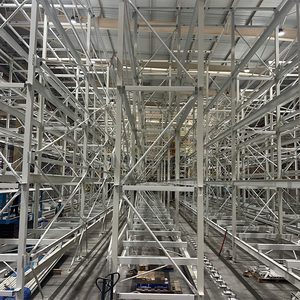
FEA-tested engineered racking configuration integrating narrow aisle (VNA) access with optimal pallet position safety factors.
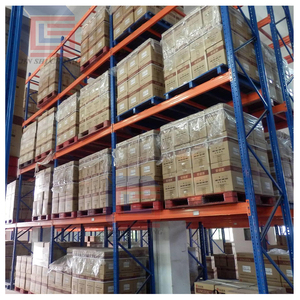
Heavy structural channel framing designed to handle rigorous forklift impact and high-turnover logistics distribution operations.
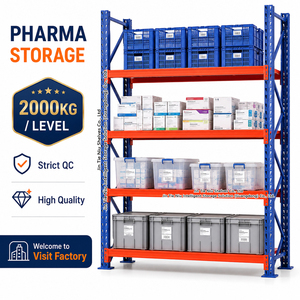
Certified 2000kg/level load-bearing structural design compliant with strict pharmaceutical cleanroom and plastic bin organization standards.
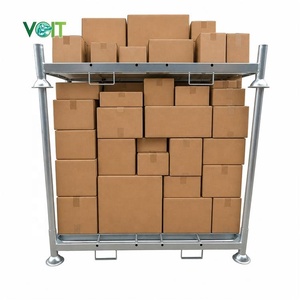
Hot-dip galvanized heavy steel stacking rack system providing maximum rust protection in cold storage freezers and outdoor staging yards.
An In-Depth White Paper on Extra Heavy-Duty Pallet Racking Architecture by China’s Premier Storage Manufacturing Authority
In modern industrial material handling, selecting the correct structural storage infrastructure directly influences operational throughput, structural safety compliance, and long-term capital expenditure efficiency. As China's leading extra heavy-duty pallet racking manufacturer and global exporter, our engineering paradigm is built upon fundamental metallurgical physics, precise Finite Element Analysis (FEA), and strict compliance with global engineering codes including ANSI MH16.1 (RMI standards), EN 15512 (European specification), and AS 4084 (Australian standard for steel storage racking).
Heavy industrial facilities—ranging from third-party logistics (3PL) hubs, pharmaceutical temperature-controlled cold chains, automotive manufacturing staging areas, to heavy chemical facilities—require storage racks that exceed standard roll-formed light gauge steel limits. Industrial operations encounter severe dynamic fork-truck impact risks, non-uniform pallet load distributions, and localized seismic forces. To address these demands, our engineering facility produces two distinct extra heavy-duty racking structural families: SK2000 Boltless Closed Tubular Racking and SK3000 Structural Hot-Rolled Channel Steel Racking.
Unlike open-back roll-formed columns prone to torsional twist upon forklift impact, our hot-rolled C-channel structural steel columns (SK3000) offer 250% higher torsional resistance and superior yield strength in high-traffic aisles.
Our SK2000 series utilizes closed structural tube upright geometry. The seamless continuous weld profile distributes vertical compression stress uniformly while absorbing lateral equipment strikes far better than standard open teardrop profiles.
Utilizing automated 12-stage pre-treatment, zirc-phosphating, and thermosetting electrostatic epoxy-polyester powder coating (or Hot-Dip Galvanizing to ISO 1461), our systems resist chemical exposure and moisture down to -30°C in freezer vaults.
Understanding structural mechanics under high stress requires evaluating how column geometry affects elastic buckling modes. In standard open-profile pallet racking, lateral column buckling often occurs under unexpected eccentric loading or when fork trucks strike lower upright columns. By shifting manufacturing focus toward closed hollow structural sections (HSS) and thick-walled structural channel profiles ($4^{\prime\prime}$ and $5^{\prime\prime}$ channels with thick web flanges), our racking systems maintain structural integrity even under harsh daily operating conditions.
Engineering metrics comparing structural hot-rolled channel racking, boltless tubular racking, and standard roll-formed selective racking systems.
| Structural Attribute | SK3000 Extra Heavy Structural Channel | SK2000 Closed Tubular Boltless System | Standard Roll-Formed Teardrop Rack |
|---|---|---|---|
| Raw Material Specification | Hot-Rolled Structural Steel Channels (Q355B / ASTM A36) | Cold-Formed Closed Structural Steel Tubes (Q235B / Q355B) | Open-Back Cold-Rolled Strip Steel (Q235B) |
| Column Torsional Rigidity | Maximum (250% higher than open-back) | High (Closed continuous tubular section) | Low (Open structural profile susceptible to twisting) |
| Frame Load Capacity Range | Up to 32,000 kg (70,500 lbs) per frame | Up to 22,000 kg (48,500 lbs) per frame | Up to 14,000 kg (30,800 lbs) per frame |
| Impact Damage Resistance | Exceptional (Ideal for high-velocity heavy fork trucks) | Superior (Resists front & side column denting) | Moderate (Requires external post guards) |
| Beam Connection Type | Heavy 4-Bolt Structural Connector Plates | High-Strength Boltless Tapered Connector Hooks | Standard 3-Pin Drop-In Rivet Lock |
| Deflection Design Criteria | Strict $L/180$ to $L/240$ under maximum rated safe working load | $L/180$ under maximum rated safe working load | $L/180$ under maximum static safe working load |
| Primary Application Fit | Cold Storage, Drive-In, Pushback, Heavy Manufacturing, AS/RS | High-Velocity DCs, Selective Pallet, Double-Deep Racks | Light Distribution, Retail Backroom, Low-Impact Storage |
How Advanced Physics and Structural Calculations Guarantee Zero Structural Failure in High-Bay Warehouse Environments
A central tenet of Google’s E-E-A-T guideline is delivering verifiable expertise and rich technical detail. When designing extra heavy-duty pallet racking systems, engineering teams must evaluate structural loads beyond simple static dead weight. A loaded rack beam experiences complex bending moments, shear stresses, and deflection forces. The maximum allowable deflection under RMI and EN 15512 specifications is strictly bounded by:
\delta_{max} = \frac{L}{180}
Where $L$ equals the clear span distance between upright columns. For a standard 2700mm (108-inch) pallet beam carrying two 1500kg pallets (totaling 3000kg load), the allowable beam deflection at mid-span cannot exceed 15mm. Our manufacturing process utilizes high-strength structural step beams and C-channel boxed beams with robotically welded 4-hook connector endplates. This construction ensures that actual deflection under peak loads remains well within less than $L/220$, minimizing beam sagging and reducing structural fatigue over decades of continuous operation.
Furthermore, column design calculations must account for Euler’s critical buckling load ($P_{cr}$), which governs long-column behavior under vertical compressive loading:
P_{cr} = \frac{\pi^2 E I}{(K L)^2}
Where $E$ represents the modulus of elasticity of steel ($210,000 \text{ MPa}$), $I$ is the minimum area moment of inertia of the column cross-section, $L$ is the unbraced column length, and $K$ is the effective length factor based on bracing configuration (K-bracing vs. X-bracing). Standard open roll-formed columns have a significantly lower moment of inertia ($I_y$) along their weak axis, rendering them vulnerable to torsional-flexural buckling. By employing closed tubular sections (SK2000) and heavy-gauge hot-rolled structural channels (SK3000), the cross-sectional moment of inertia is equalized across both X and Y axes, elevating the critical buckling threshold ($P_{cr}$) by up to 180% compared to open-section alternatives.
In seismic zones (such as California seismic zones 3-4, Japan, New Zealand, or South America), floor slab anchoring and seismic baseplate design are critical considerations. Our engineering team utilizes finite element seismic simulation to size heavy-duty baseplates with anchor bolt hole patterns designed to dissipate lateral ground acceleration forces. Baseplates are anchor-bolted into high-strength reinforced concrete slabs ($f'_c \ge 30 \text{ MPa}$) using wedge anchors or chemical resin capsules, ensuring racking structures withstand seismic overturning moments without dynamic displacement.
Strategic Market Insights for Global Supply Chain Directors and Procurement Executives
The global warehousing and logistics sector is undergoing a technology-driven transformation. Supply chain managers are shifting away from evaluating racking purely on initial purchasing price per pallet position. Modern procurement strategies focus on total cost of ownership (TCO), space density optimization, automated system readiness, and ESG (Environmental, Social, and Governance) compliance. Based on global export demand patterns across North America, Europe, Australia, and the Middle East, four key procurement trends dominate the industrial storage sector:
Rising labor costs and land scarcity drive demand for high-bay pallet racking compatible with Automated Storage and Retrieval Systems (AS/RS) and 4-way radio shuttles. Racking tolerances must meet strict millimetric accuracy to allow robotic cranes and shuttles to travel along guidance rails at high speeds.
With refrigerated storage operational expenses tied closely to power consumption, facilities must maximize pallet storage density per cubic meter of cooled volume. Pushback racking, pallet flow systems, and deep-lane shuttle racks allow facilities to reduce warehouse floor print while maintaining throughput.
Multinational corporations require suppliers to document steel sourcing, carbon footprints, and environmental standards. We address this demand by using 100% recyclable structural steel, VOC-free powder coatings, and energy-efficient automated production line processes.
Procurement teams prioritizing these trends avoid premature infrastructure obsolescence, ensuring racking systems integrate smoothly with future automation upgrades while minimizing maintenance down-time.
Pioneering Next-Generation Heavy-Duty Material Handling Equipment Solutions
To stay ahead of dynamic supply chain requirements, our engineering R&D team continuously advances manufacturing technologies, structural designs, and surface treatment methodologies. Key technical innovations defining next-generation extra heavy-duty pallet racking include:
These engineering advancements reflect our commitment to providing international buyers with storage solutions designed for reliability, adaptability, and high operational safety.
Expert technical answers addressing common buyer considerations in international pallet racking procurement.
Boltless tubular racking (such as our SK2000 series) utilizes closed-section tubular upright columns that offer excellent torsional resistance and quick, boltless beam connection setup using drop-in connector hooks. Structural pallet racking (such as our SK3000 series) uses heavy hot-rolled steel C-channels fastened with high-strength structural bolts. Structural racking provides maximum impact resistance, higher frame capacity ratings (up to 32,000 kg), and is ideally suited for drive-in racking, freezer rooms, and heavy industrial environments.
To produce a fully compliant CAD layout and FEA calculation sheet, our engineering team requires: (1) Pallet dimensions (Length x Width x Height including cargo overhang), (2) Maximum and average load weights per pallet, (3) Clear warehouse building height under ceiling trusses or sprinkler lines, (4) Forklift truck specifications including maximum lift height and minimum right-angle aisle turn radius, (5) Environmental conditions (e.g., ambient vs sub-zero freezer), and (6) Local seismic design codes.
Our manufacturing and structural calculations comply with key global standards according to target export destination requirements: ANSI MH16.1 (Rack Manufacturers Institute - RMI, USA), EN 15512 / FEM 10.2.02 (European Steel Storage Racking Standards), and AS 4084 (Australian Steel Storage Racking Code). Every exported system is supplied with official load capacity documentation and structural engineering plaques.
Uprights, beams, and structural components are bundled using automated steel banding, heavy plastic film wrapping, and custom wooden block dunnage to prevent scratching and transit damage during ocean freight shipment. Component bundles are systematically tagged with part codes matching the installation assembly drawings, streamlining site unloading, container space utilization, and field installation.
Pallet density depends on SKU counts and inventory turnover strategies (FIFO vs LIFO). For high-volume single-SKU operations, Drive-In Racking and Radio Shuttle Racking deliver the highest storage density by eliminating operating aisles. For multi-SKU medium turnover, Pushback Racking (2 to 6 pallets deep) and Pallet Flow Racking offer high cube utilization while maintaining order fulfillment speed.
We provide two primary finish options: (1) Thermosetting electrostatic epoxy-polyester powder coating cured at 200°C for standard ambient distribution facilities, providing smooth, durable, impact-resistant color finishing; and (2) Hot-Dip Galvanizing to ISO 1461 standards, which submerges fabricated steel into molten zinc to create a thick metallurgical zinc-iron alloy barrier against rust in cold storage freezers (down to -30°C) and humid outdoor applications.
Unmatched Manufacturing Scale, Engineering Expertise, and Export Reliability
Selecting a direct China manufacturing partner for extra heavy-duty pallet racking requires evaluating manufacturing capacity, quality control procedures, steel traceability, and project support capabilities. Our 80,000 m² production complex operates advanced cold-roll forming mills, robotic continuous MIG welding cells, automated 12-stage powder coating lines, and a dedicated structural testing laboratory.
We maintain full mill-test certificate (MTC) traceability from premier state-owned steel mills, ensuring every upright frame and beam conforms strictly to specified yield strengths ($Q235B$, $Q355B$, or $ASTM \text{ A572 Grade 50}$). From initial floor plan layout optimization to container loading and on-site assembly guidance, we provide global B2B clients with durable, code-compliant storage systems built for long-term operational success.
Connect directly with our engineering team for a complimentary site layout review, FEA structural calculation report, and competitive direct-factory quotation.