


Engineered for extreme ambient conditions (-30°C to +40°C), heavy industrial payloads, and automated cold chain facilities worldwide.
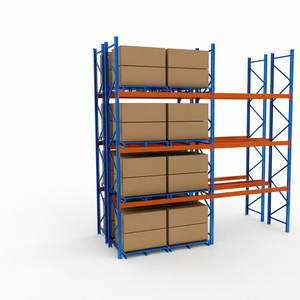
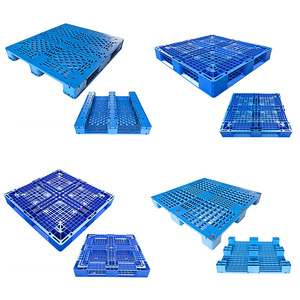
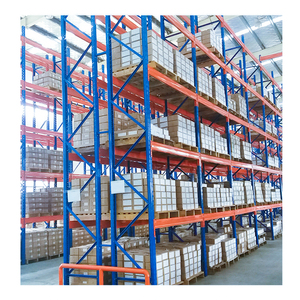
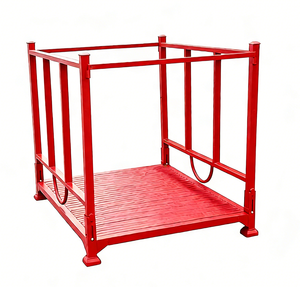
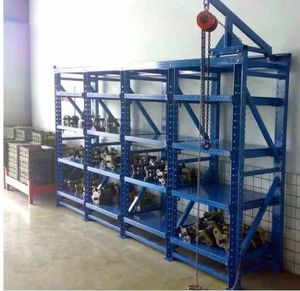
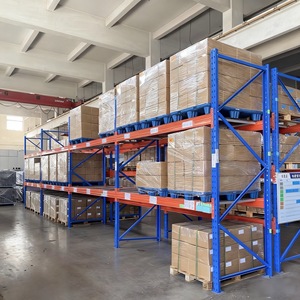
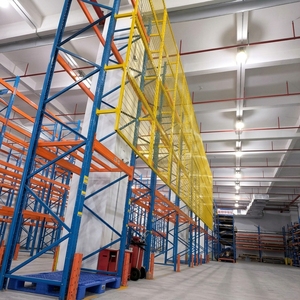
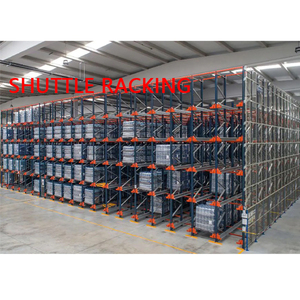
An authoritative operational guide for logistics directors, procurement managers, and structural engineers optimizing refrigerated distribution centers (RDC) and blast-freezer facilities.
Operating a cold storage facility is fundamentally an exercise in thermal energy cost mitigation. Operating costs in sub-zero environments (-18°C to -30°C) are driven overwhelmingly by refrigeration utility expenditure, which scales directly with gross cubic footprint rather than pallet volume alone. Consequently, selecting an optimized, high-density cold storage pallet racking system is not merely a material-handling decision; it is a primary financial lever governing facility ROI and long-term Operational Expenditure (OpEx).
As a leading premier OEM/ODM manufacturer and exporter based in China, our engineering methodology addresses the triple challenges of sub-zero logistics: Ductile-to-Brittle Transition Temperature (DBTT) metallurgy, micro-climate condensation control, and volumetric air-circulation balance. Standard structural carbon steels suffer severe notch-toughness degradation when subjected to low temperature environments, making unengineered racking highly susceptible to catastrophic fatigue failure during localized forklift impacts. Our cold-chain racking architectures incorporate specialized low-alloy structural steels (such as Q355D/E), thermosetting zinc-rich powder coatings, and hot-dip galvanized structural profiles designed specifically to maintain yield strength, impact toughness, and corrosion resistance at continuous operating temperatures down to -30°C.
Standard roll-formed rack profiles designed for ambient distribution centers often fail prematurely in cold storage environments due to thermal stress differentials and hydrogen embrittlement risks. Below freezing, low-carbon structural steel loses Charpy V-notch impact energy absorption capabilities. Our specialized manufacturing process mitigates structural fatigue through targeted engineering innovations:
We strictly specify certified high-yield Q355D and Q355E micro-alloy steels featuring micro-additions of Niobium (Nb) and Vanadium (V), maintaining structural impact toughness down to -40°C without brittle cleavage fracture risks.
Components undergo continuous hot-dip galvanizing (HDG) conforming to ISO 1461, yielding zinc coating thicknesses of 65–85 µm, or receive specialized sub-zero thermosetting epoxy powder coatings resistant to thermal-shock cracking during defrost cycles.
To prevent frost heave forces from cracking concrete floor slabs via thermal bridging, our systems use high-density non-compressible thermal isolation pads beneath heavy structural column footings.
Comparing high-density pallet racking topologies to optimize warehouse footprint, air convection, and capital expenditure.
| Racking System Type | Volumetric Efficiency | Pallet Selectivity | Cold-Chain Suitability | Ideal Temp Range | Primary Application |
|---|---|---|---|---|---|
| Radio Shuttle Automation | 85% - 90% | LIFO / FIFO Dynamic | Maximum ROI / High Safety | -25°C to -30°C | High-volume FMCG, Frozen Meat & Seafood |
| Drive-In / Drive-Through | 75% - 85% | Strict LIFO | High Density / Moderate Labor | -18°C to -25°C | Seasonal agricultural yield, bulk ice cream |
| Pallet Flow (Gravity Roller) | 75% - 80% | Strict FIFO | Automatic Rotation / High CapEx | 0°C to -20°C | Pharmaceuticals, fresh dairy, fast-expiry foods |
| Pushback (Cart System) | 70% - 75% | LIFO (2-6 Deep) | Medium Density / Quick Access | -10°C to -22°C | Buffer staging, medium-velocity food distributors |
| Double-Deep Selective | 60% - 65% | 50% Immediate Access | Standard Flexibility | 0°C to -30°C | 3PL multi-tenant cold stores, mixed SKU inventory |
Understanding the technology shifts transforming cold chain warehouse engineering and procurement decisions.
Soaring labor expenses and harsh sub-zero working environments are driving rapid replacement of manual forklift-operated drive-in systems with 4-Way Radio Shuttle and AS/RS automated crane systems. Automation maximizes vertical cube height utilization up to 40 meters, reducing cold room volume per pallet by over 40%.
Traditional structural steel channel racking is increasingly giving way to closed-profile tubular boltless uprights (e.g., SK2000 geometry). Closed tubular profiles offer up to 250% higher torsional resistance against forklift impact collisions while drastically reducing shipping freight costs through optimized nesting transport.
Global logistics REITs and multinational food distributors now require supply chain carbon transparency. Leading Chinese manufacturers are adopting Electric Arc Furnace (EAF) recycled steel billet sourcing combined with zero-VOC powder coating lines to reduce Scope 3 embodied carbon emissions.
Direct factory manufacturing strength, certified engineering rigor, and end-to-end global export execution.
FlexBeam Warehouse Equipment Co., Ltd. stands at the intersection of European structural compliance and Chinese industrial manufacturing scale. Operating state-of-the-art automated roll-forming lines, laser profiling cells, and continuous robotic welding centers, we produce over 50,000 metric tons of load-rated industrial storage racks annually for clients across North America, Europe, Australia, and the Middle East.
Every cold storage rack configuration undergoes advanced Finite Element Analysis (FEA) under combined live load, dead load, seismic acceleration (Zone 4), and sub-zero thermal strain vectors, ensuring structural safety compliance with ANSI MH16.1 (RMI), EN 15512, and AS 4084 specifications.
Our proprietary manufacturing process enforces ±0.5mm beam length and upright punch tolerances. Seamless fit-up accelerates site assembly, eliminates structural binding during extreme cold shrinkage, and reduces on-site erection labor overhead by up to 30%.
Export shipments are precision bundled, code-tagged, and sea-freight packaged in heavy plastic wrapping to eliminate transit oxidation. Every project ships complete with detailed CAD layout prints, installation manuals, component manifests, and mill test certificates (MTC).
Direct technical answers addressing the most common questions raised by warehouse developers, engineers, and international procurement managers.
Consult directly with our senior structural engineers to design a heavy-duty, thermal-resilient racking system engineered specifically for your payload profiles and operating temperatures.
Inquire Now