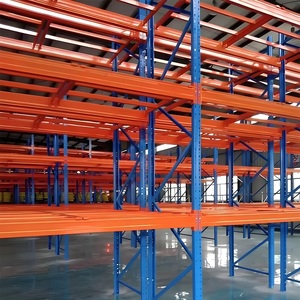


Engineered to international safety standards, fully load-rated, and customized for global automated logistics operations.
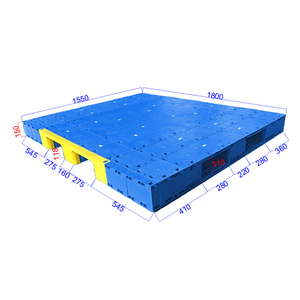
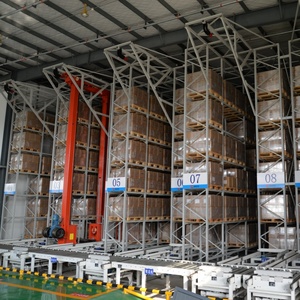
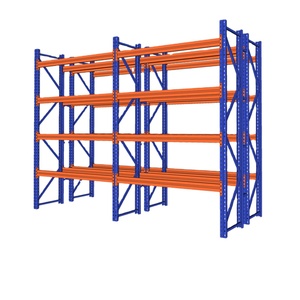
Quantifying operational gains achieved through CE-compliant automated radio shuttle racking installations.
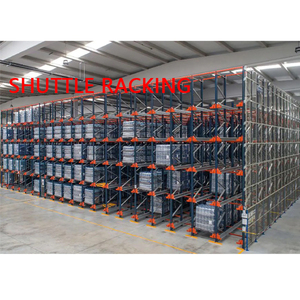
In modern high-throughput logistics, supply chain leaders face a dual constraint: escalating real estate costs and the critical need for rapid order fulfillment. As an experienced exporter of engineered storage systems, our structural engineering team delivers high-density solutions centered around CE Certified Radio Shuttle Racking. Unlike legacy static racks or labor-intensive drive-in racking, semi-automated and fully automated shuttle racking leverages autonomous electric carts traveling on specialized internal guide rails to deposit and retrieve pallets inside deep storage channels.
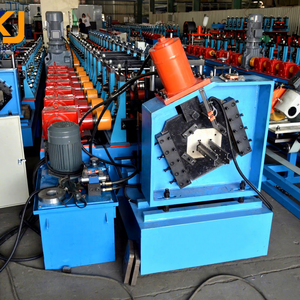
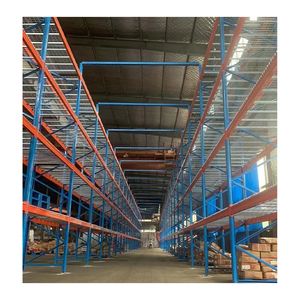
The core structural frame of a professional radio shuttle system consists of high-tensile upright frames, heavy-duty beam profiles, and custom-formed shuttle running rails designed with integrated safety lip stops. Compliance with CE Directives (2006/42/EC Machinery Directive), alongside structural specifications such as EN 15512 and ANSI MH16.1 (RMI), requires absolute precision during cold roll-forming and welding.
| System Parameter | Standard Radio Shuttle Racking | 4-Way Advanced Shuttle AS/RS | Traditional Drive-In Racking |
|---|---|---|---|
| Storage Density Ratio | Very High (up to 85%) | Maximum (up to 92%) | High (up to 65%) |
| Inventory Control Mode | FIFO & LIFO Convertible | Fully Automated Matrix Access | Strict LIFO Only |
| Forklift Damage Risk | Extremely Low (Forklifts stay outside aisles) | Zero (Fully Automated) | High (Forklifts enter rack channels) |
| CE Certification Requirement | Required for Shuttle & Rail Interface | Complete System CE Certification | Structural Safety Certificate Only |
| Operating Temperature | -30°C to +45°C (Cold Chain Ready) | -25°C to +40°C | Standard Ambient / Cold Storage |
As a globally recognized manufacturer and exporter, our engineering methodology relies on strict structural integrity, load testing, and comprehensive project documentation. Every radio shuttle layout is customized using finite element analysis (FEA) to ensure structural safety under local seismic loads, slab dynamic movement, and wind pressure for rack-supported buildings.
Insights into technological shifts driving global warehousing procurement decisions over the next decade.
Next-generation shuttles are adopting automated docking stations embedded within the racking channels. Supercapacitor hybrids allow 30-second burst charging during pallet drops, enabling continuous 24/7 autonomous operations without battery swapping.
Procurement teams are prioritizing shuttle systems equipped with open API communication protocols (REST, Modbus, MQTT). Shuttles communicate real-time channel occupancy, battery health, and maintenance alerts directly to Cloud Enterprise WMS platforms.
While traditional 2-way radio shuttles excel in deep-lane storage, procurement trends show rapid acceleration toward 4-way shuttles capable of changing tracks autonomously across grid structures, replacing traditional forklifts in high-throughput facilities.
Combining structural safety, automated machinery expertise, and end-to-end global project management.
Our shuttle carts and structural steel components undergo rigorous quality checks. Electrical systems feature CE-marked components, emergency stop relays, Siemens/Schneider PLC controls, and IP65-rated waterproof/cold-resistant enclosures.
Utilizing high-yield steel grades (Q235B, Q355B, and structural channel profiles), our engineering team designs heavy-load uprights with reinforced column cores to survive accidental impacts and support dynamic shuttle vibrations effortlessly.
From preliminary 3D CAD layout proposals and floor slab loading calculations to structural installation manuals and remote technical commissioning, we provide full support for international buyers, EPC contractors, and system integrators.
Every export shipment is supplied with fully detailed packing lists, load capacity plaques, color-coded installation schematics, and structural calculation reports tailored to local building department submission requirements.
Addressing essential technical, safety, and logistical questions raised by global procurement managers.