


Precision-engineered, structural-grade storage racks certified to international EN 15512, ANSI MH16.1, and CE standards for demanding industrial applications.
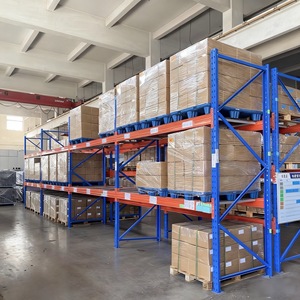
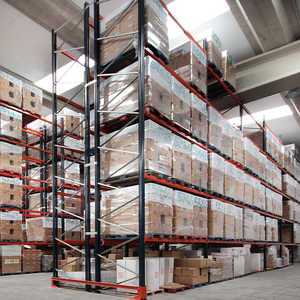
In modern industrial logistics, selecting high-capacity warehouse racking is not merely a matter of spatial layout; it is a critical structural engineering decision directly affecting personnel safety, operational continuity, and compliance risk. As global procurement standards tighten, CE Certified Heavy Duty Pallet Racking Suppliers & Exporters must adhere to rigorous structural design standards, verifiable material traceability, and audited Factory Production Control (FPC) procedures.
Under the European Construction Products Regulation (CPR 305/2011) and EN 1090-1 / EN 1090-2 (Execution of steel structures), load-bearing industrial racking systems exported to the European Union and international markets must meet stringent safety criteria. The structural design framework relies heavily on EN 15512 (Adjustable beam pallet racking systems — Principles for structural design) and FEM 10.2.02 standards, alongside North American ANSI MH16.1 standards maintained by the Rack Manufacturers Institute (RMI).
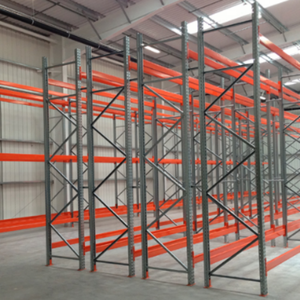
FlexBeam heavy-duty pallet storage racking is constructed from premium cold-formed or hot-rolled structural steel sections. By using high-tensile Q355B (equivalent to European S355JR / ASTM A572 Grade 50) and Q235B structural grades, upright frames achieve exceptional strength-to-weight ratios while retaining ductility under cyclic forklift impact loads.
Closed box and tubular upright profiles offer significantly higher torsional rigidity and impact resistance compared to traditional open roll-formed C-channels, dramatically cutting aisle downtime.
Heavy-duty box beams feature multi-claw alloy connector plates with automatic spring safety locks, preventing accidental beam displacement during high-bay pallet insertion.
Thermosetting epoxy-polyester powder coatings (60-80μm) applied via electrostatic line with automated 5-stage pre-wash deliver superior salt-spray corrosion resistance for cold rooms and damp warehouses.
As a premiere manufacturer and exporter of heavy-duty warehouse storage systems, FlexBeam maintains a fully integrated industrial footprint engineered to serve international EPC project contractors, 3PL logistics operators, and global distributors. Our core competitive advantages span custom structural engineering, automated mass production, rigorous quality assurance, and streamlined container export logistics.
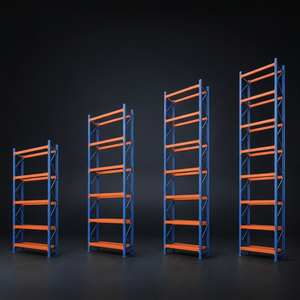
Our production facilities operate continuous automated cold roll-forming lines, robotic laser-welding stations, and high-precision CNC punching presses capable of holding tight dimensional tolerances (+/-0.5mm). Every upright column profile features optimized drop/diamond punching patterns designed to maintain section modulus while facilitating rapid tier adjustment on 50mm or 75mm pitch increments.
| Manufacturing Benchmark | FlexBeam Standard Specification | Industry Standard Comparison | Procurement Advantage |
|---|---|---|---|
| Steel Grade Selection | Q355B / S355JR High-Tensile Structural Steel | Q235B Commercial Grade Steel | +35% Higher Yield Strength; Lower structural weight |
| Welding Compliance | ISO 3834-2 & AWS D1.1 Certified Robotic Welding | Manual Stick / Semi-Auto MIG Welding | Zero void defects; Uniform penetration on beam connectors |
| Deflection Limit (Beam) | 1/200th of Clear Span (L/200) under full design load | 1/180th or non-tested deflection limits | Prevents beam permanent set; smooth forklift loading |
| Safety Factor Benchmark | 1.55 to 1.65 Structural Overload Coefficient | 1.30 to 1.40 Minimal Margin | Enhanced seismic & impact shock absorption margins |
| Surface Pre-treatment | 5-Stage Automated Zirconium Phosphate Wash | Simple Degreasing / Manual Wipe | >500 Hours Salt Spray Resistance (ISO 9227 compliant) |
To eliminate field assembly anomalies and structural risk in overseas projects, FlexBeam enforces a comprehensive 4-stage Quality Control (QC) protocol:
The industrial warehousing sector is undergoing a rapid evolution driven by supply chain digitalization, labor automation, footprint cost escalation, and stringent ESG (Environmental, Social, and Governance) targets. Global procurement directors sourcing heavy-duty pallet racking must design systems that cater to future technological trends over a 15-to-25-year operational lifecycle.
Rack structures are increasingly specified with tighter vertical plumb tolerances and specialized guide rails to integrate seamlessly with Autonomous Mobile Robots (AMR), Pallet Shuttles, and Very Narrow Aisle (VNA) turrets.
Global food logistics demand structural steel formulations designed to resist low-temperature embrittlement down to -30°C, preventing micro-fracturing under high dynamic loads.
Exporting to European and North American enterprises requires carbon-footprint disclosure. FlexBeam utilizes recycled scrap-blend electric arc furnace (EAF) steel and zero-VOC powder coatings.
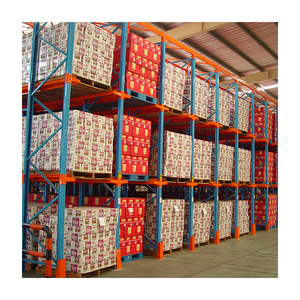
Modern warehouse design trades off immediate pallet accessibility against absolute cubic volumetric utilization. As real estate costs skyrocket in major logistics hubs, double deep racking, pallet shuttle systems, drive-in racks, and pushback systems are expanding their market share relative to single-selective layouts.
| Storage System Type | Cubic Volumetric Density | Pallet Selectivity | Inventory Rotation | Ideal Application Profile |
|---|---|---|---|---|
| Selective Pallet Racking | 40% - 50% | 100% Immediate Access | FIFO (First-In, First-Out) | High SKU variety, fast-moving consumer goods (FMCG), order picking |
| Double Deep Pallet Rack | 60% - 65% | 50% Immediate Access | LIFO (Last-In, First-Out) | Multiple pallets per SKU, cold storage, medium SKU density |
| Drive-In / Drive-Through Racking | 75% - 85% | Low (Lane Dependent) | LIFO / FIFO options | Homogeneous bulk goods, seasonal products, deep cold storage |
| Radio Shuttle Pallet Rack | 80% - 90% | Automated Lane Access | Flexible FIFO & LIFO | High-density automated fulfillment, food & beverage manufacturing |
| High Bay AS/RS Racking | 85% - 95% | 100% Automated Access | Software Controlled | Fully automated mega-distribution centers up to 40 meters high |
Below are authoritative responses to the most critical technical, compliance, and logistical inquiries raised by industrial purchasing managers and warehouse logistics consultants when sourcing CE-certified heavy-duty pallet racking systems.
CE Certification under EN 1090-1 guarantees that the manufacturer operates an audited Factory Production Control (FPC) system, uses structural steel with verified chemical/mechanical properties, applies validated structural engineering calculations according to EN 15512, and performs certified welding procedures (ISO 3834). This allows suppliers to legally affix the CE mark and provide a Declaration of Performance (DoP) for construction projects across the European Economic Area.
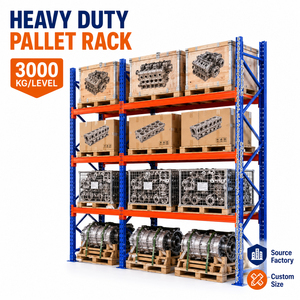
Bay capacity depends on three primary factors: maximum pallet weight (including packaging), clear beam span, and top-to-bottom beam level heights (unsupported frame length). Beam load ratings are calculated based on allowable bending stress and a maximum deflection limit of L/200 under uniformly distributed loads (UDL). Upright frame capacities decrease as distance between beam levels increases. FlexBeam engineers provide certified layout calculations confirming frame bucket loads under static, seismic, and impact conditions.
Cold-formed roll-formed racking is fabricated from high-strength sheet steel formed at room temperature into complex profiles with stiffening ribs, offering excellent economy and rapid adjustability. Hot-rolled structural racking is constructed from structural steel channels (C-channels or I-beams) hot-formed at steel mills. Hot-rolled racking provides maximum impact resistance, higher structural weight tolerances, and superior performance in brutal environments such as busy distribution centers or freezers exposed to constant forklift collisions.
Yes. FlexBeam racking systems can be customized to comply with seismic design criteria set forth in ANSI MH16.1, EN 1998 (Eurocode 8), or regional seismic building codes. Seismic engineering includes heavy-duty enlarged baseplates, high-grade floor anchor bolts (chemical or mechanical expansion anchors), reinforced upright frame bracing, and custom seismic isolation ties connected to building structural slabs.
For standard ambient warehouses, thermosetting epoxy-polyester powder coating (60-80μm) provides optimal scratch and wear resistance. For cold storage (-30°C) or high-humidity environments, hot-dip galvanizing (HDG) conforming to ISO 1461 is recommended. HDG provides a thick zinc alloy layer (55-85μm) that delivers self-healing metallurgical protection against steel oxidation and rust.
Each export order includes a comprehensive document package consisting of: EN 10204 3.1 Steel Mill Test Certificates, CE Declaration of Performance (DoP), structural load rating plaques, CAD site assembly & elevation drawings, container packing lists with barcode component tags, and installation step-by-step manuals.
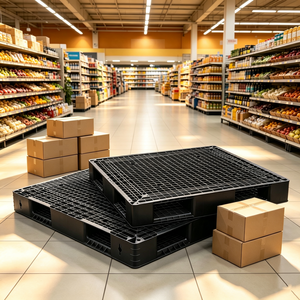
All upright frames and beams are bundled using high-tensile steel banding, wrapped in heavy-duty waterproof polyethylene film, and fitted with thick corner edge guards. Components are packed onto customized timber skids that facilitate fork truck loading and unloading directly from 40ft High Cube (40HQ) containers without scratching powder-coated surfaces.
Standard production lead time ranges from 15 to 25 days following technical drawing approval and deposit receipt. For large-scale projects exceeding 5,000 pallet positions, phased shipping schedules can be coordinated to align with warehouse floor slab curing and construction schedules.
Partner with an authoritative, CE-certified manufacturer. Contact our structural engineering team today for custom CAD layouts, capacity analysis, and competitive factory-direct pricing.
Inquire Now