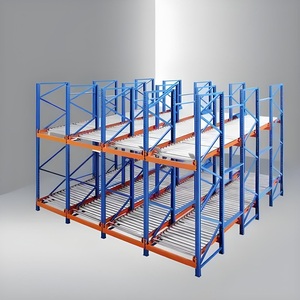
Gravity Flow Racking


Explore our certified range of high-load selective, dynamic gravity, and AS/RS compatible steel racking solutions exported worldwide.
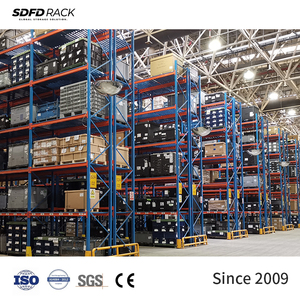
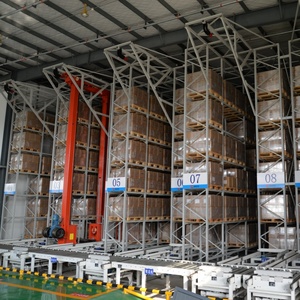
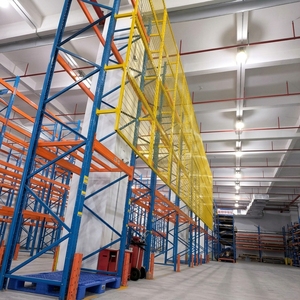
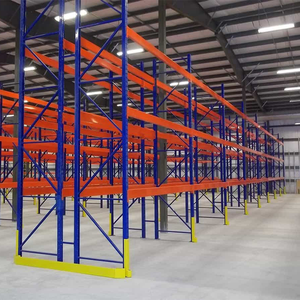
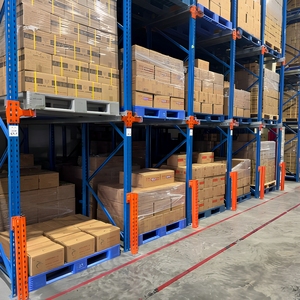
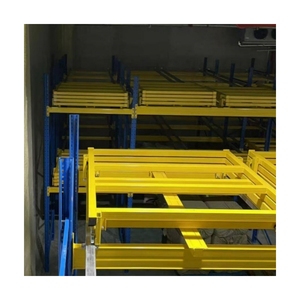
In modern industrial logistics, static pallet racks are rapidly being superseded by Dynamic Pallet Racking Systems—specifically gravity pallet flow and push-back cart systems. As a premier manufacturer and global exporter, our dynamic pallet racking systems carry full CE Certification under standard EN 15512:2020 (Steel static storage systems - Adjustable pallet racking systems - Principles for structural design) and FEM 10.2.02 specifications. Dynamic racking relies on kinetic force, gravity slope mechanics, and mechanical dampening. Therefore, structural failure is not merely a material issue—it is an operational hazard.
Our engineering framework utilizes certified high-tensile hot-rolled structural channels and cold-formed Q355B/Q235B steel sections. Unlike conventional light-duty shelving, dynamic storage systems must endure continuous kinetic impacts during pallet acceleration, deceleration, and forklift load interactions. CE compliance verifies that structural deflection parameters (limited to L/200 under maximum working load) are strictly respected, guaranteeing that structural upright frames, beam connectors, and flow lanes retain mechanical integrity across millions of operational cycles.
Rigorously calculated finite element analysis (FEA) compliant with European structural safety standards and seismic design load specifications.
Utilizing high-yield structural steel profiles resistant to fork truck collisions, torsional forces, and extreme temperature fluctuations in cold stores.
Direct magnetic and centrifugal speed controllers maintaining constant controlled velocity (0.2m/s) across variable pallet load weights (200kg - 1500kg).
Achieving absolute reliability in dynamic racking requires deep expertise in friction co-efficients, slope inclinations, and velocity regulation. Dynamic racking falls primarily into two mechanical topologies:
As global supply chains face escalating real-estate costs, labor shortages, and stringent sustainability mandates, enterprise procurement teams are shifting away from static, low-density storage. Strategic buyers are prioritizing dynamic racking systems engineered for future automation integration and energy conservation.
Modern warehouse architectures no longer treat racking as static steel shelves. Next-generation dynamic racking is manufactured with micro-tolerances compatible with Autonomous Mobile Robots (AMRs) and Automated Guided Vehicles (AGVs). Pallet flow entry guides and push-back cart alignment channels are engineered with sensor reflector targets and precision laser cutouts. This enables automated forklifts to pick and place pallets without human intervention, achieving continuous 24/7 dark warehouse operation.
Operating cold storage facilities (-25°C to -30°C) consumes massive electrical energy per cubic meter. Procurement data indicates a 40% surge in dynamic rack installations within freezer logistics centers. By utilizing multi-deep Push-Back and Pallet Flow configurations, facilities eliminate up to 60% of forklift aisles. Maximizing stored pallet density per square meter reduces refrigeration power consumption per unit load by over 35%, delivering rapid ESG alignment and lower total cost of ownership (TCO).
The integration of Smart IoT Strain Sensors directly into upright posts and dynamic roller tracks is becoming standard for enterprise procurement. Real-time telemetry alerts facility managers to critical impacts, rack overload conditions, or roller bearing degradation before mechanical failure occurs. CE-certified dynamic racking manufactured today includes pre-drilled cable channels and sensor mounting nodes to facilitate immediate smart warehouse retrofits.
| Racking Topology | Storage Density | Rotation Logic | Forklift Travel | Throughput Speed | CE Safety Index |
|---|---|---|---|---|---|
| Pallet Flow (Gravity) | Very High (90%) | FIFO (First-In First-Out) | Aisle-Only (Outer) | Rapid / High-Velocity | Class 1 (EN 15512) |
| Push Back (Cart System) | High (80%) | LIFO (Last-In First-Out) | Aisle-Only (Front) | Very Fast | Class 1 (EN 15512) |
| Drive-In Racking | High (75%) | LIFO | Enters Rack Structure | Slow / High Collision Risk | Class 2 (Requires Protection) |
| Selective Racking | Low (45%) | Direct Access | Enters Every Aisle | Moderate | Class 1 (Standard) |
| Automated AS/RS | Maximum (95%) | Software Driven | Robotic Crane / Shuttle | Ultra-Fast (Continuous) | Class 1 (ISO 9001/CE) |
As an industry-leading OEM/ODM manufacturer specializing in high-capacity warehouse equipment, our production facilities are built around engineering precision, material traceability, and seamless export execution. We provide global B2B buyers, system integrators, and 3PL providers with turnkey structural storage systems engineered specifically for their unique operational profile.
Our manufacturing complex houses advanced automated continuous roll-forming production lines, robotic laser-welding cells, and eco-friendly electrostatic powder-coating plants. Every steel upright and beam section undergoes rigid quality control: dimensional tolerance checks (+/- 0.05mm), ultrasonic weld flaw detection, and coat thickness testing (80–100 microns). Raw steel coils are sourced exclusively from Tier-1 certified steel mills with full material test report (MTR) traceability matching EN 10204 3.1 certification.
We do not sell standard off-the-shelf racking; we engineer purpose-built structural solutions. Our internal team of structural engineers utilizes advanced 3D CAD modeling and Finite Element Analysis (FEA) software to simulate dynamic load stresses, seismic zone accelerations (PGA up to 0.4g), and rack-building interaction forces. Buyers receive certified engineering drawings, structural calculations, and clear load capacity plaques with every shipment.
Exporting structural steel globally requires meticulous packing to eliminate transit abrasion and sea-freight corrosion. Components are bundled using heavy-duty steel banding, edge-protectors, moisture-barrier wrapping, and custom wooden crating. Upright frames, dynamic carts, and roller channels are pre-assembled and color-coded to reduce site installation time by up to 35%.
Essential guidance for logistics engineers, project procurement directors, and facility managers reviewing dynamic pallet rack tenders.
A: CE Certification under standard EN 15512 mandates strict structural calculation algorithms, material safety factors, and structural testing (such as stub column tests and beam connector moment testing). Purchasing CE-certified dynamic racking guarantees that the system complies with international safety regulations, reduces liability risks, and passes local municipal building inspections effortlessly.
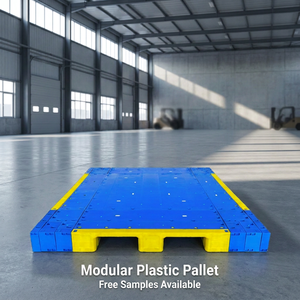
A: Gravity flow systems rely on consistent surface contact with rollers. Pallets should be hard-wood or rackable heavy-duty plastic (3-runner or full-perimeter base) with minimal bottom deck deflection. Damaged wood pallets with protruding nails, broken runners, or bottom deck sag exceed friction tolerances and can cause system hangs. We offer custom roller pitch spacing to accommodate specific pallet runner designs.
A: Push-back cart systems are typically engineered from 2 to 6 pallets deep. Beyond 6 deep, pushing pressure required by standard forklift trucks becomes excessively high, increasing driver fatigue and risk of product damage. For storage requirements beyond 6 deep, we recommend gravity pallet flow or automated radio pallet shuttle systems.
A: Cold store applications (-30°C) require specialized structural steel grades (such as Q355D/E) with proven Charpy V-notch impact toughness at sub-zero temperatures to prevent embrittlement. Dynamic flow rollers feature low-temperature synthetic lubricants, sealed bearings, and stainless steel axles to prevent moisture freezing and mechanical binding.
A: In many cases, yes. If your existing upright frames possess adequate structural section modulus, column thickness, and anchor bolt rating, our dynamic push-back cart rails or gravity flow roller beds can be custom-engineered to mount onto your existing frame profiles. Our engineers perform structural load reviews prior to approving retrofits.
A: We incorporate self-regulating magnetic centrifugal brake rollers spaced at calculated intervals along the flow lane. As a heavy pallet moves faster, the brake roller applies higher proportional resistance. This keeps pallet travel speed consistent between 0.15 m/s and 0.25 m/s whether the pallet weighs 300kg or 1400kg.
A: We require: (1) Pallet dimensions (W x D x H) including overhang; (2) Minimum and maximum pallet weights; (3) Building CAD layout showing clear height, column grids, and floor slab thickness/psi; (4) Operating temperature; (5) Forklift model/lift specs; and (6) Desired inventory rotation (FIFO or LIFO).
A: Structural upright frames, beams, and track sub-assemblies are bundled in color-coded, steel-strapped modules. Carts, rollers, and mechanical hardware are packed in heavy-duty export plywood cases with moisture absorbers. Each container load includes detailed packing lists, container loading maps, step-by-step assembly manuals, and CAD layout plans.
Speak directly with our structural engineering team. We provide custom layout drawings, FEA calculations, and competitive OEM factory pricing within 24 hours.