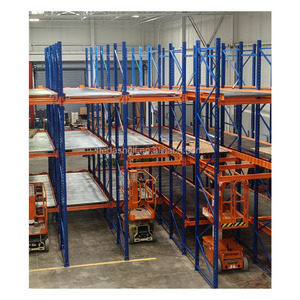
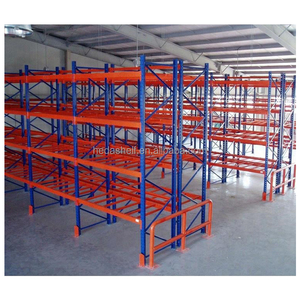
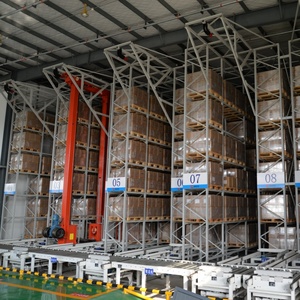
Explore our CE-compliant, load-tested double row and high-density pallet racking portfolio designed for global B2B procurement.
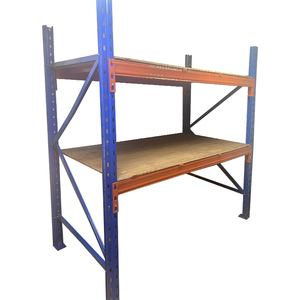
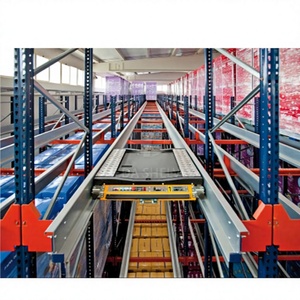
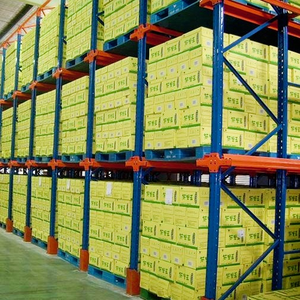
Modern supply chain logistics demand an uncompromising balance between floor space utilization and operational throughput. As a global CE certified double row pallet racking manufacturer and supplier, our engineering framework solves the fundamental dilemma of warehouse geometry: maximizing vertical cube density without incurring severe selectivity penalties. Double row (or double-deep) pallet racking configurations store pallets two-deep back-to-back, eliminating up to 50% of operating aisles compared to standard single-selective systems.
To guarantee structural safety under extreme dynamic loads, CE certification according to EN 15512 (Steel static storage systems - Adjustable pallet racking systems - Principles for structural design) is mandatory for international procurement. Engineered using cold-formed structural steel or closed-section tubular upright profiles, double row racking structures must withstand complex combinations of axial compression, frame sway, forklift impact forces, and seismic accelerations.
Key Engineering Gain: Integrating double-deep pantograph reach trucks with CE-compliant double row racking increases cubic storage efficiency by 40% to 60% compared to standard wide-aisle selective configurations, while reducing total structural footprint cost per pallet position.
Procurement directors must ensure that imported industrial storage systems comply with rigorous structural standards to mitigate structural failure risks and comply with local health and safety regulations (OHSA, FEM, and EU Machinery Directives). Our manufacturing facilities strictly execute design verification under international standards:
| Standard Specification | Geographic Region | Engineering Scope & Structural Focus |
|---|---|---|
| EN 15512 / EN 1090-1 (CE Mark) | European Union / Global Export | Limit state design principles, structural steel execution Class EXC2/EXC3, factory production control, and rigorous structural safety factors. |
| ANSI MH16.1 (RMI Standard) | North America | Design, testing, and utilization of industrial steel storage racks, beam deflection limits (L/200), and upright column stability. |
| AS 4084-2023 | Australia / Oceania | Steel storage racking safety code, seismic restraint specifications, dynamic impact allowances, and floor slab anchoring tolerances. |
| FEM 10.2.02 | International Logistics | Federation Européenne de la Manutention guidelines for high-density static steel racking and automated warehouse integration. |
As a leading industrial racking OEM/ODM exporter, our manufacturing architecture is designed to deliver predictable, field-tested structural durability. Our continuous research into roll-formed geometry and automated manufacturing has yielded distinct technical advantages for heavy-duty storage applications:
Unlike standard open-channel roll-formed C-profiles, our proprietary closed-tubular upright designs absorb dynamic forklift impacts with torsional rigidity up to 200% higher, significantly reducing downtime and long-term repair overhead.
For extreme temperature environments and high-load cold storage operations, we manufacture structural racking from hot-rolled structural steel channels, offering superior yield strength and ductile resistance to micro-fracturing.
Every frame and beam undergoes multi-stage chemical pretreatment followed by electrostatic powder coating. This ensures anti-corrosion protection in high-humidity facilities and chemical storage plants.
Procurement leadership is undergoing a fundamental shift from initial Capital Expenditure (CAPEX) evaluation toward long-term Total Cost of Ownership (TCO) and Lifecycle Assessment (LCA). As global supply chains adjust to economic volatility, nearshoring, and labor constraints, warehouse procurement managers are prioritizing several critical trends when sourcing CE-certified double row pallet racking systems:
Logistics operators no longer purchase static single-purpose racking. Modern procurement specifications demand modular structural frames capable of converting between standard selective double-row configurations, pushback cart systems, and automated radio shuttle channels. Standardized hole pitches and universal beam-connector geometry allow facilities to reconfigure bay elevations without structural replacement.
Under emerging EU Green Deal directives and international Scope 3 emissions reporting standards, enterprise buyers demand environmental product declarations (EPDs) from steel fabricators. Sourcing low-carbon recycled steel and utilizing zero-VOC powder finishes have transitioned from optional ESG features to mandatory procurement evaluation criteria.
As automated material handling adoption accelerates, racking tolerances must tighten. Procurement teams are specifying structural deflections under strict ISO/FEM thresholds to ensure uninterrupted operation of automated guided vehicles (AGVs), pantograph reach AMRs, and automated storage and retrieval systems (AS/RS).
The material handling industry is moving rapidly toward intelligent, sensor-driven warehouse infrastructure. The next generation of double row pallet racking integrates mechanical engineering with digital monitoring systems to maximize safety and efficiency:
Integration of wireless strain gauges and vertical tilt sensors into critical double row uprights. Real-time telemetry alerts facility managers to unseen forklift impact damage or structural overload conditions before catastrophic failure occurs.
Combining double-deep back-to-back rack channels with self-charging, Wi-Fi guided radio shuttles. This hybrid model eliminates deep-reach forklift hazards while boosting throughput in high-volume food, beverage, and cold storage fulfillment centers.
Advanced finite element analysis (FEA) modeling enables engineered seismic base plates and dynamic energy-dissipating frame bracing, satisfying rigorous zone 4 seismic building codes globally.
Find answers to critical engineering, manufacturing, and international export questions raised by logistics architects and procurement directors.
Connect with our senior engineering team to receive CAD layouts, structural calculations, and competitive factory-direct pricing for your CE-certified double row pallet racking project.
Get Catalog