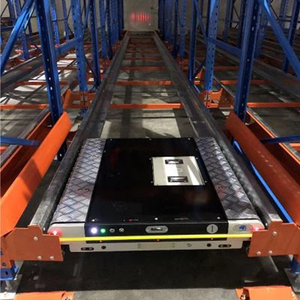
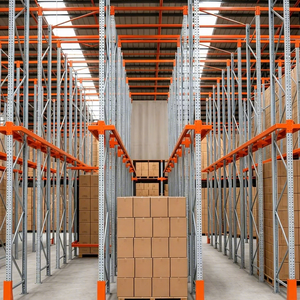
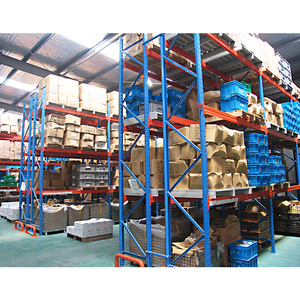
Explore our CE-compliant automated pallet runners, high-bay structural racks, and heavy-duty industrial storage systems engineered for maximum operational safety and volume utilization.
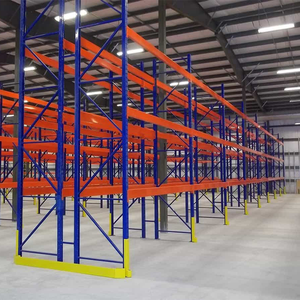
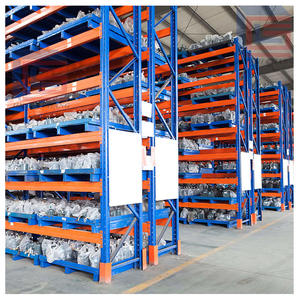
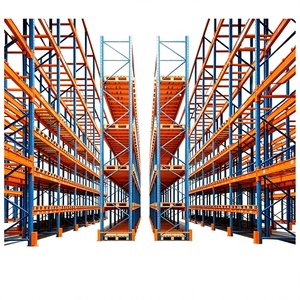
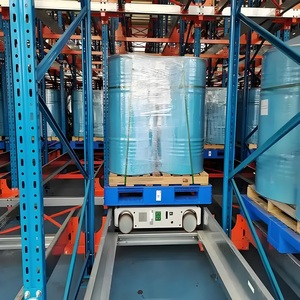
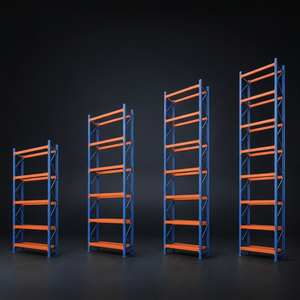
In modern industrial logistics, warehouse optimization has transitioned from basic vertical stacking to intelligent, automated material handling ecosystems. As global supply chains face escalating real estate costs, labor shortages, and stringent workplace safety mandates, the demand for certified, high-density automated pallet handling systems has accelerated exponentially. As a premier global supplier and exporter, FlexBeam integrates structural steel integrity, intelligent radio shuttle robotics, and European safety compliance (CE marking under Machinery Directive 2006/42/EC and EN 15512 structural design standards) into turnkey warehouse installations.
Achieving compliance with European conformity standards requires rigorous structural flexure modeling, dynamic impact load calculations, and automated fault-tolerant electrical safety loops. Standard selective racking systems, while providing direct SKU accessibility, consume over 60% of available floor space in access aisles. Conversely, fully automated pallet runners—including 2-Way and 4-Way Radio Shuttle Racking—transform conventional static space into high-velocity dynamic storage, achieving volumetric storage efficiencies up to 85–98%.
Selecting the optimal pallet handling system mandates a granular understanding of inventory velocity (FIFO vs. LIFO rotation), structural load distributions, and system throughput capacities. Below is an engineering comparison matrix designed for supply chain directors and facility engineers:
| Storage System Type | Volumetric Utilization | Handling Efficiency | Forklift Risk Profile | Inventory Rotation | CE Automation Level |
|---|---|---|---|---|---|
| Four-Way Radio Shuttle (AS/RS) | 95% – 98% | Ultra-High (Fully Automated) | Zero (Outside Aisle Operation) | Flexible (FIFO / LIFO) | Class 4 Fully Automated |
| Two-Way Radio Shuttle Rack | 85% – 90% | High (Semi-Automated) | Minimal (Perimeter Only) | Configurable (FIFO/LIFO) | Class 3 Semi-Automated |
| Structural Drive-In Racking | 75% – 82% | Moderate (Manual Entry) | High (Forklift Inside Racks) | Strict LIFO | Static Structural |
| Selective Heavy-Duty Racking | 35% – 45% | Direct Access (Standard) | Moderate (Standard Aisles) | 100% Selective (FIFO) | Static Structural |
Why leading enterprise logistics providers trust FlexBeam engineered automated pallet automation.
Features micro-processor guided laser positioning, optical obstacle sensing, and automated level-changing lifters capable of 1.5m/s travel speeds under 1,500kg payloads.
Engineered using high-grade Q355B and structural steel profiles complying with ANSI MH16.1, EN 15512, and AS 4084 structural stress thresholds for seismic safety.
Integrated anti-collision radar, emergency optical stops, wireless remote diagnostic telemetry, and redundant mechanical lockouts for operator protection.
Global warehouse procurement is experiencing a paradigm shift driven by smart factory automation, ESG mandates, and real-time inventory visibility. Corporate buyers are moving away from piecemeal static storage purchases toward integrated industrial solutions. The next decade will define five critical procurement vectors:
Future automated pallet systems will no longer remain passive steel frameworks. Advanced structural installations are increasingly equipped with embedded strain gauges, vibration sensors, and micro-tilt indicators. These IoT endpoints continuously beam structural stress metrics to facility WMS systems, predicting frame fatigue, thermal contraction in cold storage, or accidental forklift damage before structural compromise occurs.
While 2-way shuttle systems revolutionized deep-lane storage, procurement trends show a rapid shift toward 4-way intelligent shuttle runners. 4-way shuttles can change channels horizontally and transfer between rack levels via automated vertical lifts. This eliminates internal bottlenecking, allowing dynamic allocation of shuttle fleets based on real-time picking peak loads.
Energy costs in refrigerated logistics (operating down to -25°C or -40°C deep freeze) represent a massive operational expense. High-density shuttle systems reduce cubic refrigerated space wastage by up to 60%. Next-generation procurement specs demand specialized low-temperature lithium-iron-phosphate (LiFePO4) battery packs, quick-charge supercapacitors, and cold-resistant steel alloys that prevent hydrogen embrittlement.
Global enterprises are subject to strict Scope 3 emission reporting. Racking procurement guidelines now prioritize structural components manufactured via Electric Arc Furnace (EAF) green steel technology using recycled scrap metal, backed by Environmental Product Declarations (EPD) and ISO 14064 carbon footprint certification.
Backed by rigorous research, international certification, and global project execution capability.
Every racking system undergoes rigorous Finite Element Analysis (FEA) modeling under simulated seismic zone dynamics, localized wind loads, and asymmetric maximum point loading prior to manufacturing.
Our state-of-the-art production lines feature multi-axis robotic welding cells for seam-perfect beam connections, coupled with high-durability electrostatic epoxy powder coating for corrosion resistance.
Heavy-duty structural uprights, beams, and electronic shuttles are steel-banded, wrapped in moisture-barrier membranes, container-optimized, and clearly coded with component assembly tags for rapid site erection.
Every exported system is backed by clear installation drawings, official CE certificates, EN 15512 capacity plaques, step-by-step assembly manuals, and direct remote engineering support.
Detailed answers to essential questions asked by logistics engineers, project managers, and global B2B buyers.
Ready to maximize your warehouse volumetric capacity, reduce pallet cycle times, and implement CE-certified storage infrastructure? Consult directly with FlexBeam senior structural engineers today.
Contact Us