Double Deep Pallet Racking can add storage density without expanding a warehouse footprint. It places two pallets deep on each side of an aisle. That can mean fewer aisles and more usable rack space. It also changes how operators reach and rotate stock.
As warehouse-science author John J. Bartholdi III’s work suggests, storage choices should be judged by their effect on movement and handling. A concise editorial takeaway—not a verbatim quotation—is: “More positions matter only when every pallet remains practical to retrieve.” That distinction matters. Double-deep layouts typically require compatible reach trucks and careful slotting. They may also reduce direct access to individual pallets. For fast-moving goods, the trade-off deserves a close look.
This Top 10 Double Deep Pallet Racking Manufacturers Worldwide guide compares suppliers on practical considerations: system design, load specifications, customization, installation support, and service coverage. A glossy product photo cannot confirm beam capacity or fit. Buyers should verify those details against their pallet dimensions, handling equipment, floor plan, and operating patterns. One overlooked measurement can disrupt a whole aisle. Manufacturer claims also need checking against project requirements; no supplier is automatically right for every warehouse. The rankings are a starting point, not a substitute for engineering review. Even a well-designed system can disappoint when daily workflows were not considered. That is worth questioning before purchase.
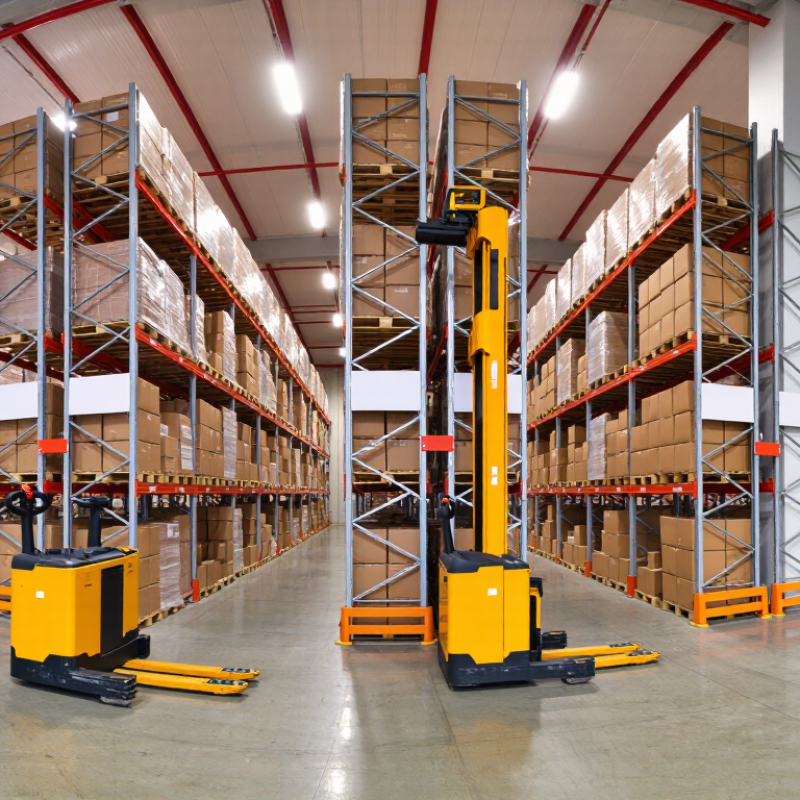
Double deep pallet racking stores two pallets behind one another in each rack position. The front pallet is directly accessible; the rear pallet sits behind it. This layout uses floor space more efficiently than single-deep racking, but it reduces access to individual loads. That trade-off matters.
A suitable reach truck, often fitted with extended forks or a pantograph mechanism, places and retrieves the rear pallet. The operator must align carefully with the rack opening. A pallet that is skewed, overhanging, or damaged can make access difficult. In practice, consistent pallet sizes and clear load limits help keep movements predictable. Small details count.
Because the rear load cannot usually be picked without moving the front one, stock rotation needs planning. Double deep systems are often better suited to multiple pallets of the same product, where deeper access is less frequent. They are not automatically the best choice for every warehouse. A site with many small orders or varied items may lose time rearranging pallets. That part is easy to underestimate.
Before installation, managers should review aisle widths, truck capabilities, pallet dimensions, rack capacity, and operator training. A layout drawing is useful, but it cannot capture every daily handling issue. Even experienced teams may need adjustments after observing real traffic and retrieval patterns. The best design depends on the work being stored and moved.
This table explains the system and its operating characteristics. It does not rank or identify manufacturers; performance and specifications depend on the rack design, pallets, equipment, and site conditions.
| No. | Topic | How It Works | Practical Consideration |
|---|---|---|---|
| 1 | Basic definition | A pallet racking layout stores two pallet positions deep in each lane, rather than one. | The extra depth can increase storage density compared with single-deep selective racking. |
| 2 | Pallet arrangement | The front pallet sits nearer the aisle; a second pallet is stored behind it on the same lane. | Rack depth, clearances, pallet dimensions, and load overhang must be designed together. |
| 3 | Loading sequence | A compatible forklift places the rear pallet first, then stores the front pallet in the same lane. | The truck must be able to reach and position loads at both pallet depths. |
| 4 | Unloading sequence | The front pallet is removed before the rear pallet can be accessed from the aisle. | Rear pallets are not directly accessible while a front pallet remains in place. |
| 5 | Inventory flow | The arrangement generally follows last-in, first-out (LIFO) access within each lane. | It is best suited to inventory that does not require direct access to every pallet at all times. |
| 6 | Forklift requirements | A reach truck or another suitably specified truck may be used to access the deeper pallet position. | Equipment choice depends on lift height, reach, load, aisle width, and the rack layout. |
| 7 | Storage density | Sharing lanes between two pallet positions can reduce the number of access aisles needed for a given storage arrangement. | Actual capacity gains depend on building dimensions, aisle design, pallet mix, and operating needs. |
| 8 | Selectivity | Pallets are grouped by lane, and accessing a rear pallet requires clearing the position in front. | Compared with single-deep selective racking, access to individual pallets is more restricted. |
| 9 | Suitable applications | It can suit operations with multiple pallets of the same product or with inventory managed in batches. | A high variety of single-pallet stock may benefit more from a more selective storage method. |
| 10 | Safety and design | Frames, beams, bracing, and connections must be designed for the specified loads and operating conditions. | Use qualified rack design, observe rated load limits, protect against impacts, and inspect the installation regularly. |
It stores two pallets behind each other. Access and forklift choice need careful planning.
Compare pallet weights, dimensions, floor conditions, and aisle measurements. Small differences can change the layout.
The rear pallet is less directly accessible. Confirm the proposed forklift can reach and retrieve loads safely.
Request engineering drawings, load calculations, design assumptions, and relevant test records. A capacity chart alone is not enough.
Check beam sizes, row spacers, decking options, and upright protection. Details matter.
Sometimes. Existing columns, floor conditions, and aisle widths may complicate the fit, so measure the actual site.
Ask about site measurements, installation, inspections, replacement parts, and service response times. Get concrete commitments in writing.
Review warranty terms and steel specifications alongside price. A low quote may not reflect service needs or component consistency.
No. A 2024 industry report said 55% of surveyed supply-chain leaders planned more technology investment. It did not measure rack purchases.
This article explains how Double Deep Pallet Racking stores pallets two positions deep, increasing storage density while requiring suitable access equipment and careful planning for inventory movement. It outlines the main factors to consider when comparing manufacturers worldwide, including system design, load capacity, material quality, safety features, customization, installation support, and after-sales service.
The article also explores regional differences in the racking industry and presents profiles of ten leading manufacturers without focusing on brand promotion. Readers will gain a practical framework for comparing product ranges and supplier capabilities, assessing how well a solution fits their warehouse layout, handling equipment, storage needs, and operational goals.