[email protected] Engineering & export support for projects worldwide
YouTube LinkedIn Facebook
0%

Choosing the right Pallet Racking system begins with understanding how your warehouse actually works. Storage goals, pallet dimensions, available floor space, and handling equipment all influence the decision. A system that performs well in a high-volume distribution center may be unsuitable for a smaller facility with narrow aisles.

In practice, rack selection should start with accurate measurements. Record ceiling height, aisle width, pallet weight, and forklift turning space. Observe daily movements, too. Are pallets stored for months, or dispatched within hours? Selective racking offers direct access to each pallet, while drive-in racking improves density but limits product rotation. Double-deep and push-back designs may increase capacity, although they require more careful planning and compatible handling equipment.

Safety must remain central. A qualified storage professional should review load ratings, upright protection, beam placement, floor conditions, and inspection routines. Small errors can create serious operational problems. Reliable suppliers should provide clear specifications, installation guidance, and maintenance support. Their recommendations should match your real inventory, not simply promote the most expensive option.

There is no universal answer. Warehouse teams sometimes focus on capacity and overlook picking speed. I have seen that mistake reduce productivity despite gaining more storage positions. The best solution balances space, accessibility, safety, budget, and future growth. Leave room for reflection. Your current layout may work today, but changing product sizes, equipment, or order volumes can quickly expose its weaknesses. A thoughtful Pallet Racking plan should support both present performance and practical long-term improvement.
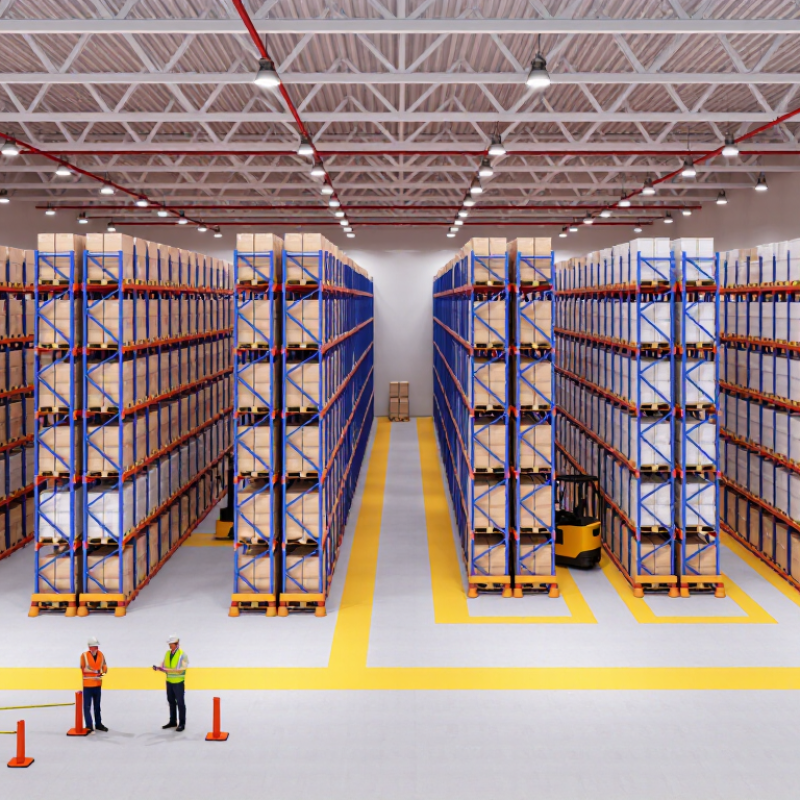
How to Choose the Right Pallet Racking System?

Define the Load: 48 × 40 in GMA Pallets, Weight, Height, and SKU Count

Start with the pallet you actually store: a 48 × 40 in GMA pallet is a baseline, not a complete load description. Measure the loaded pallet, including any product that overhangs the deck. Check several pallets, not just one. Packaging changes, and a loose carton can affect clearance. Small differences add up.

Record the maximum loaded weight, including the pallet itself. Use that figure to confirm the required capacity for each beam level and rack bay with a qualified supplier. Do not estimate from an average if some pallets are heavier. That matters. Measure the total load height, too, from the floor to its highest point. Include uneven cartons or stretch wrap, then allow practical clearance for lifting and placement. A few inches can change the usable number of storage levels.

SKU count helps determine how much access each product needs. Many SKUs with only a few pallets each usually call for more direct access; fewer SKUs stored in deep quantities may suit denser layouts. Still, the count alone can mislead. Some items move daily, while others sit for weeks. List pallet quantities and movement frequency by SKU before comparing layouts. It is easy to assume every pallet is uniform; warehouse records often show otherwise. Recheck the measurements against real inventory before finalizing the rack plan.

Map the Building: Clear Height, Columns, Sprinklers, and 10–12 ft Aisles

Before selecting a pallet racking system, map the building with a tape measure and a marked floor plan. Record clear height from the floor to the lowest obstruction, not just the roof. Ducts, lights, beams, and sprinkler pipes can reduce usable space. Measure around them. A few inches matter when loads rise.

Mark every column and note its dimensions. Columns can interrupt rack rows or create awkward gaps where pallets will not fit safely. Include doors, dock edges, and pedestrian routes on the same plan. Then check sprinkler heads and piping against the proposed rack height. Stored goods and rack layout can affect sprinkler coverage, so have a qualified fire-protection professional review the design. This step is easy to underestimate.

Aisles of 10–12 feet may suit some lift trucks, but they are not a universal rule. Check the truck’s turning needs, pallet size, and load overhang. A taped mock-up on the floor can reveal tight turns before racks arrive. Measure with the largest expected load. It is a little tedious. Still, a narrow aisle that works on paper may feel very different with a loaded truck, a column nearby, and people moving through the area.

Match Access Needs: Selective Racking Delivers 100% Pallet Accessibility

Selective pallet racking suits warehouses where staff need direct access to every stored pallet. Each pallet has its own rack position, so a forklift can retrieve it without moving another load. That is the practical meaning of 100% pallet accessibility. No shuffling. This setup can help when a warehouse handles many stock-keeping units or frequent order changes.

It also supports straightforward stock rotation and replenishment. Workers can see and reach individual loads, which may reduce delays when picking mixed orders. For example, a team can collect one pallet of a slow-moving item from a specific bay while leaving nearby stock in place. Clear location labels and consistent loading practices still matter. Accessibility alone does not prevent picking errors.

The trade-off is aisle space. Selective racks usually store fewer pallets within the same floor area than denser systems, because forklifts need access lanes. Measure the actual forklift turning path, pallet dimensions, and expected load weights before settling on a layout. A drawing can look generous; a loaded truck may tell a different story. I would not assume every aisle width works equally well across equipment types. Have the layout checked against the site’s operating and safety requirements before installation.

How to Choose the Right Pallet Racking System? - Match Access Needs: Selective Racking Delivers 100% Pallet Accessibility

Racking system Pallet accessibility Storage density Best suited for Key consideration
Selective 100% direct access; each pallet position can be reached without moving another pallet. Low to moderate; aisles are required between rack rows. Many SKUs, frequent picking, and operations needing straightforward stock rotation. Aisles use floor space that could otherwise hold additional storage.
Double-deep Front pallets are directly accessible; rear pallets require moving the front pallet first. Moderate to high compared with selective racking. Fewer SKUs with multiple pallets per SKU. Typically requires a reach truck designed to handle double-deep storage.
Drive-in Limited access; pallets are stored in lanes, so other pallets may need to be moved first. High; forklifts enter the rack structure and use fewer aisles. Large quantities of a small number of SKUs, often in batch storage. Requires careful truck operation inside the rack and is generally suited to less selective picking.
Push-back Access is by lane; pallets behind the front position are not directly accessible. High; multiple pallets are stored in depth from a shared aisle. Several pallets per SKU where last-in, first-out lane access is acceptable. Lane depth and load characteristics affect operation; inventory rotation is typically LIFO.
Pallet flow Pallets are loaded from one side and retrieved from the opposite side; individual pallet access within a lane is limited. High; gravity-fed lanes make efficient use of storage depth. High-volume, date-sensitive goods needing first-in, first-out lane rotation. Requires compatible pallets and properly maintained rollers or wheels.

Accessibility refers to whether an individual pallet position can be reached without relocating another pallet. Actual capacity and suitability depend on the warehouse layout, equipment, load, and operating requirements.

Compare Density: Double-Deep, Drive-In, and Mobile Systems by LIFO/FIFO

How to Choose the Right Pallet Racking System?

Compare storage density with stock rotation. Double-deep racking places two pallets behind each other, reducing aisle space while keeping more direct access than deeper lanes. It usually works as LIFO: the last pallet stored is the first retrieved. A reach truck designed for deep storage is typically needed. Drive-in racking packs pallets into shared lanes and can use floor space very efficiently. But it is usually LIFO, and operators must enter the rack structure to reach loads. Drive-through layouts allow access from both ends, making FIFO possible. The trade-off is less selectivity when a lane holds one product.

Mobile racking moves on floor rails, opening an aisle only where needed. This can provide high storage density while retaining access to many individual loads. With access from one end, it generally operates as LIFO; access from both ends can support FIFO. The extra movement can slow retrieval during busy periods. A tidy density calculation can mislead if picking speed matters more.

Tips: Check pallet dimensions, load weights, and daily retrieval patterns before choosing. Map a real product lane, then test how the last pallet gets out. Small details count. A layout that looks efficient on paper may feel awkward during a shift.

Verify Design: ANSI MH16.1 Loads, EN 15635 Inspections, and Protection

Choosing a pallet racking system starts with verified design, not appearance. ANSI MH16.1 requires engineers to check rack loads, beam levels, upright frames, connections, anchorage, and seismic conditions where applicable. Confirm the design load for every bay. A drawing can look complete and still be wrong.

OSHA estimates that powered industrial trucks cause about 35,000 serious injuries in the United States each year. Forklift impact protection therefore deserves careful planning. Install upright guards and end-of-aisle barriers without blocking inspections or changing the rack’s intended load path. Check the concrete slab, too. Protection is useful only when it is correctly anchored and compatible with traffic routes.

EN 15635 recommends regular visual inspections, with intervals based on risk assessment, and a detailed expert inspection at least every 12 months. HSE guidance in HSG76 also emphasizes competent inspection and prompt action after damage. Mark bent uprights, displaced beams, missing locking pins, and overloaded locations immediately. Remove unsafe loads when necessary. Do not rely on memory.

Weekly checks help.

Keep inspection records with photographs, rack identification, load signs, and corrective dates. In real warehouses, records are sometimes completed after the fact. That weakens reliability. A qualified person should review the actual rack, floor condition, vehicle movements, and operating changes against the original design assumptions. Cite: ANSI MH16.1, EN 15635, OSHA Powered Industrial Trucks, and HSE HSG76.

FAQS

What measurements should be recorded for a loaded pallet?

Record its full length, width, total height, and maximum weight. Include overhanging cartons and the pallet itself. Small details matter.

Why should several pallets be measured?

Packaging and load patterns can vary. Check multiple pallets, including loose or uneven cartons, before finalizing clearances.

How should pallet weight affect rack planning?

Use the heaviest loaded pallet, not an average. Confirm beam and bay capacity with a qualified supplier. Guessing is risky.

What should be included in the load height?

Measure from the floor to the load’s highest point. Include uneven cartons and stretch wrap, then allow room for lifting and placement.

How does SKU count help determine a storage layout?

Many SKUs with few pallets each may need direct access. Fewer SKUs stored in deep quantities may suit denser layouts. Movement frequency matters too.

What does direct pallet accessibility mean?

Each pallet has its own rack position and can be retrieved without moving another load. No shuffling.

When can selective pallet racking be useful?

It can suit warehouses with many SKUs, frequent order changes, or mixed picking needs. Workers can reach a specific pallet while nearby stock stays put.

What is the main trade-off with selective racking?

Forklift access aisles take floor space, so the layout may store fewer pallets in the same area. A drawing may not show every turning constraint.

What should be checked before choosing aisle widths?

Check the forklift’s turning path, pallet size, load weight, and site requirements. Equipment can differ. I would verify the layout with actual operating conditions.

Conclusion

Choosing the right Pallet Racking system begins with a clear understanding of your inventory and facility. Start by defining the load, including standard 48 × 40 inch GMA pallet dimensions, average and maximum weight, load height, and the total number of SKUs. Then map the building carefully by reviewing ceiling height, column locations, sprinkler systems, floor conditions, and the aisle width needed for safe equipment operation, typically around 10–12 feet for conventional access.

Next, match the storage method to your operating priorities. Selective racking provides direct access to every pallet, while double-deep, drive-in, and mobile systems can increase density but may require specific LIFO or FIFO strategies. Before installation, verify that the design supports the intended loads in accordance with ANSI MH16.1 and establish routine inspections based on EN 15635 guidance. Proper protection, clear load limits, and documented inspections help maintain a safe, efficient, and adaptable warehouse.

Liam

Liam

Liam is a professional marketing specialist who combines a deep understanding of the company’s products with a clear, customer-focused approach to communication. He regularly contributes expert articles to the company website, offering practical insights into product features, applications, and......