Adjustable Pallet Racking can look simple on a warehouse plan: upright frames, beams, and open aisles. On a busy floor, the details matter. A forklift needs turning space. A beam must suit the load. And a poorly matched layout can leave valuable pallet positions unused.
Quality-management expert W. Edwards Deming offered a useful reminder: “A bad system will beat a good person every time.” His point applies to storage design: reliable operations depend on sound systems, not just careful workers. This guide to China Top 10 Adjustable Pallet Racking Manufacturers considers more than price or product photos. It looks at load specifications, steel and finish, configuration options, documentation, production capacity, and after-sales support. These factors can help buyers compare suppliers against real warehouse needs.
There is no single best rack for every site. A cold store, a narrow-aisle facility, and a warehouse handling mixed pallet sizes face different constraints. Supplier claims also deserve careful checking; a polished brochure cannot confirm performance in your building. The manufacturers featured here offer a starting point for research, not a substitute for checking drawings, load data, and references. A missed measurement can matter. So can a small detail, such as beam adjustment spacing.
China Top 10 Adjustable Pallet Racking Manufacturers
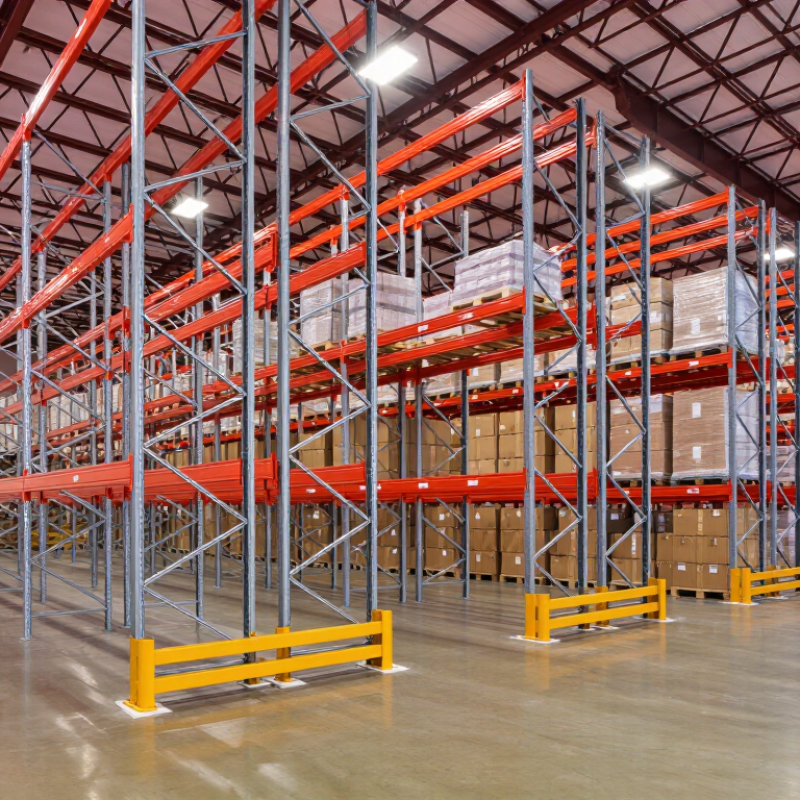
Adjustable pallet racking uses upright frames, horizontal beams, bracing, and adjustable connectors. Beam levels can be repositioned for different pallet heights. This structure supports direct forklift access and clearer stock rotation. The 2024 MHI Annual Industry Report found that 83% of supply-chain professionals expect technology investment to increase. Yet, good storage still begins with accurate rack design, not software alone.
Common types include standard selective racking, narrow-aisle systems, double-deep layouts, and drive-in configurations. Selective racking offers the best access for mixed products. Double-deep storage improves density but needs suitable reach equipment. Drive-in systems increase capacity, although pallet selectivity becomes limited. Real warehouses are rarely perfect.
Typical adjustable systems support 2,000–5,000 kg per level, depending on beam length, steel grade, connection design, and load distribution. A 2023 report from the European Materials Handling Federation emphasizes engineering checks for frame stability, impact protection, and safe working loads. These figures are not universal. A 2,000 kg rating may change when pallets are uneven, damaged, or concentrated near one beam. Installation teams should verify floor strength, aisle clearance, seismic conditions, and forklift turning space. Many buyers overlook floor tolerance. That mistake can become expensive. Load signs, inspections, and operator training should remain visible parts of daily warehouse control.
Adjustable Pallet Racking: Structure, Types, and 2,000–5,000 kg Load Ranges
The chart presents representative rated loads per pallet position for common adjustable pallet racking configurations. Selective, double-deep, drive-in, push-back, pallet-flow, and mobile systems typically fall within the 2,000–5,000 kg range when engineered with suitable beams, uprights, bracing, and floor conditions. Actual capacity must be verified against the rack supplier’s structural calculations and safety requirements.
Ranking China’s top ten adjustable pallet racking manufacturers requires more than comparing catalogue prices. Six industry metrics create a stronger basis: structural safety, steel traceability, engineering capability, production consistency, delivery performance, and after-sales support.
Structural safety should be checked against FEM 10.2.02 principles, tested load tables, and documented inspections.
Steel traceability also matters. The World Steel Association reported that China produced 1.019 billion tonnes of crude steel in 2023. That scale supports supply capacity, but it does not prove consistent material quality.
Buyers should request mill certificates, coating data, welding records, and independent testing. Small details matter.
Engineering capability includes seismic design, aisle planning, and compatibility with forklifts or automated systems. The International Federation of Robotics reported 276,288 industrial robot installations in China during 2023. This suggests strong manufacturing depth, although warehouse integration still needs project evidence.
Delivery reliability can be measured through lead-time records and corrective-action reports. The World Bank’s 2023 Logistics Performance Index ranked China 19th globally, with timeliness treated as a distinct logistics measure.
After-sales scoring should include spare-part availability, response time, inspection frequency, and total ownership cost. A low quotation may conceal future repairs.
This ranking model is useful, but not flawless. Site conditions and local installation quality can still distort results.
China Top 10 Adjustable Pallet Racking Manufacturers
Profiles of China’s Top 10 Adjustable Pallet Racking Manufacturers
China’s leading adjustable pallet racking manufacturers serve different warehouse realities. One focuses on export-ready systems with standardized beams, upright frames, and clear load charts. Another specializes in automated warehouses, linking racking with shuttle cars, conveyors, and warehouse software. A third designs cold-storage racking, using corrosion-resistant finishes and components suitable for low temperatures.
A heavy-duty manufacturer may produce frames for steel coils, machinery parts, or high-density inventory. Another offers seismic design support for regions with frequent ground movement. A flexible supplier provides custom dimensions for irregular buildings, while a modular producer helps smaller warehouses expand gradually. Some factories emphasize galvanized surfaces for humid environments. Others combine racking with mezzanines, picking platforms, and safety barriers. The tenth profile often belongs to an engineering-focused supplier that measures aisle widths, forklift turning space, and floor conditions before production.
Reliable selection requires more than attractive product photos. Buyers should review material standards, welding quality, coating thickness, load testing, and installation records. Factory audits can reveal whether production matches the technical drawings. Ask for recent project evidence. Check beam deflection limits and anchor specifications.
No profile is complete. Some catalogs simplify real loading conditions. A rack may perform differently when pallets are damaged, uneven, or frequently moved. Experienced engineers should verify the layout on site. Small design errors can reduce usable space or create daily handling problems. That detail deserves attention.
Safety should guide every comparison of adjustable pallet racking manufacturers. EN 15635 focuses on safe use, inspection, maintenance, and damage control during daily operations. A reliable supplier should provide clear load tables, installation instructions, and inspection procedures. Inspectors should check upright dents, loose beam locks, missing anchors, and uneven floors. Small defects can become serious under repeated forklift impacts.
FEM 10.2.02 supports technical evaluation of rack design, including tolerances, clearances, and deformation limits. Ask for engineering calculations that match the actual pallet weight, beam span, and storage height. Do not accept a generic drawing. It may not reflect seismic conditions, floor quality, or forklift clearance. ANSI MH16.1 adds recognized design and testing requirements for steel storage systems. Documentation should identify the applied standard and its revision.
A practical factory assessment includes sample measurements, weld inspection, coating checks, and traceable material records. Beam connectors should lock visibly and remain secure after loading. Load plaques must match the installed configuration, not an older layout. This detail is often overlooked. A rack can look strong yet perform poorly when installation tolerances are ignored. Standards reduce risk, but human judgment still matters. That assumption deserves regular review.
Selecting among China’s top adjustable pallet racking manufacturers requires more than comparing steel thickness. Capacity should be verified through beam load tables, upright profiles, and bay testing. Ask for working load limits, not maximum marketing figures. MHI’s 2024 Annual Industry Report found that 55% of supply-chain leaders planned higher technology investment, increasing pressure for safer, more measurable storage systems. Real warehouse layouts still matter.
Lead time often separates a reliable supplier from a cheap one. Standard beams may ship within 15–25 days, while custom heights, seismic details, or powder colors can extend production beyond 35 days. Request a written schedule covering drawings, approval, fabrication, inspection, and packing. A small delay can leave forklifts waiting beside empty concrete. I have seen estimates fail when approval time was ignored.
Certifications need careful reading. ISO 9001 supports process control, but it does not prove every rack design is safe. Check structural calculations against applicable standards, such as EN 15635 or ANSI/RMI MH16.1, and request material certificates and load-test records. Export performance should include shipment history, destination coverage, packaging quality, and damage rates. UN Comtrade data can help compare national export trends, but it cannot verify one factory’s reliability. MHI reports continuing investment in supply-chain resilience, yet supplier claims remain imperfect. Independent inspection is still worth the cost.
Anonymous comparison template. Manufacturer-specific capacity, lead time, certification, and export figures cannot be verified without identifying the supplier and reviewing its current technical documents. The entries below are placeholders, not a ranked list or verified claims.
| Entry | Manufacturer | Capacity | Lead Time | Certifications | Export Performance | Verification |
|---|---|---|---|---|---|---|
| 1 | Anonymous supplier 1 | Project-specific; confirm beam load, bay load, and upright-frame load from approved calculations. | Not publicly verifiable. | Not publicly verifiable; request current certificates and confirm their scope and issuing body. | Not publicly verifiable; request destination-market references and shipment records. | Required |
| 2 | Anonymous supplier 2 | Project-specific; confirm beam load, bay load, and upright-frame load from approved calculations. | Not publicly verifiable. | Not publicly verifiable; request current certificates and confirm their scope and issuing body. | Not publicly verifiable; request destination-market references and shipment records. | Required |
| 3 | Anonymous supplier 3 | Project-specific; confirm beam load, bay load, and upright-frame load from approved calculations. | Not publicly verifiable. | Not publicly verifiable; request current certificates and confirm their scope and issuing body. | Not publicly verifiable; request destination-market references and shipment records. | Required |
| 4 | Anonymous supplier 4 | Project-specific; confirm beam load, bay load, and upright-frame load from approved calculations. | Not publicly verifiable. | Not publicly verifiable; request current certificates and confirm their scope and issuing body. | Not publicly verifiable; request destination-market references and shipment records. | Required |
| 5 | Anonymous supplier 5 | Project-specific; confirm beam load, bay load, and upright-frame load from approved calculations. | Not publicly verifiable. | Not publicly verifiable; request current certificates and confirm their scope and issuing body. | Not publicly verifiable; request destination-market references and shipment records. | Required |
| 6 | Anonymous supplier 6 | Project-specific; confirm beam load, bay load, and upright-frame load from approved calculations. | Not publicly verifiable. | Not publicly verifiable; request current certificates and confirm their scope and issuing body. | Not publicly verifiable; request destination-market references and shipment records. | Required |
| 7 | Anonymous supplier 7 | Project-specific; confirm beam load, bay load, and upright-frame load from approved calculations. | Not publicly verifiable. | Not publicly verifiable; request current certificates and confirm their scope and issuing body. | Not publicly verifiable; request destination-market references and shipment records. | Required |
| 8 | Anonymous supplier 8 | Project-specific; confirm beam load, bay load, and upright-frame load from approved calculations. | Not publicly verifiable. | Not publicly verifiable; request current certificates and confirm their scope and issuing body. | Not publicly verifiable; request destination-market references and shipment records. | Required |
| 9 | Anonymous supplier 9 | Project-specific; confirm beam load, bay load, and upright-frame load from approved calculations. | Not publicly verifiable. | Not publicly verifiable; request current certificates and confirm their scope and issuing body. | Not publicly verifiable; request destination-market references and shipment records. | Required |
| 10 | Anonymous supplier 10 | Project-specific; confirm beam load, bay load, and upright-frame load from approved calculations. | Not publicly verifiable. | Not publicly verifiable; request current certificates and confirm their scope and issuing body. | Not publicly verifiable; request destination-market references and shipment records. | Required |
For a reliable comparison, request a project-specific load schedule, production and shipping schedule, certificate copies with applicable standards and scope, and verifiable export references. Rack capacity depends on the design, components, configuration, installation, and operating conditions; it should not be inferred from a generic product description.
It uses upright frames, horizontal beams, bracing, and adjustable connectors. Beam levels can move to suit different pallet heights.
Selective racking gives forklifts direct access to each pallet. Double-deep and drive-in layouts add storage density, but reduce access or require specific equipment.
Typical systems support 2,000–5,000 kg per level. Actual capacity depends on beam length, steel grade, connections, and load distribution. Check the design.
Verify floor strength and tolerance, aisle clearance, seismic conditions, and forklift turning space. Uneven or damaged pallets can also affect safe capacity.
Check upright dents, loose beam locks, missing anchors, and uneven floors. Keep load signs visible, and train operators. Small defects matter.
Request project-specific engineering calculations, load tables, installation instructions, inspection procedures, and traceable material records. Generic drawings may miss site conditions.
No. Quality certifications support process control, but they do not confirm every design. Match calculations to the actual load, layout, and relevant standards.
Ask for a written schedule covering drawing approval, fabrication, inspection, and packing. Standard beams may take 15–25 days; custom details can exceed 35 days.
Review shipment history, destination coverage, packaging quality, and damage rates. National export data offers context, but cannot confirm one factory’s reliability. Independent inspection helps.
This guide presents Adjustable Pallet Racking as a flexible storage solution for warehouses handling diverse pallet sizes and inventory volumes. It explains the main structural components, including upright frames, beams, bracing, and decking, while comparing common configurations and load capacities ranging from 2,000 to 5,000 kg. It also introduces six practical criteria for evaluating China’s top manufacturers, such as engineering capability, production quality, customization, delivery performance, certification, and export experience.
The article profiles ten leading manufacturers without focusing on brand promotion, helping readers understand differences in product design, manufacturing processes, service coverage, and project support. It further highlights the importance of safety compliance through references to EN 15635, FEM 10.2.02, and ANSI MH16.1. Finally, it offers a clear comparison of capacity, lead times, certifications, and international delivery performance, enabling warehouse operators, distributors, and project buyers to make informed decisions when selecting reliable racking solutions.