[email protected] Engineering & export support for projects worldwide
YouTube LinkedIn Facebook
0%

Narrow Aisle Pallet Racking is becoming a practical response to tighter warehouse footprints, rising inventory volumes, and expensive industrial space. The 2025 MHI Annual Industry Report identifies warehouse automation, data visibility, and operational efficiency as continuing investment priorities. CBRE’s 2024 North American Industrial and Logistics Occupier Survey also highlights persistent pressure on occupiers to improve capacity within existing facilities. These findings make aisle width more than a design detail. It becomes a measurable cost and productivity decision.

The leading 2026 options will likely include selective narrow aisle racking, very narrow aisle systems, double-deep racking, and mobile pallet racking. Each type changes storage density, truck requirements, access speed, and installation complexity. Very narrow aisle systems can use vertical space efficiently, but they may require specialized turret trucks and precise floor conditions. Double-deep designs increase capacity, although stock rotation can become less convenient. Mobile systems can recover floor space, but movement speed and access planning deserve careful review.

John J. Bartholdi III, a respected warehouse-design researcher, states, “The objective of warehouse design is to minimize the sum of handling and space costs.” That principle remains useful for evaluating Narrow Aisle Pallet Racking in 2026. Still, no single system wins every project. Real facilities are messier. SKU profiles change. Operators make mistakes. This guide compares the top narrow aisle pallet racking types through capacity, accessibility, equipment compatibility, safety, and total operating cost. The final choice should follow measured warehouse data, not fashionable technology.

What Are the 2026 Top Narrow Aisle Pallet Racking Types?

Definition and Role of Narrow Aisle Pallet Racking in 2026

Narrow aisle pallet racking is a storage system designed for limited floor space and high vertical capacity. Its aisles are usually narrower than conventional forklift lanes. In 2026, warehouses use it to store more pallets without expanding the building footprint. The system often works with turret trucks, reach trucks, or guided equipment.

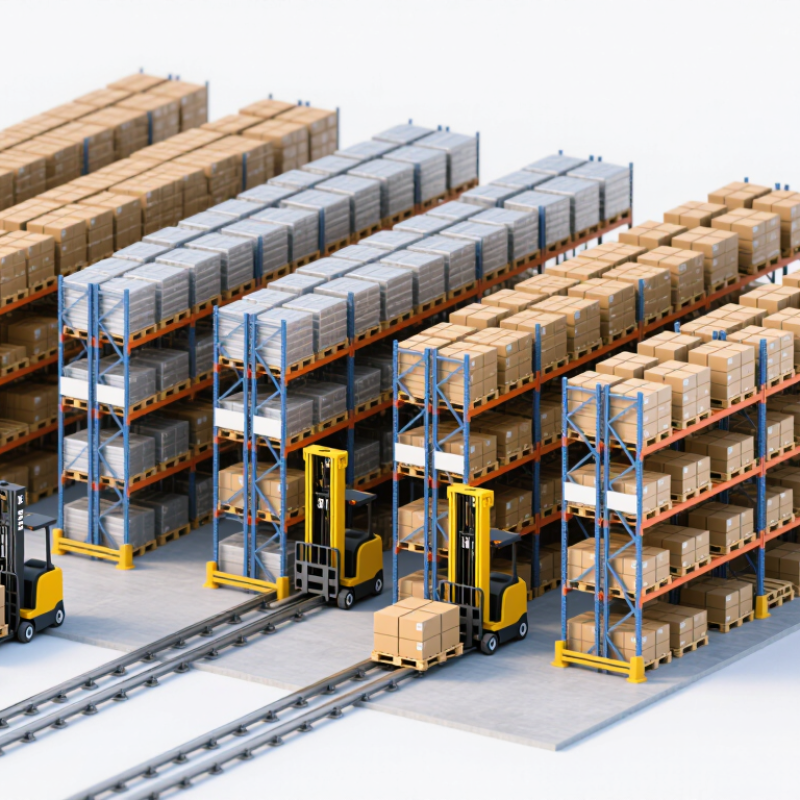
The main types include very narrow aisle selective racking, double-deep racking, and mobile narrow aisle racking. Very narrow aisle systems provide direct access to each pallet and suit warehouses with many stock-keeping units. Double-deep racking improves density, but workers may need to move the front pallet before reaching the rear one. Mobile systems reduce unused aisle space by moving rack rows along floor rails. Every choice changes picking speed, equipment cost, and safety procedures.

Details matter here. A warehouse manager should measure pallet dimensions, load weights, turning space, floor flatness, and fire protection clearance before installation. A six-inch measurement error can disrupt daily truck movement. Experienced teams also review battery charging areas and operator visibility. Narrower aisles do not automatically mean better performance. They can increase training demands and slow operations when inventory records are inaccurate. That limitation deserves honest attention. A well-planned layout supports safer travel, faster replenishment, and better use of building height, but its value depends on disciplined operation and regular inspection.

Key Design Features of Modern Narrow Aisle Racking Systems

What Are the 2026 Top Narrow Aisle Pallet Racking Types?

Modern narrow aisle racking focuses on usable volume, safe movement, and accurate inventory control. Selective narrow aisle racks suit mixed pallets and frequent picking. Double-deep racks increase storage density, but they require disciplined stock rotation. Very narrow aisle systems use guided turret or reach trucks. Their aisles can be about 1.6 to 2.0 meters wide, compared with roughly 3.0 meters in conventional layouts.

The key design feature is controlled movement. Rail guidance, wire guidance, aisle-end protection, and adjustable beam levels reduce contact damage. Load sensors and warehouse software can also verify pallet positions.

MHI’s 2024 Annual Industry Report reported that 55% of supply chain professionals faced workforce shortages. This supports investment in guided equipment and automated checks. The same report noted that 80% of respondents planned to increase technology investment over the next five years.

However, automation alone will not repair poor slotting or damaged floors. That part is often underestimated.

Tips: Measure the largest pallet first. Confirm truck turning clearance, sprinkler spacing, floor flatness, and emergency access. Test one aisle with real loads before expanding. OSHA guidance stresses protection from falling materials and safe industrial truck operation. A rack may look efficient on a drawing, yet daily congestion can expose weak planning. Review the layout after several weeks of actual use.

Main Types of 2026 Narrow Aisle Pallet Racking

In 2026, narrow aisle pallet racking focuses on storage density, access, and safer movement. The main types include narrow-aisle selective racking, very narrow aisle (VNA) racking, double-deep racking, and mobile pallet racking.

Narrow-aisle selective systems usually keep direct pallet access, with aisles around 2.4 to 3 metres wide. VNA layouts can reduce aisles to roughly 1.5 to 1.8 metres, but they require specialised turret trucks and accurate floor control. Double-deep racking stores pallets behind one another. It improves capacity, although stock rotation becomes less flexible.

Mobile pallet racking moves along floor rails and opens only the required aisle. This design suits cold stores, high-value inventory, and buildings with expensive floor space. The 2024 MHI Annual Industry Report found that 67% of surveyed organisations planned to increase technology investment. It also identified labour shortages as a continuing supply-chain pressure. These findings support more automated and space-efficient racking decisions.

However, automation is not automatically better. Poor slotting, weak training, or uneven floors can reduce real productivity.

Tips: Measure pallet dimensions, load weights, truck turning space, and fire-clearance requirements first. Compare usable storage positions, not only theoretical capacity. In practice, a slightly wider aisle may reduce damage and improve picking speed. That trade-off deserves a serious review.

How to Compare Narrow Aisle Racking Types for Different Warehouses

What Are the 2026 Top Narrow Aisle Pallet Racking Types?

Comparing narrow aisle racking begins with the warehouse’s operating pattern, not the rack’s advertised height. Selective narrow aisle racks suit mixed pallets and frequent access. Double-deep racks improve storage density, but they reduce direct access and require disciplined stock rotation. Very narrow aisle systems use specialized trucks and can reach greater heights. They may deliver impressive capacity, yet floor flatness and operator training become critical.

A 2026 comparison should measure usable locations, retrieval time, truck costs, and safety clearances. The 2025 MHI Annual Industry Report found that 83% of supply-chain professionals expected to increase technology investment. That pressure makes automated or semi-automated aisle systems more attractive in high-volume warehouses. Still, automation is not automatically efficient. A small facility with irregular orders may lose flexibility after installing complex equipment.

The 2024 Warehousing Education and Research Council benchmarking report emphasizes labor productivity, storage utilization, and order-cycle performance as practical warehouse measures. Use those measures together. For example, a cold-storage site may favor high-density double-deep racks, while an e-commerce warehouse usually needs faster access from selective or very narrow aisles. Check pallet dimensions, load weights, ceiling height, fire protection, and aisle turning radii before comparing quotations. Numbers can mislead. I would also test the proposed layout with real order histories, because a perfect drawing may fail during the afternoon rush.

Safety, Automation, and Future Trends in Narrow Aisle Storage

Narrow aisle storage is moving beyond simple space saving. The leading options include selective narrow aisle racks, double-deep racks, and very narrow aisle systems. VNA layouts can reduce aisle widths to roughly 1.6–2.0 meters, depending on equipment and load design. That extra capacity is useful, but it leaves little room for mistakes.

Safety must shape the rack choice. The Occupational Safety and Health Administration reports about 85 forklift-related fatalities and 34,900 serious injuries annually in the United States. These figures are older estimates, yet they remain a warning. Physical barriers, rack protection, floor markings, load inspections, and operator training should work together. In practical warehouse assessments, poor visibility often creates more risk than narrow spacing itself. A fully automated aisle is not automatically safer.

Automation is becoming more realistic for repetitive movements. The 2024 MHI Annual Industry Report found that 55% of supply chain professionals planned to adopt robotics and automation within five years. Automated storage and retrieval systems can guide pallet movement, reduce pedestrian exposure, and improve inventory accuracy. However, sensors require maintenance, clean floors, and reliable data. The 2024 World Robotics report also recorded continued growth in professional service robot demand, supporting wider warehouse automation investment. Still, manual intervention remains necessary during faults and unusual loads. That weakness deserves more attention. Future-ready narrow aisle designs will likely combine guided vehicles, collision detection, rack monitoring, and flexible access, rather than depending on one technology.

What Are the 2026 Top Narrow Aisle Pallet Racking Types?

Typical clear aisle-width ranges by pallet-racking configuration

Very-narrow-aisle systems maximize storage density, but they require purpose-built trucks, strict floor-flatness control, collision protection, and disciplined operator training. Automated guidance, warehouse-control software, and sensor-based safety systems are increasingly used to improve accuracy and reduce aisle traffic risks. The values shown are typical engineering ranges; actual requirements depend on pallet size, load dimensions, truck specifications, rack height, and local safety regulations.

FAQS

What are the main types of narrow aisle pallet racking?

Selective racks suit mixed pallets and frequent picking. Double-deep racks increase density but reduce direct access. Very narrow aisle systems use guided trucks and specialized equipment.

How narrow can these warehouse aisles become?

Very narrow aisles may measure about 1.6 to 2.0 meters wide. Conventional layouts often require roughly 3.0 meters. Actual width depends on truck clearance and pallet size.

Which system offers the fastest pallet access?

Selective narrow aisle racks usually provide the most direct access. They work well for irregular orders and frequent picking. Speed may fall if aisles become crowded.

What are the disadvantages of double-deep racking?

Double-deep racks store more pallets in less floor space. However, rear pallets are less accessible. Careful stock rotation becomes essential.

What equipment is needed for very narrow aisles?

These systems commonly use guided reach or turret trucks. Rail or wire guidance helps control movement. Operator training remains important, even with guidance.

What should be checked before installing narrow aisle racks?

Measure the largest pallet and heaviest load. Check floor flatness, ceiling height, sprinkler spacing, and emergency access. Confirm truck turning clearance.

How can warehouses improve movement safety?

Use aisle-end protection, guidance systems, and adjustable beam levels. Load sensors can help verify pallet positions. Falling materials remain a serious concern.

Can automation solve warehouse layout problems?

No. Automation cannot repair poor slotting, damaged floors, or weak planning. Technology helps, but it does not replace practical review.

How should a proposed layout be tested?

Test one aisle with real loads and actual order histories. Watch the afternoon rush. Drawings can deceive.

Which measurements help compare different racking systems?

Compare usable pallet locations, retrieval time, truck costs, safety clearances, and order-cycle performance. Storage density alone can mislead. I might underestimate flexibility when focusing only on capacity.

Conclusion

In 2026, Narrow Aisle Pallet Racking will play an important role in helping warehouses maximize storage capacity while maintaining efficient pallet access. Designed for facilities with limited floor space, these systems use reduced aisle widths, specialized handling equipment, adjustable beam levels, and strong structural components to support different pallet sizes and load requirements. Modern designs may also include guided travel, improved visibility, modular layouts, and flexible configurations that can adapt to changing inventory needs.

The main types include selective narrow aisle racking, very narrow aisle systems, double-deep configurations, and high-density solutions that combine compact storage with organized access. Choosing the right type depends on warehouse dimensions, inventory turnover, pallet weight, equipment compatibility, budget, and required accessibility. Safety features such as load protection, clear aisle markings, inspections, and operator training remain essential. Looking ahead, automation, warehouse monitoring, data-based planning, and energy-efficient equipment will continue to improve the safety, capacity, and performance of narrow aisle storage systems.

Liam

Liam

Liam is a professional marketing specialist who combines a deep understanding of the company’s products with a clear, customer-focused approach to communication. He regularly contributes expert articles to the company website, offering practical insights into product features, applications, and......